
Lieferung heute & morgen

Qualitätsgarantie

Willkommens-Angebote freischalten: KOSTENLOSE Lieferung | Bis zu 80 % RABATT | Kostenlose 30-Tage-JoyPlus-Testphase
App herunterladen
The range of LED lamps includes everything from simple desk lamps to decorative ceiling and floor lamps. But differences in colour temperature, fitting, power supply and design can determine whether a lamp really suits your room and how you use it every day.
Three common purchasing pitfalls are worth looking out for:
Brightness is measured in lumens (lm). Decorative lamps and bedside lamps often need fewer lumens, while desk lamps, reading lamps and work areas need more focused lighting. However, a high lumen figure alone doesn’t guarantee comfortable lighting. The beam angle, lampshade and positioning also matter.
Colour temperature is measured in kelvin (K):
Some cordless LED lamps offer several colour temperatures, so you can adjust the lighting to suit the time of day and what you’re doing. For extended periods of work, position the light source as evenly as possible to help prevent distracting reflections on screens.
For lamps with a replaceable bulb, make sure the fitting is exactly right. E27 lamps have a larger standard screw fitting, while E14 lamps use a smaller one. You should also check the lamp’s maximum wattage.
For example, the Atmosphera Pojo model has an E14 fitting. The bulb isn’t included; according to the product description, you can use an E14 bulb up to 40 W, or an equivalent LED bulb. Atmosphera’s Tibu table lamp also uses an E27 fitting and is supplied without a bulb.
With integrated LED lights, the LED module is already built in. Before buying, check whether the colour temperature, brightness and dimming function are fixed. The module isn’t designed to be replaced in every model.
Mains-powered table lamps provide a constant power supply but need a socket. A 150 cm cable can make it easier to position a lamp on a desk, shelf or bedside table.
Rechargeable table lamps and cordless LED lamps are more flexible. Check the battery capacity, charging port, run time and charging time. For a balcony or patio, the IP rating is also important. According to the product details, IP65 means certain models are protected against dust and water jets. Even so, the lamp shouldn’t be left standing in water or submerged.
Before you buy, measure the space available, the height and the distance from the wall. A slim floor lamp can often fit neatly into a corner, while a wide fabric-shade lamp needs more room.
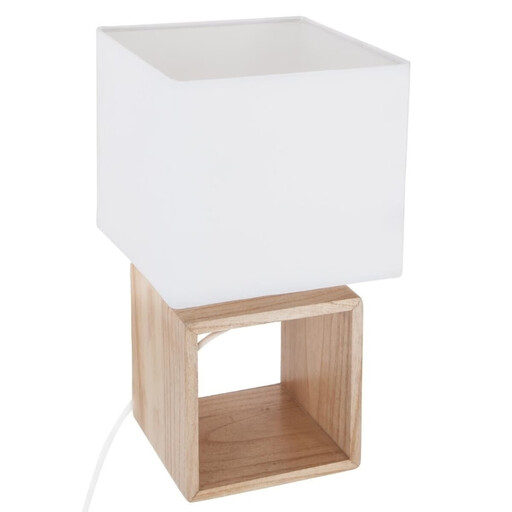
Why it suits this type of user: At 32.5 cm tall, this table lamp takes up little space and works well on a desk, bedside table or shelf. You can choose a separate bulb with the colour temperature you prefer.
The product details specify the fitting, maximum wattage and cable length, and confirm that a bulb isn’t included. This makes it easier to plan for any additional purchase in advance.
E14 fitting, 150 cm cable, cotton shade and a Paulownia wood base, according to the product details.
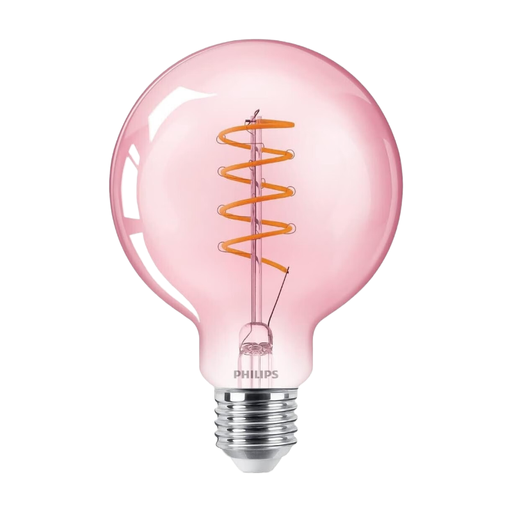
Why it suits this type of user: This decorative E27 lamp is designed for open fittings, pendant lights and chandeliers. It combines a distinctive vintage shape with warm white light.
The product description lists the fitting, 250 lumens and dimming capability, and notes that the dimmer must be compatible with LEDs. This helps you check whether it will work with your existing light fitting.
E27 base, warm white light, 250 lumens and dimmable, according to the product details.
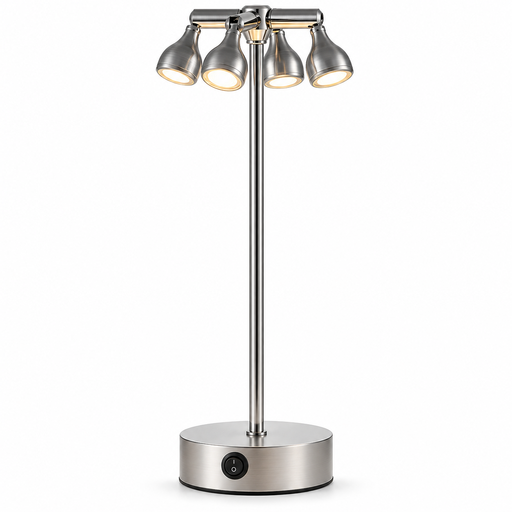
Why it suits this type of user: Its cordless design makes it a good choice for a dining table, bedroom, living room, bar, balcony or patio when there isn’t a socket nearby.
The product details clearly list the battery, IP rating, colour temperatures and brightness settings. This gives you a better idea of how it will work as a portable lamp than a design description alone.
3000 mAh battery, four brightness settings, three colour temperatures, and a lamp head that tilts by 180° and rotates by 320°.
We’ve put together a complete, regularly updated list of products that meet these strict selection criteria and fully comply with the safety regulations in force in the EU.
Energy use depends on the wattage and how long the lamp is switched on each day. A 10 W lamp switched on for five hours a day uses 50 Wh per day. To work out the running cost, multiply the energy used by your current electricity tariff. You should also check the lumen figure to assess the lamp’s brightness.
Their actual lifespan depends on product quality, how long they’re used for, heat dissipation and the ambient temperature. With integrated LED lights, the module can’t always be replaced by the user. For lamps with an E27 or E14 fitting, you can replace the bulb separately, as long as the fitting and maximum wattage are compatible.
Warm white light is often chosen for bedrooms and bedside tables. A dimmable lamp or a bulb with several brightness settings lets you adjust the light for reading, relaxing or finding your way around at night. Before buying a cordless model, check the battery charge, controls and IP rating you need.