
Lieferung heute & morgen

Qualitätsgarantie

Willkommens-Angebote freischalten: KOSTENLOSE Lieferung | Bis zu 80 % RABATT | Kostenlose 30-Tage-JoyPlus-Testphase
App herunterladen
LED lamps are replacing traditional incandescent and halogen bulbs in many German homes, offices, cafés and hotels. The range extends from a simple LED bulb to an app-controlled RGB+CCT LED lamp. However, the sheer variety of models can easily lead to the wrong purchase: a lamp may appear technically suitable but still not fit the light fitting, be too dim or flicker with the existing dimmer.
This guide explains which details really matter before you buy and which models are suitable for different uses.
E27 and E14 look similar, but they are different sizes. An E27 LED lamp has the classic large Edison screw cap, while an E14 LED lamp is designed for smaller fittings in table lamps, chandeliers and wall lights. GU10 is commonly used for spotlights. This cap is not screwed in, but pushed into the fitting and secured with a short twist.
You should therefore check the marking on the old lamp or light fitting before buying. The maximum height and diameter are also important, particularly with enclosed lampshades.
Power consumption in watts describes energy use, not brightness directly. For comparisons, the luminous flux in lumens is what matters:
A 4.5-watt LED lamp can, for example, produce around 470 lumens. By contrast, a 20-watt LED lamp with 2,100 lumens is more suitable for rooms where high brightness is required.
A dimmable LED lamp must be explicitly identified as dimmable. Smart models are usually dimmed via an app or voice assistant and are not designed for conventional wall dimmers. Combining both systems can cause flickering, buzzing or connection problems.
As well as the cap type, the shape of the lamp affects its fit and light distribution. G45 refers to a compact globe shape, A60 to a classic standard shape and ST64 to an elongated teardrop shape. C35 usually indicates a slim candle shape. With visible light sources, these shapes can also form part of the room’s décor.
An LED filament lamp with clear or amber-coloured glass is suitable for open light fittings. Visible LED filaments create a decorative look, while frosted covers can diffuse the light more evenly.
Colour temperature is measured in Kelvin:
A warm white LED lamp usually creates a more subdued atmosphere in living rooms and bedrooms than cool white light. With a CCT lamp, the colour temperature can be adjusted within the stated range. An RGB+CCT lamp adds coloured light to these white tones.
The colour rendering index, CRI or Ra, indicates how naturally colours appear under the lamp. A value of Ra80 or higher is a common guideline for many everyday indoor spaces.
The energy efficiency class is shown on the EU label from A to G. It is also worth checking consumption in kilowatt hours per 1,000 hours. Low power consumption combined with sufficient luminous flux can reduce running costs. Actual costs depend on your electricity tariff and how long the lamp is used.
The stated lifespan, such as 15,000 or 25,000 hours, is a product specification and not a guarantee for every installation. Heat, frequent switching, poor ventilation and use in unsuitable enclosed light fittings can affect operating life.
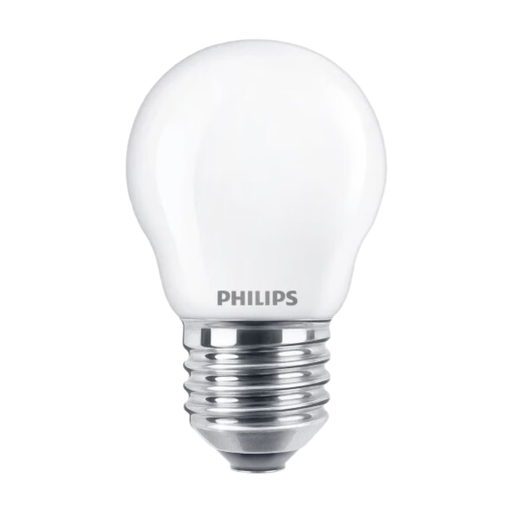
Why this product suits this profile: The E27 fitting, 2700 Kelvin and 250 lumens are suitable for smaller living-room lights, bedside tables and decorative applications with conventional operation.
The technical specifications clearly state the cap, luminous flux, colour temperature and lack of dimming functionality. This makes it easier to assess whether it is suitable before buying.
2.2 W power consumption, 250 lumens, 2700 K and a stated lifespan of 15,000 hours.
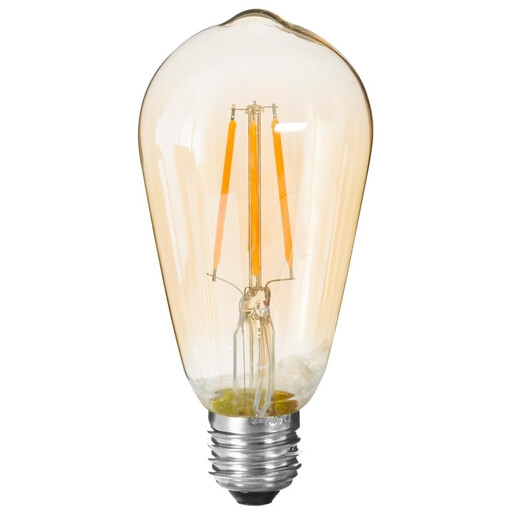
Why this product suits this profile: The amber-coloured ST64 shape with visible filament is designed for open light fittings in living rooms, cafés or restaurants.
The E27 cap, indoor use, 4.7 W and 470 lumens are clearly specified. The lamp is not connected, making it suitable for conventional switches.
470 lumens, a stated lifespan of 25000 hours, a stated 2-year warranty and warm decorative glass design.
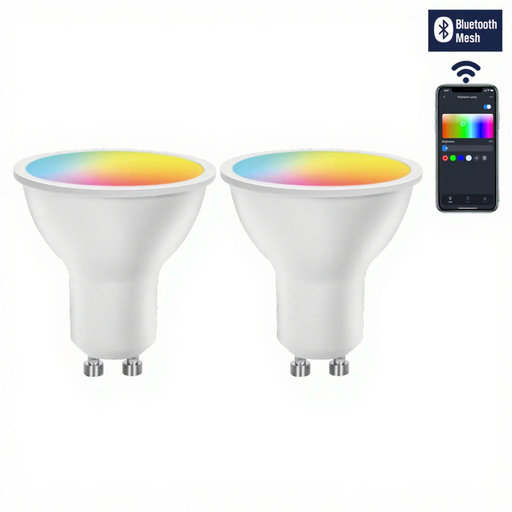
Why this product suits this profile: The GU10 cap and Bluetooth Mesh are suitable for smart home users and multiple spotlights in homes, hospitality venues or hotels.
The lamp is designed for indoor use with IP20 and should not be combined with a conventional wall dimmer. It is controlled via an app or voice assistant.
RGB plus 2700–6500 K, brightness adjustment from 1 to 100 per cent, Bluetooth Mesh and a stated lifespan of up to 25,000 hours.
For a rough cost calculation:
Power in kW × operating hours × electricity price = electricity costs
A 6-watt LED lamp uses around 6 kWh over 1,000 operating hours. The exact amount depends on your individual electricity price. With several lamps in a café, restaurant or hotel, power consumption can therefore be an important selection criterion.
Switch off the power supply before installation. IP20 lamps are designed for dry indoor areas and are not suitable for damp conditions or unprotected outdoor areas. With enclosed light fittings, follow the manufacturer’s ventilation instructions. Faulty LED lamps should be taken to an electrical and electronic waste collection point in accordance with local requirements, not placed in general waste.
We have put together a complete, regularly updated list of products that fully meet these strict selection criteria and the safety regulations applicable in the EU.
First, check the cap: E27, E14 and GU10 are not interchangeable. Then check the diameter, length, operating voltage and permitted wattage of the light fitting. With decorative lamps, you should also check whether the desired shape will fit inside the lampshade.
The stated product lifespan is often between 15,000 and 25,000 hours. This figure depends on ventilation, ambient temperature, switching frequency and correct use. A lamp should not be used in a completely enclosed light fitting if the manufacturer advises against it.
Running costs are primarily determined by power consumption and operating hours. A smart LED lamp may also use a small amount of additional energy in standby mode. When choosing a lamp, you should therefore consider wattage, luminous flux and the functions you actually need together.