
Lieferung heute & morgen

Qualitätsgarantie

Willkommens-Angebote freischalten: KOSTENLOSE Lieferung | Bis zu 80 % RABATT | Kostenlose 30-Tage-JoyPlus-Testphase
App herunterladen
LED lamps are suitable for almost every area of the home: as indoor lighting in the living room, an LED night light in the hallway, an LED light strip in the kitchen or colourful TV backlighting in a gaming area. However, the wide range of options does not automatically make buying easier. Technical specifications, installation methods and smart home functions can vary considerably.
If you focus solely on design or a high wattage, you may end up buying a light that is too dim for its intended location, needs to be installed incorrectly or requires more day-to-day operation than expected. This guide explains which specifications matter when choosing LED lamps and which product type best suits different needs.
For LED lamps, wattage primarily describes power consumption. The amount of light is determined by the value in lumens (lm). A decorative lamp with 30 or 40 lumens may be sufficient for a side table, but it cannot replace functional ceiling lighting.
The beam angle, lampshade and installation height also affect perceived brightness. An LED wall light with a narrow beam creates accents, while an LED ceiling light distributes light more widely around the room.
When choosing smart home lighting, buyers should check which connections are actually supported. Wi-Fi, Bluetooth, Matter and voice assistants are not interchangeable. For example, a product may only work with 2.4 GHz Wi-Fi or require an additional bridge.
The preferred control method is also important: app, remote control, touch control and motion-sensor lighting all offer different ways to use the product. If you want to integrate a light into Apple Home, Google Home, Alexa or Samsung SmartThings, check compatibility before buying.
Adhesive strips work best on clean, smooth and dry surfaces. On rough plaster, dusty cupboard surfaces or damp substrates, adhesion may deteriorate. The bending radius should also be taken into account with an LED light strip. Sharp bends can damage the conductive tracks and LED components.
For permanently installed lights, such as an LED ceiling light, LED pendant light or hard-wired LED wall light, you should also establish whether professional electrical installation is required.
The colour temperature in Kelvin (K) describes whether the light appears warm or cool:
A dimmable lamp allows for more flexible adjustment. However, you should check not only the light itself but also how it is operated. Possible options include touch dimming, remote control, app control or a separate dimmer.
Mains-powered LED lamps require a socket or fixed connection. Rechargeable lamps and battery-powered night lights offer greater flexibility but need to be charged regularly. With battery-operated models, batteries are not always included.
The technical limits are important for sensor products. For example, a sensor night light may switch on automatically once the surrounding light falls below a certain level. Range, detection angle and switch-off behaviour determine whether the product works practically in a hallway, under a kitchen cupboard or in a child's bedroom.
The IP20 rating, for example, indicates use in dry indoor areas and offers no protection against water. For bathrooms, balconies or outdoor areas, the product must have an expressly suitable IP rating. A product marked “for indoor use only” must not be used outdoors or in damp rooms.
For lights with a mains connection, the voltage and plug should be suitable for the German power network. Fixed connections, such as those for a pendant light above a kitchen island, should be handled by a qualified electrician.
The following recommendations group specific LED lamps by intended use and features. The details are based on the respective product descriptions.
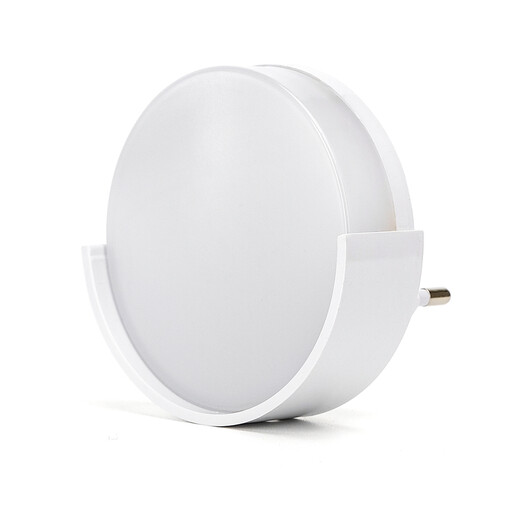
Why this product suits this profile: According to the product details, this compact plug-in light does not require batteries and switches on automatically as the surrounding light level falls. It is suitable for hallways, stairways or children's bedrooms in dry indoor areas.
The technical data specifies 1 W, 40 lm, 6,500 K, a 120° beam angle and IP20. This makes it easier to assess realistically as an orientation light.
Dusk sensor, plug-in operation and a stated lifespan of 25,000 hours according to the product description.
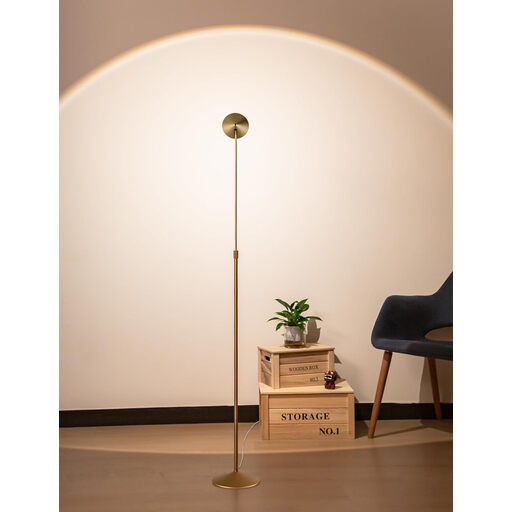
Why this product suits this profile: This LED floor lamp combines an adjustable-height design with a light head that rotates through 150°. It is suitable for reading areas, offices, bedrooms or creative workspaces.
Instead of a fixed position, the lamp offers three touch brightness levels, adjustable height and light directed upwards or downwards.
Integrated LED, 150° rotation, telescopic pole and three-stage touch dimming according to the manufacturer's specifications.
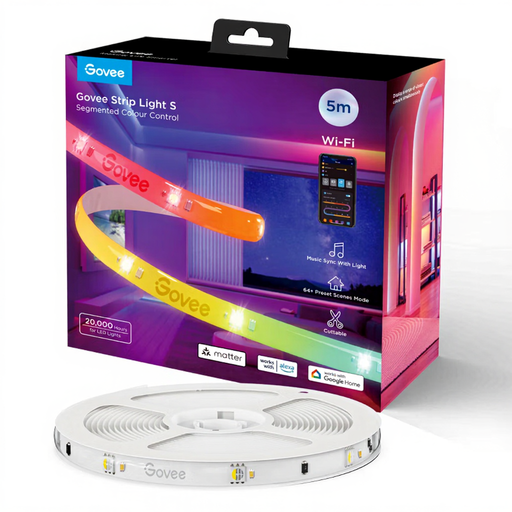
Why this product suits this profile: This 5-metre RGB LED strip offers segmented colour control, app operation, music synchronisation and Matter support for various smart home platforms.
The product details explicitly specify 2.4 GHz Wi-Fi as well as Bluetooth and Matter. This allows you to check your existing network and hub setup before buying.
5 m length, RGBIC segment control, 64 preset scenes according to the description and Matter compatibility.

Why this product suits this profile: The two 20 cm LED lamps can be attached without drilling and are suitable for kitchen wall cupboards, wardrobes, shelving units and hallways.
The PIR sensor, rechargeable battery operation and three selectable colour temperatures are clearly specified. You can therefore plan the installation, recharging and preferred light colour in advance.
800 mAh battery, detection range of 3 to 5 m, 21 LEDs per light and adhesive installation according to the product details.
We've put together a complete, regularly updated list of products that fully meet these strict selection criteria and the safety regulations applicable in the EU.
Before placing your order, check the dimensions, cable length, power supply and contents of the package. With hard-wired products, you should also check whether bulbs are included and which type of fitting is required. A traditional floor lamp may, for example, be designed for E27 bulbs, while some LED lamps have a non-replaceable integrated light source.
Consumption depends on the wattage and how long the lamp is used. A 5 W light running for four hours a day uses 0.02 kWh per day in theory. To calculate the ongoing cost, multiply this consumption by your personal electricity rate. Sensor and timer functions can reduce the actual operating time.
The stated lifespan is a manufacturer specification and depends, among other things, on heat, operating time, the power supply and usage. According to the product descriptions, some of the products listed have a lifespan of 25,000 hours. This figure is not a guarantee of the same service life in every household.
Adhesive surfaces must be clean, dry and free from grease. LED strips should not be sharply bent or operated while rolled up and switched on. Mains-powered ceiling or pendant lights must be used with the specified voltage. For a fixed electrical connection, installation should be carried out by a qualified electrician.