
Lieferung heute & morgen

Qualitätsgarantie

Willkommens-Angebote freischalten: KOSTENLOSE Lieferung | Bis zu 80 % RABATT | Kostenlose 30-Tage-JoyPlus-Testphase
App herunterladen
LED lamps vary considerably in light output, controls, installation and intended use. A decorative RGB LED lamp serves a different purpose from an office floor lamp or an LED night light. If you focus only on wattage, design or an overly enthusiastic product description, you could end up buying a light that is too dim, cannot be dimmed as needed or is incompatible with your existing smart home system.
With LED lighting, wattage primarily indicates energy consumption. The luminous flux in lumens (lm) is what determines the actual brightness. For example, a 4.9-watt LED lamp may produce 420 or 470 lumens, depending on the model and its construction. This is generally not enough for the main lighting in a larger room, but it may be suitable for a table lamp or accent light.
Warm white light at around 2,700 to 3,000 kelvin is often suitable for living rooms, bedrooms and dining areas. Warm white LED lighting at 3,000 K creates a different atmosphere from neutral white light at 4,000 K, which is commonly used in work areas. Cooler light may also be chosen for hallways or orientation points. The term “mood lighting” does not replace a specific colour-temperature specification.
“Dimmable” does not mean the same thing for every product. Some models are controlled using a touch switch, remote control or app. With replaceable bulbs, you must also check whether an existing wall dimmer is compatible with LED technology. For a smart LED lamp, the wireless standard, Wi-Fi frequency and required app are also important. According to the product details, for example, the Aigostar E27 model works with 2.4 GHz Wi-Fi; 5 GHz networks are not supported.
Start by considering the intended use:
Room size, beam angle and the number of lights all affect the result. A wide beam angle distributes light more evenly, while a directional lamp can highlight specific areas.
The kelvin rating describes the colour of the light. 2,700 to 3,000 K represents warm white light, while 4,000 K represents neutral white light. For workspaces, the CRI or Ra value is also relevant. It indicates how naturally colours appear under the light. One of the LEDVANCE office floor lamps in our selection is specified with CRI 80 and 4,000 K.
For balconies, patios or sheltered outdoor areas, the IP rating is crucial. IP54 means limited protection against dust and protection against splashing water. It does not mean that the light can be exposed to continuous rain or submerged. According to the product details, the cordless Brilliant LED floor lamp, standing 125 cm tall, has an IP54 rating and an integrated battery. For indoor spaces, IP20 is sufficient for many products as long as there is no risk of moisture.
When buying an LED wall light, check the drilling distances, wall material, connection type and installation space beforehand. An E27 LED bulb, on the other hand, can be fitted quickly, but it requires a compatible socket and adequate ventilation. For enclosed lights, check the relevant manufacturer approval.
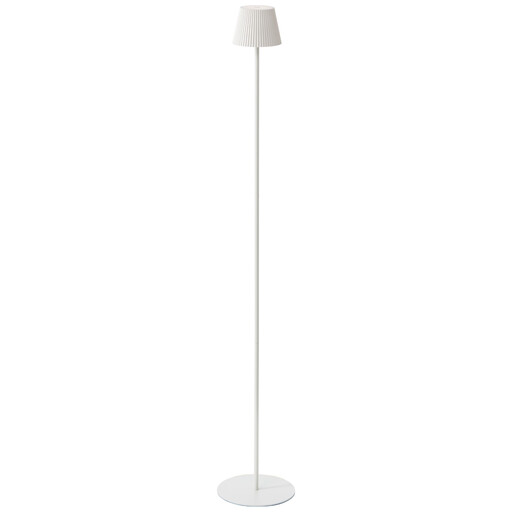
Why this product suits the profile: This cordless LED floor lamp can be positioned flexibly on a balcony, patio, in the garden or indoors.
The specifications state the luminous flux of 340 lm, 3,000 K and a three-stage touch dimmer, rather than just the power consumption.
Integrated rechargeable battery, 125 cm height, 340 lm and IP54 protection.
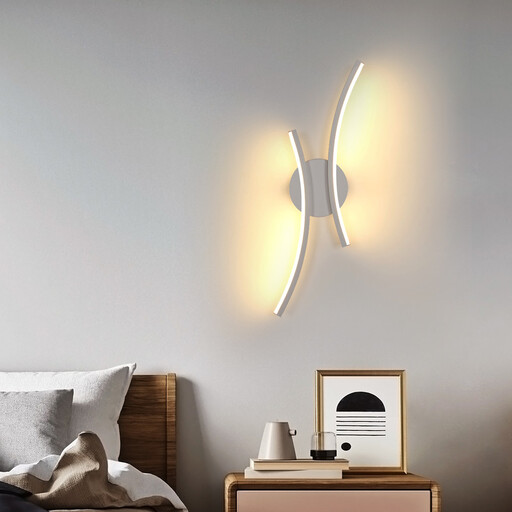
Why this product suits the profile: With its slim, curved design and 5 cm depth, it is suitable for living rooms, bedrooms, hallways or home offices where space is limited.
The construction is described as aluminium, with a slim profile and light emitted upwards and downwards. Check the connection and drilling points before installation.
20 W power, 3,000 K warm white light, plus indirect and direct lighting.
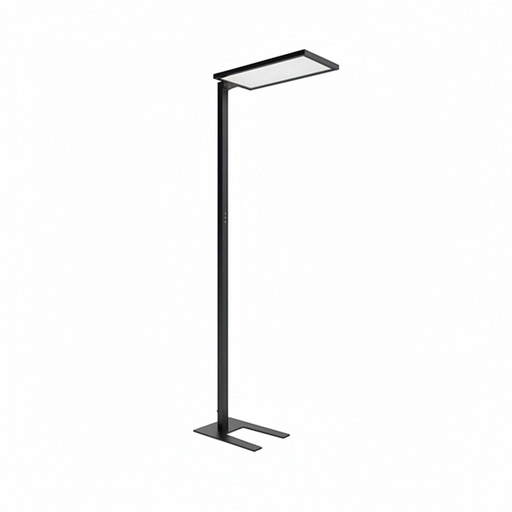
Why this product suits the profile: For a home office, individual office or larger workspace, this office floor lamp offers separately controllable direct and indirect light.
With up to 12,600 lm, 4,000 K, sensor control and a touch panel, key planning specifications are clearly stated.
Direct and indirect light, daylight and motion sensors, dimmable, UGR < 19 and a 2,500-mm cable.
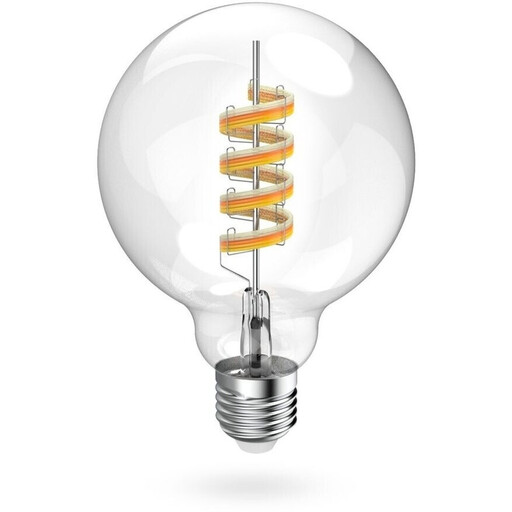
Why this product suits the profile: This E27 LED bulb combines a visible filament look with app, voice and Matter control for dry indoor spaces.
Matter compatibility, 2,700 to 6,500 K, dimming and the E27 base are all clearly specified. Check the fitting, Wi-Fi and desired platform beforehand.
RGBW light, 470 lm, app and voice control, timer, plus compatibility with Matter, Alexa, Google Assistant and Apple HomeKit.
We have put together a complete, regularly updated list of products that fully meet these strict selection criteria and the safety regulations applicable in the EU.
Consumption depends on the wattage and the number of hours the lamp is used each day. The simple calculation is: Wattage ÷ 1,000 × operating hours = kilowatt-hours. A 5 W lamp running for five hours each day uses a calculated 0.025 kWh per day. To work out the running cost, multiply this figure by your electricity price.
Lifespan is usually stated in operating hours and depends on heat generation, electronics and usage. With integrated LEDs, it is not always possible to replace just the light source. Before buying, check whether the light is designed as a complete unit and review the applicable warranty and manufacturer information.
For calm ambient lighting, warm white LED lamps with 2,700 to 3,000 K are often a good choice. A dimmable LED lamp also lets you adjust the brightness for evenings, reading or orientation. For automatic pathway lighting, an LED night light with a sensor may be useful. However, it should only be used in dry indoor spaces if an IP20 rating is specified.