
Lieferung heute & morgen

Qualitätsgarantie

Willkommens-Angebote freischalten: KOSTENLOSE Lieferung | Bis zu 80 % RABATT | Kostenlose 30-Tage-JoyPlus-Testphase
App herunterladen
The range of LED lamps and lights extends from classic E27 bulbs to LED floor lamps and connected Wi-Fi lamps with colour-changing features. Many offers boast millions of colours, voice control or exceptionally long lifespans. However, these details are only helpful if the light suits the room and its intended use.
The wattage describes power consumption, not directly the brightness. For comparison, the luminous flux in lumens (lm) is what matters. An E27 LED lamp with 840 lm, for example, is better suited for general room lighting than a model with 210 lm, which would be used as a table or accent light.
A smart LED lamp or an RGBIC LED strip can create coloured mood lighting. For focused work, reading or even ambient room lighting, brightness, beam angle and colour temperature are more important than the number of colours. Colourful LEDs are therefore often best used as a supplement, not as the sole light source.
With an LED floor lamp, the base area, height and cable routing all matter. For an LED strip, a clean, dry mounting surface and sufficient distance from heat sources are important. Even an adhesive surface applied to dusty or uneven ground can come loose over time.
With an E27 LED lamp, the socket, mains voltage and maximum wattage of the fixture must match. A lamp with an E27 base and a maximum of 40 W can generally accept a compatible LED bulb, provided the other manufacturer specifications are met. It is also crucial whether the bulb is dimmable. A non-dimmable LED on a dimmer switch can cause flickering or noise.
A Wi-Fi lamp, Alexa lamp or Google Assistant lamp should be compatible with your existing network and preferred app. Many devices require a 2.4 GHz Wi-Fi connection. It is also worth checking:
The products mentioned are primarily intended for indoor use. An IP20 rating, for example, means no protection against water should be assumed.
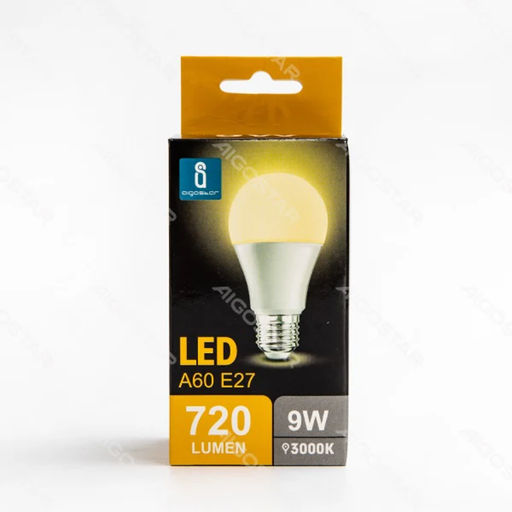
Why this product fits the profile: The classic E27 format works with many existing light fittings. 840 lm, 3000 K and a beam angle of 190° are clear selection criteria for everyday indoor spaces.
The product data lists lumens, colour temperature, socket and beam angle. This allows you to check the bulb against your existing light fitting before purchase.
9 W power consumption, 840 lm luminous flux and 3000 K. The bulb is intended for indoor use and is not specified as dimmable.
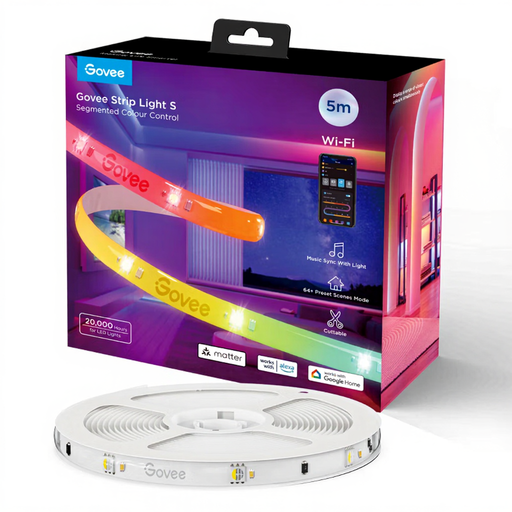
Why this product fits the profile: For users looking for segmented colour effects and integration into multiple smart home systems, this model specifies concrete control options including Matter, Wi-Fi and Bluetooth.
The specifications mention the required 2.4 GHz Wi-Fi connection, indoor use and the note not to operate the strip while rolled up for extended periods.
5 m length, RGBIC segment control, Matter support plus app, Bluetooth and voice control. Power consumption is stated as 24 W.
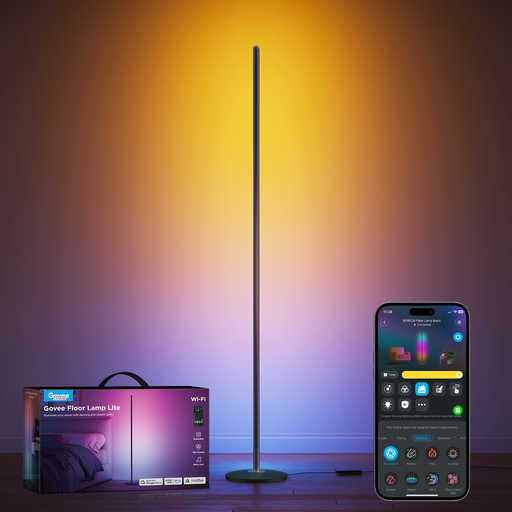
Why this product fits the profile: This LED floor lamp is designed for living rooms, gaming lighting and home entertainment. App, Wi-Fi, Bluetooth and voice control support changing usage scenarios.
The product description mentions height, base, indoor use and the need for a stable setup. This reduces the risk of buying based purely on design.
136 cm height, 1,000 lm luminous flux, dimming function, 58 scenes and 16 million stated colours. The lamp requires 24 W and is designed for indoor use.
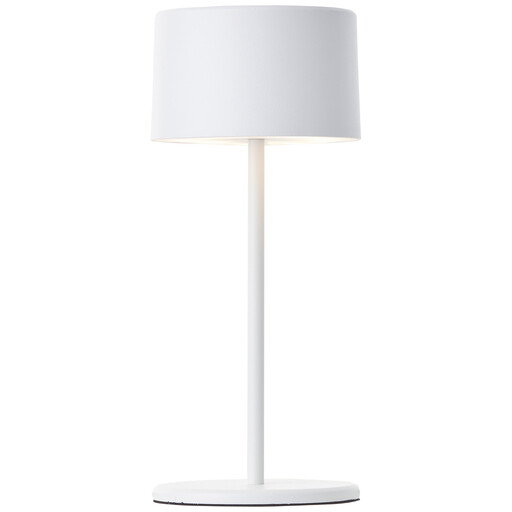
Why this product fits the profile: As a battery-powered table lamp, it can be placed on a desk, bedside table, shelf or sideboard without needing a permanent free socket.
The compact design, USB charging function and three-step touch dimming are clearly specified. This means the lamp isn't judged solely by a decorative product image.
21 cm height, 210 lm, warm white 3000 Kelvin LEDs and three-step touch control. The stated energy efficiency class is F.
We have compiled a complete, regularly updated list of products that fully meet these strict selection criteria and the safety regulations in force in the EU.
The consumption depends on the power rating in watts and the daily usage time. A 9 W LED uses less electrical energy for the same operating time than a conventional bulb with a higher wattage. For ongoing costs, you should also consider the electricity price and your actual usage.
The lifespan is stated by the manufacturer in operating hours. For the Aigostar E27 LED lamp, for example, 15,000 hours is quoted. This value is a product specification and depends on factors such as heat dissipation, ambient temperature, switching cycles and use in enclosed fittings.
Not every LED bulb is dimmable. A dimmable lamp must be supported by both the bulb and the dimmer. With smart lights, brightness control is usually done via app, remote control or voice assistant. Before installation, the socket, dimmer, power supply and control method should all be checked against each other.