
Lieferung heute & morgen

Qualitätsgarantie

Willkommens-Angebote freischalten: KOSTENLOSE Lieferung | Bis zu 80 % RABATT | Kostenlose 30-Tage-JoyPlus-Testphase
App herunterladen
LED lighting is the first choice in many homes. Even so, product names and attractive images do not always lead to the right buying decision. When choosing LED lamps for indoors and outdoors, unsuitable purchases are often caused by three typical pitfalls:
Checking a few technical specifications before buying makes it easier to combine design with functionality.
The IP rating consists of two digits. The first describes protection against solid foreign objects and dust, while the second indicates protection against water. For balconies, patios or gardens, the stated protection rating should explicitly match the installation location.
A waterproof outdoor light should not be chosen solely on the basis of the word “waterproof”. The decisive factor is the manufacturer’s specific IP rating. Cables, power supplies, plug connections and the installation position must also be taken into account.
Brightness is measured in lumens (lm). In principle, the higher the value, the more light a lamp emits. The actual effect also depends on the lampshade, beam angle and size of the room.
Colour temperature is measured in Kelvin (K). A warm white LED lamp at around 2,700 to 3,000 K often creates a welcoming atmosphere. Neutral white at around 4,000 K is suitable for working from home and focused tasks. Values up to 6,500 K appear noticeably cooler and should be used selectively.
A dimmable LED lamp offers additional adjustment options. With integrated LEDs, check whether dimming is built in or whether a compatible dimmer is required.
For indoor areas, mains-powered lights such as an LED floor lamp, LED arc lamp or modern floor lamp are practical when consistent lighting is required. A sufficiently long cable makes positioning easier. According to the product information, the Brilliant arc lamp has a cable length of 228 centimetres.
Outdoors, a rechargeable table lamp, USB outdoor lamp or solar light offers greater flexibility. Buyers should pay attention to the following details:
A solar light for the garden needs a location with sufficient sunlight. The stated illumination time of 8 to 12 hours for some solar models depends on charging conditions, the season and shade. An LED garden spike light can be positioned flexibly, but is not automatically suitable for every type of ground or weather condition.
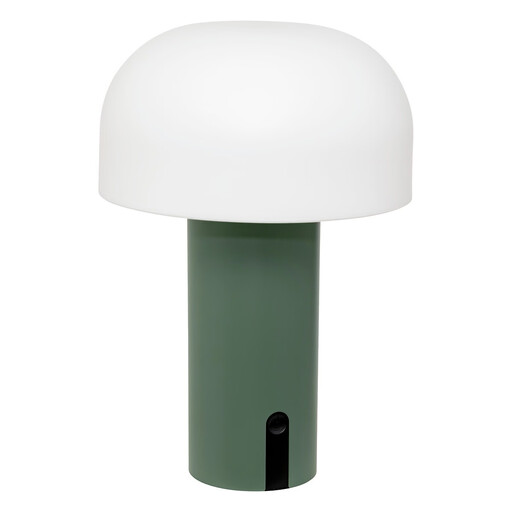
Why this product suits this profile: The compact rechargeable table lamp can be positioned flexibly on balcony or patio tables. It provides warm white light at 3,000 K and, according to the product information, offers up to 6 hours of battery life.
The IP44 rating makes its suitability for sheltered outdoor areas clearer than a product name alone. However, its limited output of 90 lumens means it should be planned as mood lighting.
Rechargeable operation, USB Type-C cable, touch switch, 90 lumens and IP44 protection.
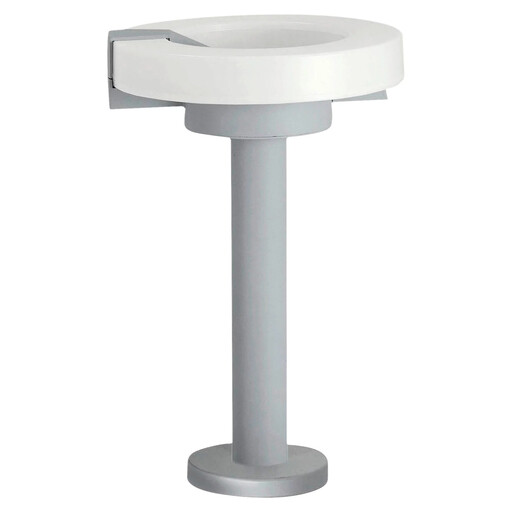
Why this product suits this profile: This garden light is intended for paths, lawns and driveways. Its IP65 protection rating, 3,000 K colour temperature and 470 lumens are clearly stated technical specifications.
The specific IP65 classification distinguishes this light from models suitable only for dry indoor areas or sheltered locations. The LED module is not dimmable.
IP65, 470 lumens, warm white light at 3,000 K, glass cover and E27 fitting for bulbs up to 40 W.
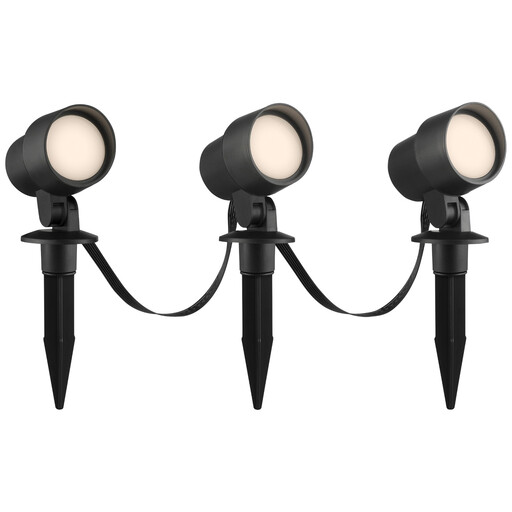
Why this product suits this profile: Three LED garden spike lights provide distributed illumination along paths, flowerbeds or on the patio. According to the product information, CCT, RGB and dimming can be controlled via Tuya Smart and a voice assistant.
The IP44 rating specifies the intended protection against splashing water. Before installation, check that the ground is stable and that the power supply is connected correctly.
Set of 3, RGB and CCT colour selection, dimming function, app and voice control, plus IP44.
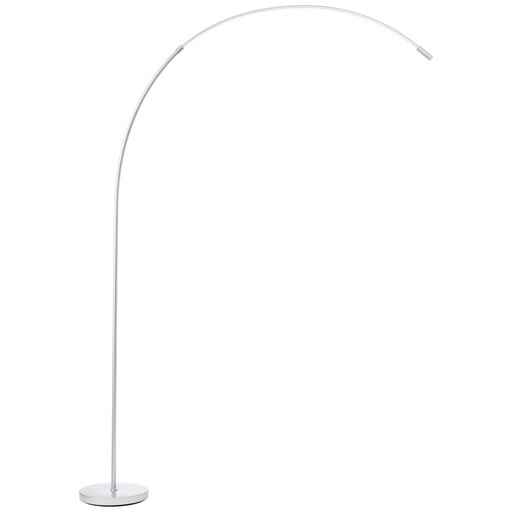
Why this product suits this profile: This LED arc lamp is designed for living rooms, reading corners or home offices. It delivers 1,300 lumens at 14 watts and allows adjustment from 3,000 to 6,500 K.
The product information clearly states the brightness, power consumption, colour temperature range and IP20 rating. This also makes it clear that the light must be protected from moisture.
1,300 lumens, integrated LED, stepless touch dimmer, CCT function and 228 centimetres of cable.
We have put together a complete, regularly updated list of products that fully meet these strict selection criteria and the safety regulations applicable in the EU.
Models with IP44 are suitable for sheltered areas. A light with IP20 should only be used in dry indoor areas. For exposed locations, a higher protection rating, safe cable routing and a stable base are particularly important.
Service life depends on the LED module, electronics, heat dissipation and usage. With integrated LEDs, the service life stated by the manufacturer is the key reference. Rechargeable and solar models also have a battery, whose capacity may decrease with charging cycles and age.
Running costs can be estimated using this formula:
Power in watts × operating hours ÷ 1,000 × electricity price per kilowatt-hour
A 14-watt light used for two hours a day consumes approximately 10.22 kilowatt-hours per year in theory. The actual amount depends on your individual electricity tariff. Solar lights do not incur mains electricity costs while operating; however, their illumination time depends on their location and charging conditions.