
Lieferung heute & morgen

Qualitätsgarantie

Willkommens-Angebote freischalten: KOSTENLOSE Lieferung | Bis zu 80 % RABATT | Kostenlose 30-Tage-JoyPlus-Testphase
App herunterladen
LED lamps are a flexible alternative to traditional lighting in many homes: as decorative table lighting, battery-powered table lamps for balconies and patios, LED camping lamps or robust work lights. At the same time, models vary considerably in brightness, battery life, IP rating and operation. A high lumen figure alone therefore says little about whether a lamp is suitable for its intended purpose.
Lumens describe the total luminous flux, not automatically the range or quality of the illumination. A compact LED torch with a high lumen rating may produce a narrow beam, while a table lamp distributes light more evenly across its immediate surroundings. For dining tables, bedside tables or patios, light distribution and dimming are therefore often more important than the highest possible maximum output.
Descriptions such as “suitable for outdoor use” should not be interpreted without checking the IP rating. An IP44 LED lamp is protected against solid foreign objects and splashing water from various directions. It is suitable for many covered outdoor areas, but not for immersion in water. An IP67 LED lamp, on the other hand, is protected against temporary immersion. The manufacturer’s specific information and the stated usage limits remain decisive.
For battery-powered models, runtime depends on the selected light level, ambient temperature and the condition of the battery. Statements such as “up to” usually refer to a particular operating mode. So check whether the lamp offers several brightness levels and how it is charged. A rechargeable torch with a USB-C connection, for example, can be charged via a power adapter, laptop, power bank or car charger.
For decorative lighting, anything from a few to several hundred lumens is often sufficient. The Cara LED lamp by Atmosphera is described as providing 30 lumens and a stated battery life of up to 48 hours. It is therefore intended more for gentle accent lighting on a side table or coffee table.
A work light or torch generally needs considerably more light. Also pay attention to the stated range, the number of light modes and how easy it is to operate. With a dimmable LED lamp, the lowest brightness setting is also important if you want to use it in the evening without glare.
Light colour is measured in Kelvin. Warm white light of around 3,000 Kelvin usually creates a subtle atmosphere in living spaces. According to the product details, the Brilliant Xaana outdoor table lamp offers an adjustable colour temperature of 3,000 to 6,500 Kelvin, as well as stepless touch dimming.
Battery-operated lights are ready to use straight away, but they incur ongoing costs when the batteries need replacing. A battery-powered table lamp is more flexible if its battery can be charged via a standard connection. Check the following:
The Brilliant LED Battery Table Lamp uses a rechargeable battery, delivers 200 lumens, provides warm white light at 3,000 Kelvin and is dimmable. Its compact size of 12 × 8.5 cm makes it easy to move between indoor and outdoor areas.
For balconies, patios or gardens, the IP rating should match the intended use. An IP44 LED lamp is suitable for splashing water, provided it is not continuously exposed to rain, snow or standing water. For hiking, camping or emergencies, a waterproof LED lamp with a higher IP rating may be the better choice.
For work environments, housing material, impact resistance, the grip and a secure base are also important. A torch should never be pointed directly at anyone’s eyes. Charging ports must be dry before charging if the model has been used outdoors.
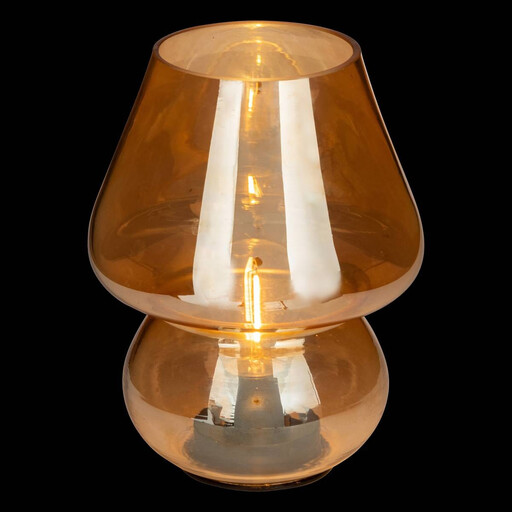
Why this product suits this profile: This compact glass lamp is designed for coffee tables, sideboards or bedside tables and requires two batteries.
The stated light output of 30 lumens makes its intended use as accent lighting clear, rather than suggesting that it is suitable for task lighting.
19 cm height, iridescent-effect glass and a stated battery life of up to 48 hours.
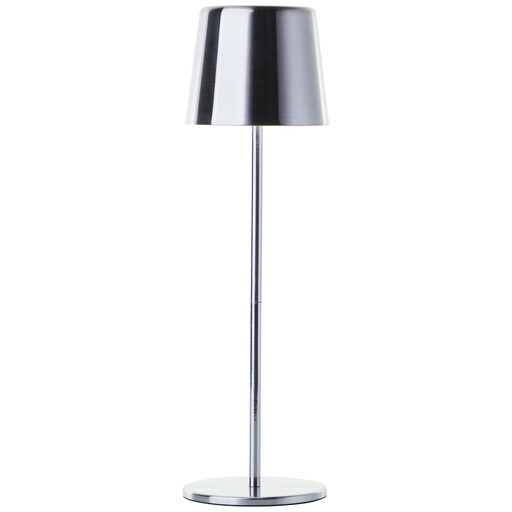
Why this product suits this profile: This table lamp combines a height-adjustable design with USB charging, adjustable light colour and flexible indoor and outdoor use.
The IP44 rating clearly defines the protection against splashing water and does not replace permanent placement in exposed weather conditions.
3,000–6,500 Kelvin, stepless touch dimming, USB connection and integrated battery according to the product details.
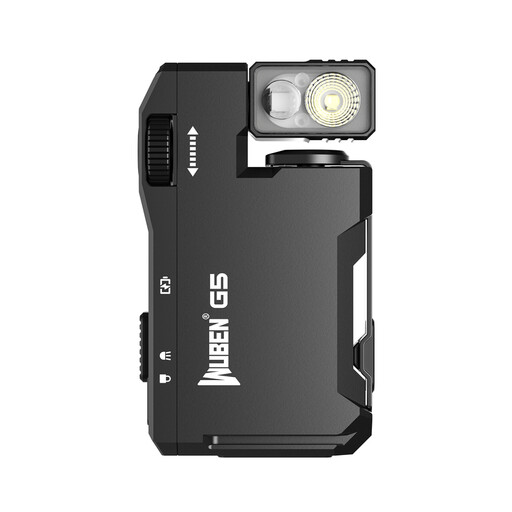
Why this product suits this profile: For hiking, camping, night-time work and emergency kits, this rechargeable torch offers six light modes.
Alongside 1,200 lumens, the product details specify a range of up to 93 metres, six modes and an IP68 rating.
Aluminium housing, USB-C charging, IP68 rating and six stated lighting modes.
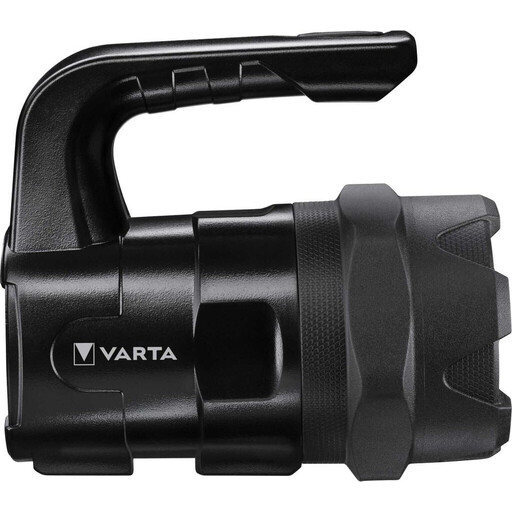
Why this product suits this profile: This lantern is designed for work areas, outdoor activities and emergencies where long runtime and a durable housing matter.
IP67, IK08 and the stated impact resistance for drops from up to four metres provide specific information about its durability.
400 lumens, a stated range of up to 400 metres, up to 85 hours of runtime and six AA batteries included.
We have put together a complete, regularly updated list of products that fully meet these strict selection criteria and the safety regulations applicable in the EU.
The LED light source itself is often designed for a long service life. However, the actual lifespan of the product also depends on the battery, battery compartment, charging electronics, switch and housing. With battery-powered models, available capacity decreases with charging cycles and age. It is therefore not possible to give a general runtime for all LED lamps.
Running costs depend on power consumption, daily usage time and the electricity price. For mains-powered or rechargeable models, the electrical power rating in watts is the key factor. For battery models, the cost of replacement batteries must also be taken into account. A lamp with a low wattage may be cheaper to run regularly, provided it still delivers the required brightness.
For covered areas, an IP44 LED lamp may be suitable, provided it is protected from continuous rain. For changing weather conditions, a higher IP rating is preferable, and the manufacturer’s description should explicitly confirm suitability for this type of use. A stable base, sufficient battery life and an easily accessible charging socket are also practical selection criteria.