
Lieferung heute & morgen

Qualitätsgarantie

Willkommens-Angebote freischalten: KOSTENLOSE Lieferung | Bis zu 80 % RABATT | Kostenlose 30-Tage-JoyPlus-Testphase
App herunterladen
LED lamps are available in many forms in British homes: as classic E27 LED bulbs, E14 LED bulbs, ceiling lights, recessed spotlights or decorative LED lighting. The wide choice does not always make the search easier. If you focus only on wattage, design or supposed energy-saving claims, you can quickly end up with a lamp that is unsuitable for the fitting, room size or existing electrical installation.
With LED technology, wattage primarily describes energy consumption. The luminous flux in lumens determines the actual brightness. Depending on the model, a 6-watt lamp may produce 510 lumens, for example, while a 15-watt LED reaches 1,500 lumens. Comparing it with a traditional incandescent bulb is only a rough guide and should not be the sole selection criterion.
A warm white LED lamp of around 2,700 to 3,000 Kelvin creates a cosy, homely light. Neutral white at approximately 4,000 Kelvin is often suitable for kitchens, hallways or work areas. Cool white or daylight white up to 6,500 Kelvin has a noticeably cooler appearance.
With a permanently installed light, replacing it later is not as straightforward as replacing a bulb. A 3CCT LED with switchable settings of 3,000, 4,000 and 6,500 Kelvin can therefore be useful during renovations. Important: on many 3CCT models, the colour temperature is selected using a switch on the light and cannot be changed while it is operating.
An IP20 LED lamp is intended for dry indoor areas. For bathrooms, kitchens or covered outdoor areas, an IP44 LED lamp may be more suitable, as it is protected against splashing water. However, IP44 does not mean protection against a direct jet of water or immersion.
“Dimmable” is not a universal feature either. A light may have an integrated dimmer or work only with certain external leading-edge or trailing-edge dimmers. A bulb that is not approved for this purpose may flicker or buzz.
With replaceable bulbs, the fitting and voltage must match. E27 is a widely used standard screw fitting, while E14 is often used in smaller table lamps, wall lights or decorative lights. The mains voltage commonly used in homes is 220–240 volts.
For recessed LED spotlights, the ceiling cut-out and installation depth are also key factors. A model designed for a 90–100 millimetre cut-out will not automatically fit an opening measuring 145–160 millimetres. Before buying, you should therefore note down the following measurements:
Direct connection to 230 volts must only be carried out in accordance with the applicable safety requirements and by a suitably qualified person.
For general lighting, the luminous flux in lumens is what matters. A wide beam angle of around 190 to 230 degrees distributes light over a large area. With LED ceiling spotlights or recessed spotlights, it is also important to consider whether the light is focused or widely diffused.
The colour rendering index, CRI or Ra, indicates how naturally colours appear under the light. A value of Ra ≥ 80 is specified for several of the residential lights mentioned here and provides a clear reference point for everyday applications. Specialist tasks may require different standards.
For the products listed, the EU energy label ranges, for example, from D to F. Actual consumption in watts is the key factor when calculating running costs. A simple calculation is:
Wattage ÷ 1,000 × operating hours × electricity price = electricity costs
A 6-watt LED used for three hours a day consumes fewer kilowatt hours in theory than a 15-watt LED used for the same length of time. At the same time, the brightness must be suitable for the room. A lamp that is too weak may mean that several lights have to be switched on at once.
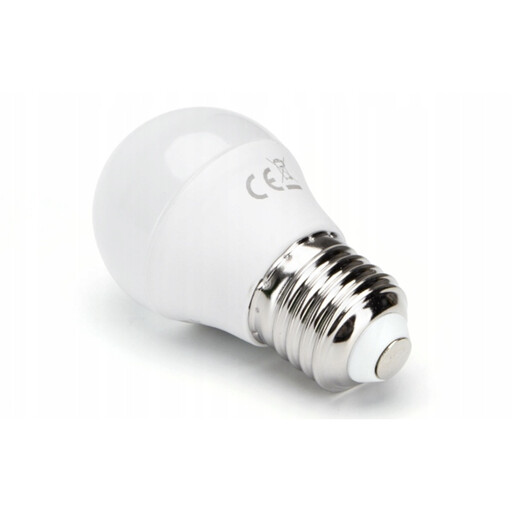
Why this product suits this profile: This E27 bulb with 6 watts, 510 lumens and 3,000 Kelvin is suitable for standard fittings in living rooms, bedrooms or dining rooms.
The fitting, voltage, colour temperature and luminous flux are clearly specified. However, this model is not designed for use with external dimmers and is suitable only for dry indoor areas.
E27 base, compact G45 shape, 510 lumens and 200° beam angle.
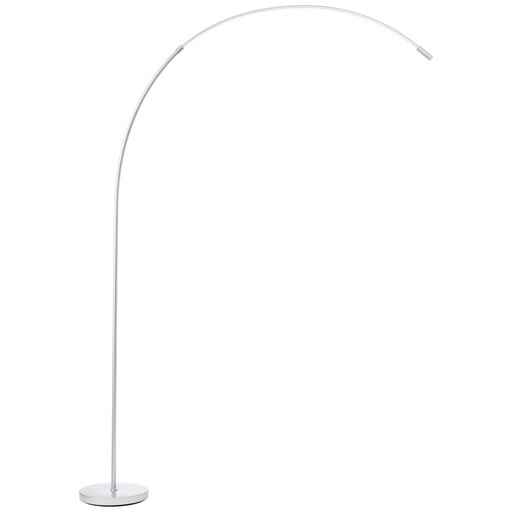
Why this product suits this profile: Standing 179 centimetres tall, this LED floor lamp combines a curved design with integrated LED lighting, a touch dimmer and adjustable colour temperature.
It is operated directly using the touch switch. The IP20 rating and Class 2 protection also show that this light is intended for dry indoor areas.
1,300 lumens, stepless dimming, 3,000–6,500 Kelvin and 2.28 metres of cable.
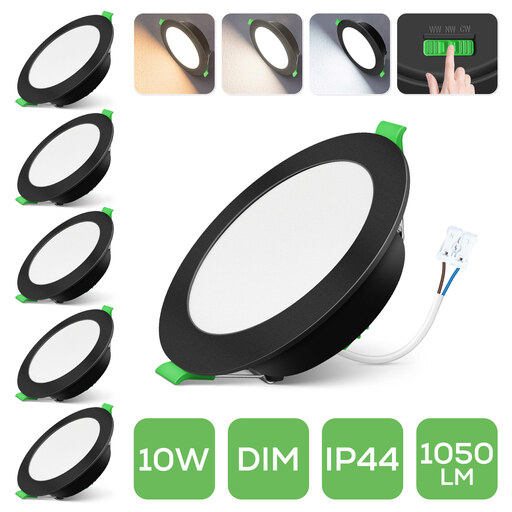
Why this product suits this profile: This flat recessed spotlight is designed for 90–100-millimetre ceiling cut-outs and offers three colour temperatures for bathrooms, kitchens or other indoor areas.
The required ceiling cut-out, 34-millimetre installation depth and IP44 rating are clearly specified. IP44 does not replace protection against a direct jet of water.
1,050 lumens, dimmable from 10–100% with a compatible dimmer, 3CCT and a set of six lights.
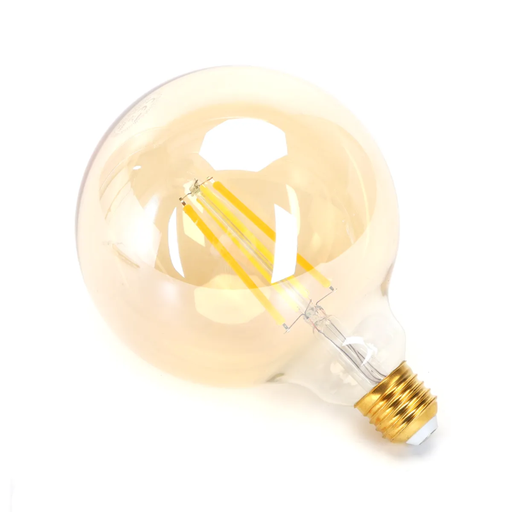
Why this product suits this profile: This smart LED lamp with an E27 fitting, G125 globe shape and amber-coloured glass is designed for exposed fittings, pendant lights and decorative accents in the home.
WiFi and Bluetooth, 2.4 GHz compatibility and control via app or voice assistant are all clearly specified. The large G125 shape must be compatible with the light fitting.
806 lumens, dimmable via app, adjustable white from 2,700–6,500 Kelvin and RGB colour modes.
We have put together a complete, regularly updated list of products that fully meet these strict selection criteria and the safety regulations applicable in the EU.
This depends on the size of the room, ceiling height, wall colour and the desired lighting effect. For general lighting, several lights are often more even than one very bright lamp. An LED floor lamp can provide additional light for a reading or seating area, while ceiling spotlights take care of the overall brightness.
No. Some models are explicitly dimmable, while others are designed only to be switched on and off. With dimmable LED lamps, the bulb, dimmer and, where applicable, transformer must be compatible. The manufacturer’s specifications should be checked before installation.
The stated service life is a technical guideline and depends, among other things, on operating hours, ambient temperature and heat dissipation. Product specifications may state, for example, 15,000, 25,000 or 30,000 hours. Enclosed lights without sufficient ventilation can impair heat dissipation.