
Lieferung heute & morgen

Qualitätsgarantie

Willkommens-Angebote freischalten: KOSTENLOSE Lieferung | Bis zu 80 % RABATT | Kostenlose 30-Tage-JoyPlus-Testphase
App herunterladen
LED lighting can reduce electricity consumption compared with traditional incandescent bulbs and offers numerous options for living and working areas. However, a low wattage does not automatically mean the lamp is the right choice. Common buying mistakes include choosing an incompatible fitting, unsuitable brightness or smart home features that are not compatible with your existing network.
This buying guide from the Joybuy Product Recommendation Officer explains what households in Germany should look for when choosing LED lamps for the home and which models are suitable for different uses.
For LED lamps, wattage primarily indicates energy consumption. The luminous flux in lumens determines the actual brightness. Depending on its design, a 6 W LED lamp may produce 470, 510 or 555 lumens, for example. Different values are suitable for general living-room lighting than for a decorative table lamp.
Colour temperature is measured in Kelvin. 2700 K usually produces a yellowish, warm light and is suitable for bedrooms or cosy living areas. 3000 K also provides warm white light, but appears slightly more neutral. Values up to 6500 K create a cooler, daylight-like appearance and may be useful for home offices, cellars or practical areas.
A smart LED lamp does not automatically work with every system. Before buying, check the following:
An LED lamp with Alexa control or an LED lamp with Google Home can be convenient, but requires the right setup and compatible accounts.
The fitting must match the light fixture. An E27 LED lamp has the standard large screw thread, while an E14 LED lamp is designed for smaller fittings in table lamps, wall lights or chandeliers. A GU10 LED spotlight is generally inserted into the corresponding push-and-twist fitting and is suitable for directional lighting.
The dimensions are also important. A G45 lamp with a diameter of around 45 mm fits many compact light fixtures, while a G120 globe lamp with a diameter of 120 mm requires considerably more space. Before buying, check the available room inside the lampshade.
The luminous flux in lumens (lm) indicates how much visible light a lamp emits. The beam angle describes how widely this light is distributed. An angle of around 190 to 200 degrees is often suitable for evenly lighting a room. 360 degrees are useful when an all-round distribution is required in an open light fixture.
The CRI or Ra value describes colour rendering. A value of Ra ≥ 80 is specified for many everyday living areas for the models featured here. This is often sufficient for decorative lighting; workplaces where accurate colour assessment is particularly important may require additional criteria.
A dimmable LED lamp must be explicitly labelled as dimmable. Non-dimmable models may flicker or buzz when connected to conventional dimmer switches. With smart lamps, brightness is usually adjusted via the app or compatible voice control.
Running costs depend on wattage and daily operating time. A 6 W lamp uses less energy than a 15 W or 20 W version over the same period, but usually produces less light. The EU energy efficiency class and consumption per 1000 hours provide additional points of comparison.
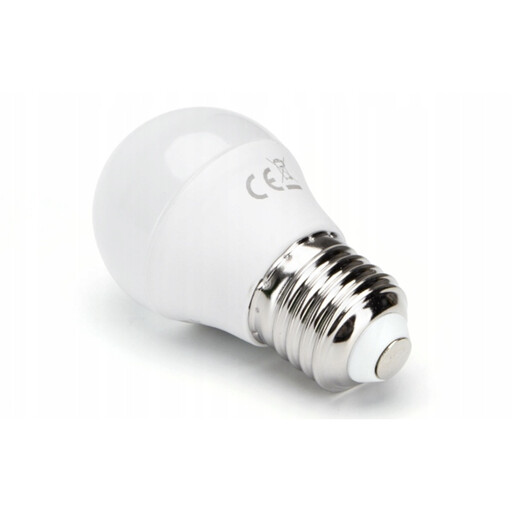
Why this product suits the profile: This compact E27 LED bulb is designed for standard indoor light fixtures and produces 510 lumens at 6 W. Its 3000 K colour temperature suits living rooms, bedrooms and dining areas.
The fitting, lumens, colour temperature and dimensions are clearly stated. This model is not listed as dimmable, so it should only be used with simple on/off switches.
E27 fitting, 510 lm, 3000 K and a 200° beam angle; suitable for many compact indoor light fixtures.
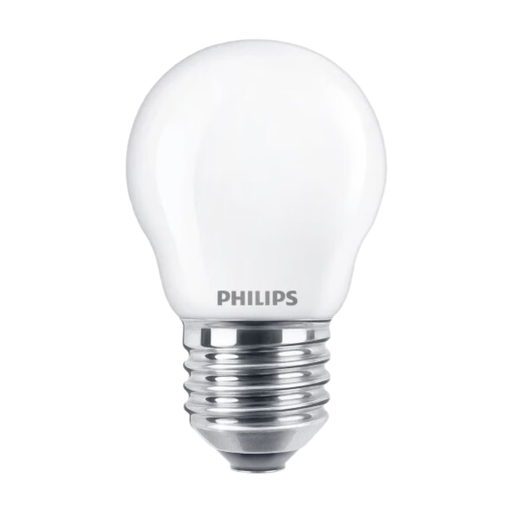
Why this product suits the profile: The matt P45 design, 2700 K colour temperature and 250 lumens are intended to provide softer general lighting indoors. The stated specifications also include 15,000 hours of operating life and 20,000 switching cycles.
The technical specifications explicitly state that the lamp is not dimmable. This helps you avoid pairing it with an unsuitable wall dimmer.
E27 base, matt P45 shape, 2700 K, Ra80 and energy efficiency class E according to the product specifications.
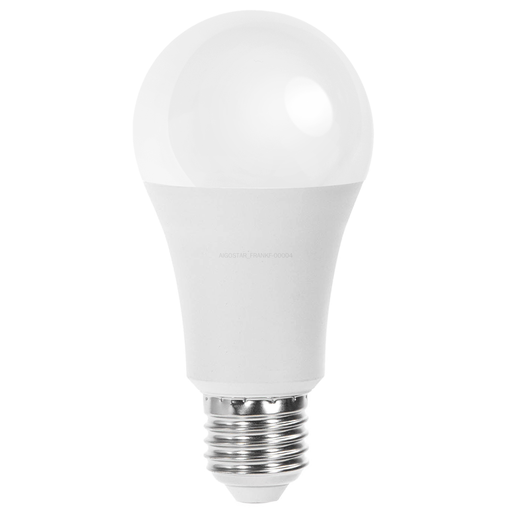
Why this product suits the profile: With 1500 lumens and a beam angle of 190°, this model is designed for areas where higher brightness and broad light distribution are required.
Brightness is assessed by luminous flux rather than wattage alone. IP20 and indoor use are also specified.
1500 lm, 3000 K, Ra≥80, E27 fitting and a stated lifespan of 15,000 hours.
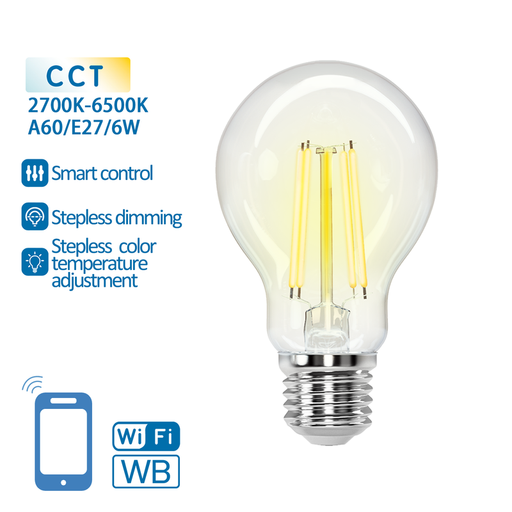
Why this product suits the profile: This Wi-Fi LED lamp delivers 850 lumens at 6 W, has an adjustable colour temperature from 2700 to 6500 K, and can be controlled via an app, Alexa and Google Home.
According to the product specifications, it connects directly via 2.4 GHz Wi-Fi without an additional gateway. Nevertheless, check before buying that your router provides this band.
E27 A60 shape, 850 lm, app control, schedules and adjustable warm to cool white light.
We have put together a complete, regularly updated list of products that fully meet these strict selection criteria and the safety regulations applicable in the EU.
This depends on the size of the room, the number of light fixtures and the desired lighting effect. A few hundred lumens may be sufficient for a decorative lamp. Higher values or several light sources are generally more suitable for central room lighting. Even distribution without distracting glare is key.
Manufacturers specify lifespan in operating hours and, in some cases, also in switching cycles. The selection includes examples with stated lifespans of 15,000 or 25,000 hours. High ambient temperatures, poor ventilation and frequent switching can affect the actual service life.
Running electricity costs mainly depend on wattage and operating time. A smart lamp can reduce unnecessary operating time through schedules or automatic switch-off. At the same time, it uses a small amount of energy in standby mode. For an objective assessment, consider power consumption, usage patterns and features together.