
Lieferung heute & morgen

Qualitätsgarantie

Willkommens-Angebote freischalten: KOSTENLOSE Lieferung | Bis zu 80 % RABATT | Kostenlose 30-Tage-JoyPlus-Testphase
App herunterladen
LED lamps and lights differ in more than just brightness and design. For homes, rented accommodation, offices and retail spaces, the key considerations are cap fitting, luminous flux, colour temperature, IP rating and connection type. If you focus solely on wattage, app features or an especially long lifespan, you can quickly end up with a model that is unsuitable for its intended location.
For LED products, wattage primarily indicates energy consumption. The luminous flux in lumens determines the actual brightness. For example, an E27 LED lamp with 9 W and 840 lm is suitable for general room lighting, while a small LED night light with 1 W and 40 lm is mainly intended to provide guidance.
A warm white LED lamp of around 2700 to 3000 K produces a calmer light for living rooms and bedrooms. More neutral or cooler light up to 6500 K can be useful for work surfaces or specific functional areas. The CRI or Ra value describes how naturally colours appear under the light. A value of Ra ≥ 80 is common for many everyday lights, but it does not replace checking whether the product is suitable for your specific use.
IP20 is intended for dry indoor areas and is not suitable for damp environments. For kitchens, bathrooms or cellars, a light with a higher IP rating may be more suitable, provided that it matches the specific installation location and the manufacturer’s specifications. With an LED downlight, the ceiling cut-out must also be the correct size. A model requiring a cut-out of 120 to 130 mm cannot easily be installed in a smaller opening.
For replaceable light bulbs, E27 LED lamps and GU10 LED lamps are particularly common. E27 is a screw fitting, while GU10 is typically used in spotlight fittings. Before buying, check the base, lamp dimensions and the maximum permitted wattage of the light fitting.
An LED ceiling light is usually mounted directly on the ceiling. For recessed versions, the installation depth, cut-out size and space for the driver are important. For rented accommodation, table lamps, floor lamps or plug-in lights can be a practical alternative, as they generally do not require permanent ceiling installation.
The luminous flux in lumens shows how much visible light a lamp emits. The beam angle determines how widely that light is distributed. An LED spotlight with a 120° beam angle is more suitable for broad general lighting than for a tightly focused accent. With a decorative light, however, you may prefer a narrower or directional beam.
A dimmable LED lamp must be explicitly labelled as dimmable. Not every light bulb works with an existing wall dimmer. With smart versions, brightness is often adjusted via an app, voice control or a manufacturer’s hub.
Smart LED lighting can communicate via Wi-Fi, Bluetooth Mesh or Matter. A Wi-Fi LED lamp often requires a 2.4 GHz network. Bluetooth Mesh lighting can connect multiple lights, but depending on the system, a gateway may be required for remote access or voice control. Matter-compatible lighting makes it easier to integrate lights with supported smart home platforms, but you should still check app, network and device compatibility.
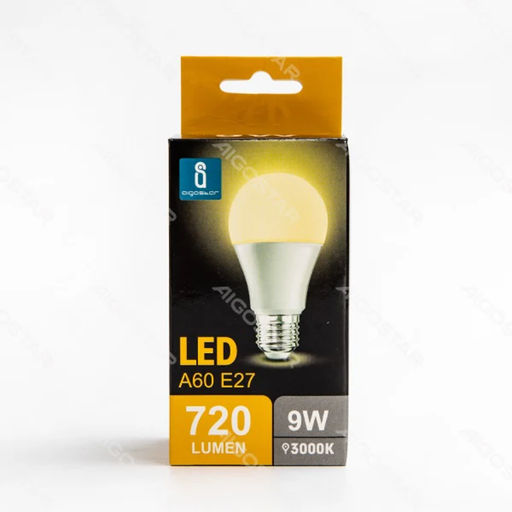
Why this product suits this profile: The standard E27 fitting and 840 lm make it suitable for many existing living room light fittings. The 3000 K colour temperature is designed for warm white general lighting.
The specifications state both the luminous flux and colour temperature. This makes it easier to compare the lamp with your existing lighting instead of looking only at the wattage.
9 W, 840 lm, 3000 K, 190° beam angle and a stated lifespan of 15,000 hours.
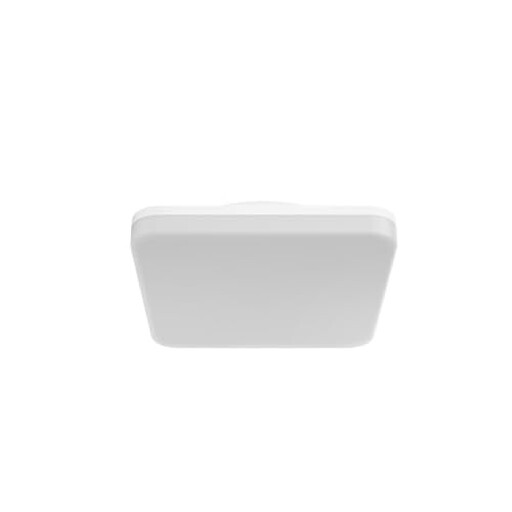
Why this product suits this profile: This light combines permanently installed ceiling lighting with app, voice and Matter control. It is designed for indoor areas such as living rooms, kitchens, bathrooms and cellars.
Compatibility is specifically stated for Matter, Apple Home, Google Home, SmartThings, Alexa and other systems. The IP54 rating is also specified.
18 W, up to 1,800 lm, RGBW, continuously adjustable dimming, 2700–6500 K and a direct Wi-Fi connection without a hub for the Hama Home app.
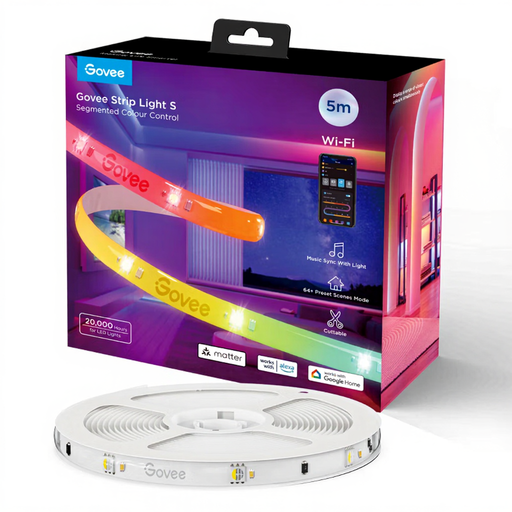
Why this product suits this profile: This LED strip light is suitable for indirect lighting, shelving, media areas or work environments. Segmented RGBIC control allows different colour zones along the strip.
The specifications explicitly state that it is for indoor use and warn against prolonged operation while rolled up. This reduces the risk of heat build-up caused by incorrect installation.
5 m length, Wi-Fi, Bluetooth and Matter, 24 W input power, plus app control with scenes and music synchronisation.
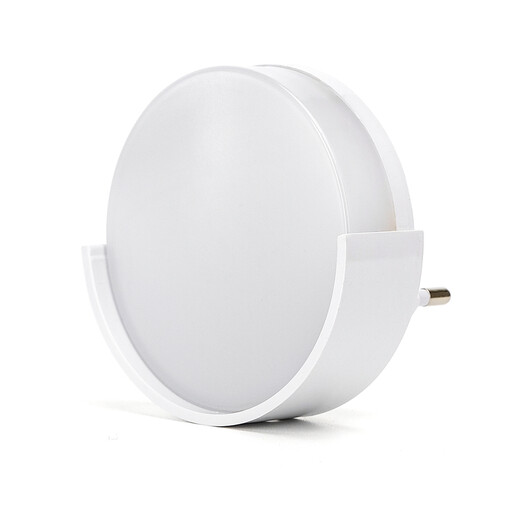
Why this product suits this profile: For hallways, stairwells or children’s bedrooms, this plug-in light provides automatic guidance when ambient light levels are low.
The integrated sensor switches the light on below 20 lux and off when there is sufficient daylight. No batteries or charging cycles are required.
1 W, 40 lm, 6500 K, IP20 for indoor use and a stated lifespan of 25,000 hours.
We have compiled a complete, regularly updated list of products that fully meet these strict selection criteria and the safety regulations applicable in the EU.
That depends on the size of the room, how it is used and the desired lighting effect. For general lighting, several lights with a medium luminous flux are often more even than a single very bright lamp. Work surfaces usually require more targeted lighting. As well as lumens, you should therefore check the beam angle and the position of the light fitting.
The stated lifespan is a manufacturer’s estimate and depends, among other things, on operating time, ambient temperature, ventilation and switching cycles. A light with 15,000 or 30,000 hours of stated life should not automatically be considered suitable if it is used in an enclosed, poorly ventilated fitting. The specified temperature range and installation requirements are therefore also relevant.
When switched on, consumption is determined by the stated power rating. A smart Wi-Fi or Bluetooth lamp may require additional energy in standby mode. If you are away for an extended period, it may be sensible to switch lights off completely, provided that remote control is not required. You can estimate running costs using the formula Watts ÷ 1000 × operating hours × electricity price.