
Lieferung heute & morgen

Qualitätsgarantie

Willkommens-Angebote freischalten: KOSTENLOSE Lieferung | Bis zu 80 % RABATT | Kostenlose 30-Tage-JoyPlus-Testphase
App herunterladen
Whether you need an LED desk lamp, rechargeable table lamp, children’s light or robust torch, the right lighting depends on where it will be used and on its technical specifications. Many products look similar at first glance, but can differ considerably in terms of power supply, protection rating, light output and controls.
A high lumen rating describes the luminous flux, not necessarily the range. A lamp with a wide beam can illuminate a room evenly, while a focused LED torch concentrates the light further. A long range is usually not important for a desk, but it can be useful when walking or camping.
Look for a specific IP protection rating. IPX4, for example, means protection against splashing water, not immersion. A lamp with an IP67 rating is protected against temporary immersion and dust, provided the manufacturer’s conditions are followed. Charging ports must be completely dry before charging.
Runtime depends on the brightness level, battery capacity and operating mode. With a rechargeable torch, you should always consider the stated runtime together with the light level used. With a rechargeable table lamp, it is also important to check whether it can be used while charging and which cable is included.
The unit lumen (lm) indicates luminous flux. Moderate levels are often sufficient for a bedside or decorative lamp. According to the product specifications, the Aigostar LED table and floor lamp produces 105 lm and has an adjustable colour temperature of 2700 to 6500 K. This is suitable for creating a subtle lighting effect, but it does not replace bright room lighting.
Colour temperature is measured in kelvin:
A dimmable LED lamp is practical when you need different brightness levels. Touch controls and several colour temperatures improve ease of use, but should be considered alongside the desired battery runtime.
Battery-powered models are ready to use immediately and are useful as a back-up during power cuts. However, replacement batteries create ongoing costs. A rechargeable torch can be cheaper and more convenient for everyday use, but it does need to be charged regularly.
With USB models, check whether a mains adaptor is included. The Aigostar ambient table lamp runs on DC 5 V and USB; according to the product description, an adaptor is not included. A USB-C torch, on the other hand, can often be charged using existing cables for a smartphone, power bank or laptop.
For an LED desk lamp, a stable base, adjustable lamp neck and glare-reduced light source are important. For portable lamps, weight, grip, switch and transport dimensions all matter. In a children’s room, lights should be placed out of the reach of young children. Button batteries and other batteries must be stored safely, as swallowing them can pose serious risks.
A camping lamp or robust outdoor lamp should be chosen based on specific information: IP protection rating, impact resistance, runtime, battery type and whether it can be operated while wearing gloves. Decorative LED string lights, on the other hand, should primarily be selected based on their length, power supply and intended area of use. For outdoor areas, the product description must expressly permit outdoor use.
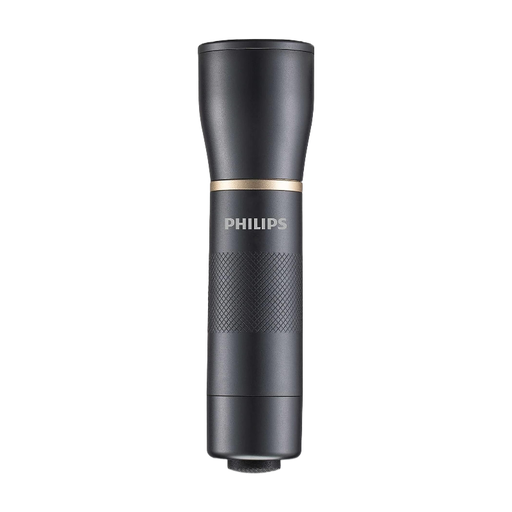
Why this product suits this profile: This battery-powered LED torch comes with three AAA batteries, so it can be used without charging first. It is suitable for use around the home, in the cellar and occasionally outdoors.
The technical specifications state 120 lm, a range of up to 140 m and IPX4. This makes the level of splash protection clearer than general marketing claims.
Aluminium housing, one-button operation and three AAA batteries included.
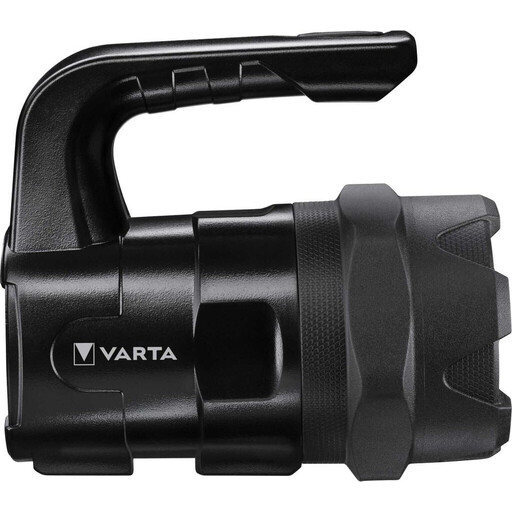
Why this product suits this profile: For emergency equipment, workshops, camping and more demanding outdoor situations, this model offers specific information about its protection and durability.
Rather than making vague claims about durability, the specifications state IP67, IK08 and a drop height of 4 m. The battery cover must be closed correctly to maintain the stated protection.
400 lm, a range of up to 400 m, two light modes and up to 85 hours of runtime according to the product specifications.
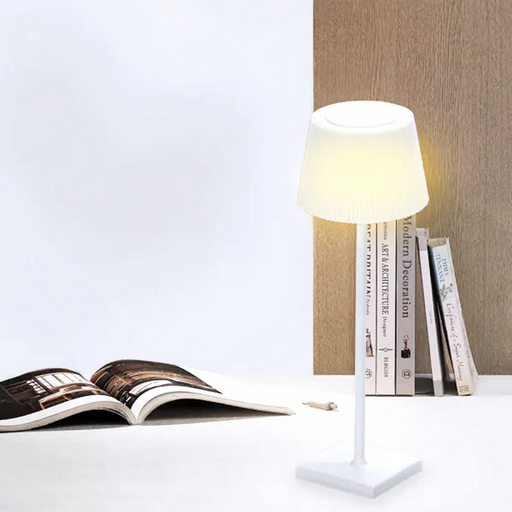
Why this product suits this profile: The flexible lamp neck, touch dimmer and three colour temperatures allow you to adapt the light for reading, writing and working.
The product specifications state 400 lm, 4 W, 3000/4000/5000 K and 5-V battery operation. This makes it easier to assess the brightness and colour temperature before buying.
Battery with 2 × 1800 mAh capacity, 1-m charging cable, stable base and IP54 rating for indoor use.
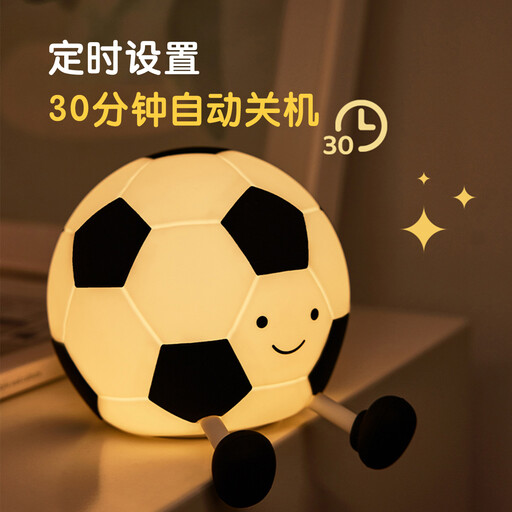
Why this product suits this profile: The soft silicone housing, three brightness levels and football design are ideal for a children’s room or a sports-themed setting.
The brightness can be set to one of three levels. However, the light is not designed to be immersed in water and should be kept away from heat sources.
1200-mAh battery, USB-C charging port, up to 6 hours of runtime at maximum brightness and charging indicator.
We have put together a complete, regularly updated list of products that fully meet these strict selection criteria and the safety regulations applicable in the EU.
Consumption depends on the power rating and operating time. A 4-W lamp used for ten hours consumes approximately 0.04 kWh in theory. Rechargeable models also incur charging losses. The ongoing cost therefore depends on the wattage, daily use and electricity tariff.
Lifespan is often stated in operating hours. The Aigostar Battery LED Desk Lamp, for example, is specified as lasting 25,000 hours. This is a manufacturer’s figure, not a guarantee for every usage scenario. Heat, moisture, frequent charging cycles and mechanical damage can affect the actual service life.
For occasional use, a compact lamp with spare batteries is sufficient. For regular camping, runtime, protection rating and ease of operation are more important. A USB-C torch is practical when a power bank is available. For consistently damp or dusty environments, a specific rating such as IP67 or IP68 should be stated. A children’s torch should be lightweight and must never be pointed directly at the eyes.