
Lieferung heute & morgen

Qualitätsgarantie

Willkommens-Angebote freischalten: KOSTENLOSE Lieferung | Bis zu 80 % RABATT | Kostenlose 30-Tage-JoyPlus-Testphase
App herunterladen
LED lamps are suitable for almost every area of the home: as an LED desk lamp for your workspace, an LED sensor night light in the hallway, RGB lighting in your gaming room or energy-efficient outdoor lighting for your patio and entrance. However, the extensive range makes comparisons difficult. Terms such as “smart”, “RGBIC” or “solar” alone reveal little about a product’s suitability for everyday use.
The Joybuy Product Recommendation Officer filters the most important product data and explains what buyers in Germany should look for in 2026.
Wattage indicates energy consumption, not the amount of light produced. For comparisons, the luminous flux in lumens is the key specification. A desk lamp with 400 lm may be sufficient for reading or focused work, while a small night light with 30 lm is mainly intended for orientation.
Also pay attention to the colour temperature:
Many dimmable LED lamps adjust their brightness directly via a touch surface, remote control or app. These control methods are not automatically compatible with one another. Check whether the lamp requires its own app, uses Bluetooth or can be integrated into an existing smart-home system.
With smart LED lamps, the Wi-Fi frequency, required bridge and supported platforms are also relevant. Matter-compatible lighting can simplify integration across multiple smart-home environments, but it generally requires a suitable hub or controller.
For outdoor use, the IP rating is an important specification. IP65, for example, indicates protection against dust and water jets from various directions. This does not mean the product is suitable for permanent immersion or every weather condition. Cables, power supplies and connectors must also be suitable for the intended application.
For a rechargeable table lamp, battery capacity, charging port and the actual usage scenario all matter. A higher capacity may enable longer operation, but runtime also depends on the selected brightness and colour.
In addition to lumens and colour temperature, the colour rendering index, CRI or Ra, is relevant. A higher value can make colours appear more natural. The Aigostar Battery LED Desk Lamp, for example, specifies Ra = 80. For general work and living areas, this provides a useful point of comparison.
RGB LED lamps produce coloured light for decorative scenes. For reading, crafts or concentrated work, there should also be a white-light mode with a suitable colour temperature. RGBIC light strips can display multiple colour zones simultaneously, while classic RGB strips often show only one colour along the entire strip.
Differentiate between:
For adhesive light strips, the surface should be clean, dry and smooth. An LED light strip should not remain tightly coiled during operation, as this can cause heat to build up. The power supply, cable length and permitted installation environment must also be checked.
Look for clear manufacturer and importer details, as well as the conformity information relevant to the product. A CE mark is a manufacturer’s declaration that certain EU requirements have been met; it does not replace an assessment of the specific installation conditions.
Electrical night lights should be kept out of the reach of young children unless the manufacturer expressly states otherwise. Disconnect lamps from the power supply before cleaning. For outdoor lights, consider the operating temperature range, moisture protection and the position of the solar panel.

Why it suits this profile: A portable LED desk lamp for desks, bedside tables or flexible workspaces without permanent wiring.
The product specifications state 400 lm, three colour temperatures from 3,000 to 5,000 K and touch dimming instead of making a blanket “smart” marketing claim.
Integrated battery with 2 × 1,800 mAh, 4 W power consumption, metal-and-plastic housing and a 1 m charging cable.
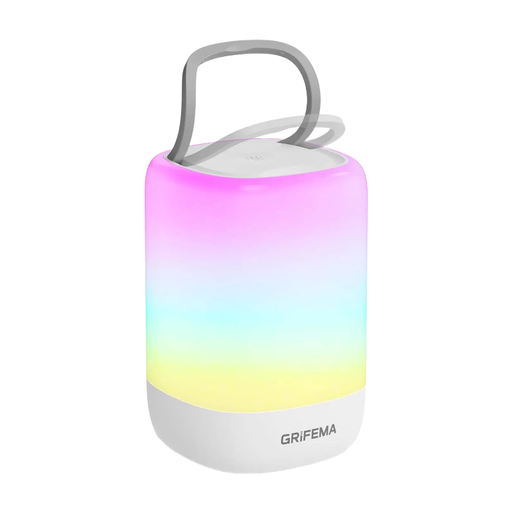
Why it suits this profile: This portable night light combines warm white light with seven RGB colours for bedrooms, children's rooms or camping.
Operation is controlled by touch, with dimming from 100% to 5% and a specified 30-minute timer.
USB-C charging, a 1,500 mAh lithium-ion battery and up to 15 hours of stated battery life.
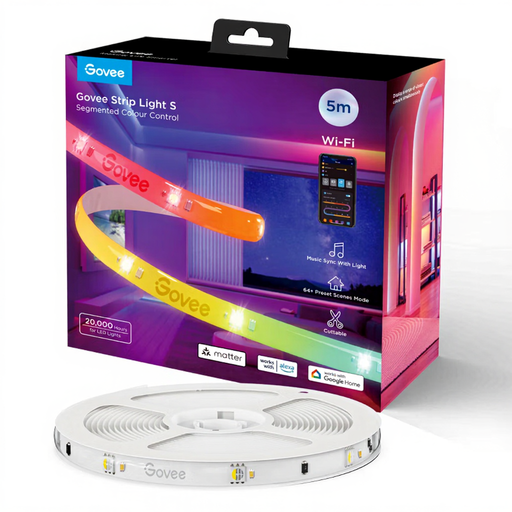
Why it suits this profile: Designed for gaming areas, home cinemas and decorative room lighting with app, voice and Matter connectivity.
The technical specifications explicitly state a length of 5 m, 24 W, 2.4 GHz Wi-Fi, Bluetooth and Matter support.
RGBIC segment control, 64 specified scene modes and an integrated microphone for optional music or gaming synchronisation.
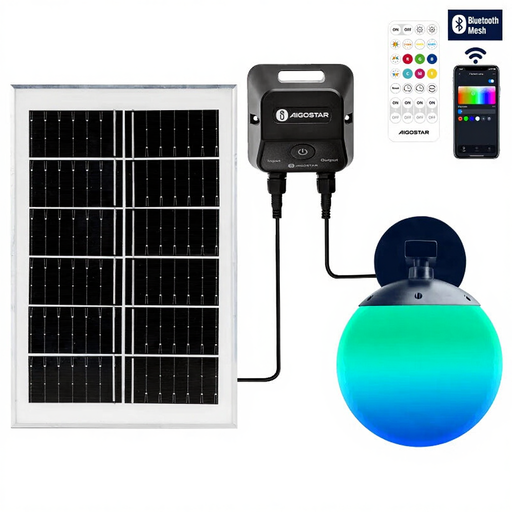
Why it suits this profile: A smart solar wall light for gardens, patios or entrances where no permanent power connection is available.
The IP65 rating, operating temperature range from −10 to 50 °C and separate solar panel provide concrete planning guidance.
RGBCCT from 2,700 to 6,500 K, Bluetooth Mesh control, a 5 m cable to the 5 W solar panel and a specified output of 200 lm.
Our complete selection of colour-changing lamps makes it easier to compare RGB, dimmable and smart models for indoor and outdoor use.
Running costs can be estimated as follows:
Power in kW × operating hours × electricity price = electricity costs.
A 4 W lamp consumes around 4 kWh over 1,000 operating hours. The exact cost depends on the individual electricity tariff. Consumption may vary in coloured modes, at maximum brightness or when integrated additional functions are active.
Lifespan is often specified in hours. The products mentioned, for example, list values of 25,000 or 30,000 hours. This is a manufacturer’s specification and does not guarantee the same service life in every installation scenario. Heat, moisture, frequent switching and the quality of the power supply can affect the actual operating life.
For hallways, bedrooms or children's rooms, low lumen levels, a low dimming setting and automatic control are practical features. An LED sensor night light switches on automatically when it gets dark. With plug-in models, keep the light away from curtains, bedding and other flammable materials, and follow the manufacturer's instructions.
That depends on the model. Some lamps initially work via touch or Bluetooth, while app control, voice control or remote access requires a Wi-Fi connection or smart-home hub. With Matter-compatible lighting, check before purchasing whether your existing system and controller are supported.
In addition to low power consumption, consider the IP rating, installation location, operating temperature range and availability of sunlight. A solar light should be positioned so that the panel is not permanently shaded. With Bluetooth Mesh lights, also consider the range between devices and whether multiple linked lights may be required.