
Lieferung heute & morgen

Qualitätsgarantie

Willkommens-Angebote freischalten: KOSTENLOSE Lieferung | Bis zu 80 % RABATT | Kostenlose 30-Tage-JoyPlus-Testphase
App herunterladen
The right outdoor LED Christmas lights should look attractive, be safe to use and suit the space you have available. In practice, poor purchases are often caused not by the LED technology itself, but by unclear information about weather resistance, cable length or power supply.
The IP44 rating means protection against solid objects larger than 1 mm and splashing water from different directions. It is suitable for sheltered outdoor areas such as balconies, patios or covered entrances. However, the power supply, plug or controller may still need to be kept dry.
For exposed areas that face harsher weather, a higher rating such as IP65 is more practical. It protects against dust and water jets. However, the rating applies only to the components marked accordingly. Before installation, check the full product description and safety instructions.
A 30 m LED fairy light string will not automatically cover 30 m of building frontage. The lead cable, spacing between the LEDs, bends and fixing points all reduce the length you can actually use. For windows, LED curtain lights with a set width and height are often a better choice than a long standard string.
Allow plenty of length for trees, railings or hedges. For an even effect, the number of LEDs and the spacing between them matter just as much as the total length.
“Warm white” can look different from one model to another. Warm white fairy lights often work well around windows, entrances and traditional Christmas decorations. Multicoloured fairy lights are better suited to parties, shop windows or eye-catching garden displays. Cool white gives a cleaner, higher-contrast look, but may feel less subtle in living spaces.
Also check whether a timer fairy light string or a remote-controlled fairy light string is actually included. Some models can only be operated using a button on the power supply.
For outdoor Christmas lighting, choose an IP rating that suits the installation location:
Position cables so they are not under tension, do not create a trip hazard and do not rub against sharp edges. Before hanging the lights, check for damaged cables and loose connections.
Mains-powered models provide consistent brightness regardless of the amount of sunlight. Solar fairy lights, on the other hand, need a suitable spot for the solar panel and enough daylight. Short winter days and cloudy weather can affect how long they stay lit.
Timers reduce the daily running time. Depending on the model, the lights may switch off automatically after 3, 5, 6 or 8 hours. A remote control is useful if the installation is difficult to reach. On products with a memory function, the last selected mode is saved when the lights are switched off and on again.
Flexible copper-wire lights are ideal for railings, plants and small objects. Curtain lights or shaped curtain lights can add a more structured look to windows and walls. A Christmas projector, on the other hand, lights up a larger area without the need to attach metres of cable.
A lit Christmas tree or an LED reindeer is a standalone decoration with a strong visual presence. Before buying, check the floor space, height, fixing method and cable length.
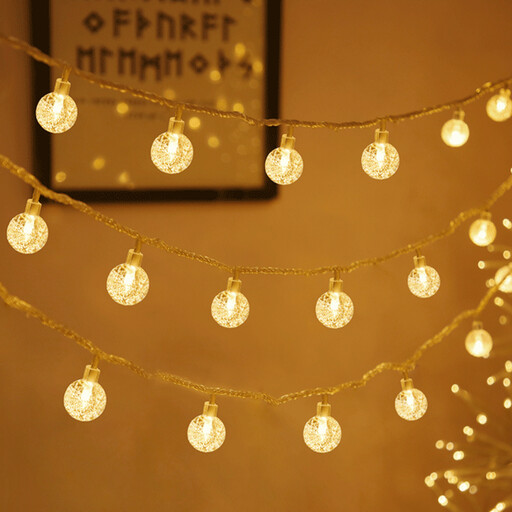
Why this product suits this profile: The 10 m version with 400 LEDs is suitable for balconies, smaller patios, window areas or individual planters. According to the product description, it offers eight lighting modes, a timer and a memory function.
Its manageable length makes it easier to plan how much area to cover. However, the IP44 rating should be understood as protection against splashing water, not as approval for heavy rain or snow.
10 m length, warm white light, eight modes, plus timer and memory functions, according to the product details.
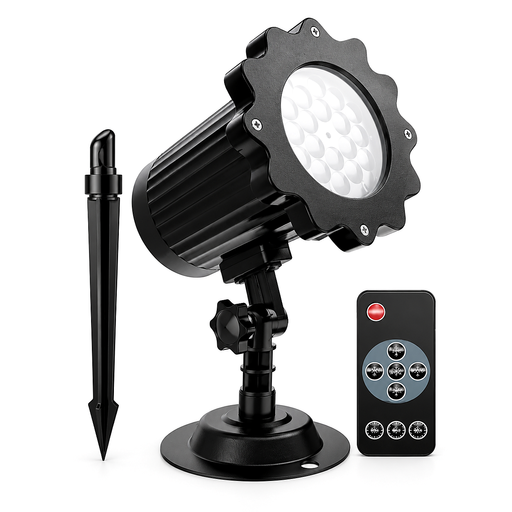
Why this product suits this profile: This projector is designed for anyone who wants to decorate a larger outdoor area without attaching long strings of lights to a wall or fence. The product description lists IP65 protection, a remote control and automatic shut-off after six hours.
Its stated IP65 rating makes it better suited than IP44 to a location more exposed to the weather. However, you should still follow the manufacturer's instructions for positioning and routing the cables.
Snowflake projection, 9-button remote control, automatic 6-hour shut-off and a projection area of up to 30 m², according to the product details.
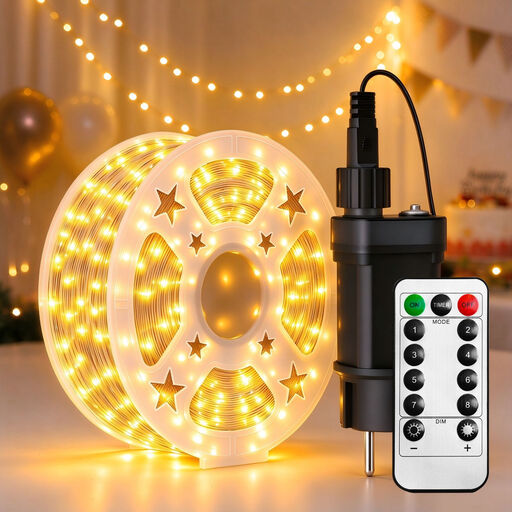
Why this product suits this profile: The flexible copper wire can be wrapped around railings, plants, furniture or signs. This makes the lights a versatile choice for Christmas, weddings, parties or seasonal displays.
The 4.5 V DC voltage and stated power consumption of around 3.6 W make the technical specifications clear. IP44 is still limited to sheltered outdoor areas.
30 m length, 300 warm white LEDs, eight modes and control by remote or button on the plug.
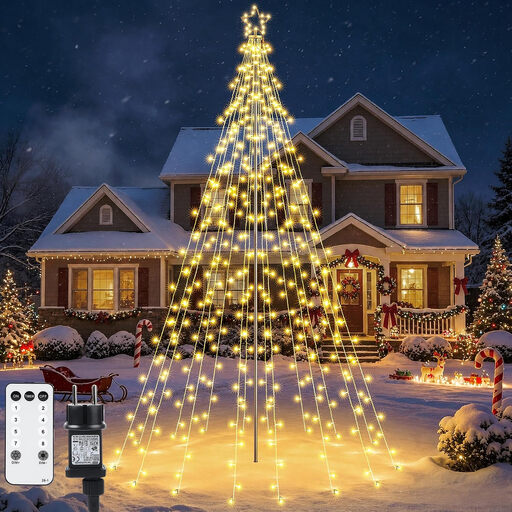
Why this product suits this profile: This freestanding lit Christmas tree makes a striking focal point in the garden, on the patio or in a shop window. A remote control, eight modes and four brightness settings let you adapt it to different occasions.
Its fixed height and metal frame make it easier to plan for than a string of lights that you need to wrap around an area. For outdoor use, make sure it is stable and the cable is protected.
2.3 m high, 274 warm white LEDs, 10 m lead cable, timer and four brightness settings, according to the product description.
We’ve put together a complete, regularly updated list of products that meet these strict selection criteria and fully comply with the safety regulations in force in the EU.
IP44 may be sufficient for covered areas, provided the power supply and controller stay dry. IP65 is a more suitable technical rating for installation locations that are more exposed to the elements. Check the ratings for the whole relevant system, not just the LED string.
Power consumption depends on the length, number of LEDs, power supply and how long the lights are used. The key figure is the power rating in watts. A timer can reduce the daily running time. Solar models do not use mains electricity while running, but how long they stay lit depends on the charge level and weather conditions.
Their actual lifespan depends on hours of use, temperature, moisture, storage and physical wear. LED products usually produce less heat than traditional bulbs. Even so, they should be stored somewhere dry and free from tension, in line with the manufacturer's instructions.