
Lieferung heute & morgen

Qualitätsgarantie

Willkommens-Angebote freischalten: KOSTENLOSE Lieferung | Bis zu 80 % RABATT | Kostenlose 30-Tage-JoyPlus-Testphase
App herunterladen
The right outdoor lighting should look decorative, work reliably and suit its location. But choosing the wrong product can lead to unnecessary expense: a string of lights may be too short, the solar panel may get too little sunlight, or an outdoor light may have an IP rating that doesn’t make it suitable for every type of weather.
This buying guide explains which details to check before you buy and which types of lighting are best suited to balconies, gardens, patios, front entrances and seasonal displays.
The IP44 rating means protection against solid objects larger than 1 millimetre and splashing water. This is suitable for many sheltered areas, such as a covered patio or balcony. However, a higher rating may be more appropriate in heavy rain, snow or permanently exposed locations.
IP65 also provides protection against dust and water jets. Even so, always protect power supplies, plugs, control units and USB connections from moisture as instructed by the manufacturer.
With outdoor LED string lights, the total length isn’t the only thing that matters. Check how much of the string is actually lit and how long the lead cable is. A 5-metre string may be enough for a balcony with 4 metres of railing. For a pergola or a longer hedge, 15, 50 or 100 metres may be more suitable.
Dimensions matter for curtain lights, too. LED string lights measuring 3 × 3 metres are suitable for a wall or window, but won’t necessarily cover a wide house façade.
Outdoor solar lights need a solar panel with access to enough light. In the shade, beneath a dense tree or on a north-facing wall, they may not stay lit for as long. Models with an additional USB-C charging option offer more flexibility if there’s little sunshine for several days.
A motion sensor can reduce energy use, but it can’t make up for an unsuitable installation position. For a solar light with a motion sensor, make sure the detection angle, range and mounting height suit the path, entrance or steps.
First, match the installation location to the right type of product:
Mains-powered lights operating at 220–240 volts should be installed by a qualified electrician. This is particularly important for fixed outdoor wall lights.
Warm white often has a cosy, yellowish tone and works well around seating areas, on balconies and as Christmas decoration. A warm-white string of lights is therefore better for creating atmosphere than for evenly lighting a path.
Cool white can feel more practical. RGB models create colourful effects, but should also have a suitable mode for more subtle everyday use.
Multiple light modes are handy for seasonal displays, but aren’t always essential. Check whether the lights are controlled by remote, switch or built-in controller. A memory function can save you from having to select your preferred mode every time you switch them on.
For a permanently connected light, such as the Westinghouse Winslett, also check that your existing dimmer is suitable for integrated LED modules. An external dimmer may not be included.
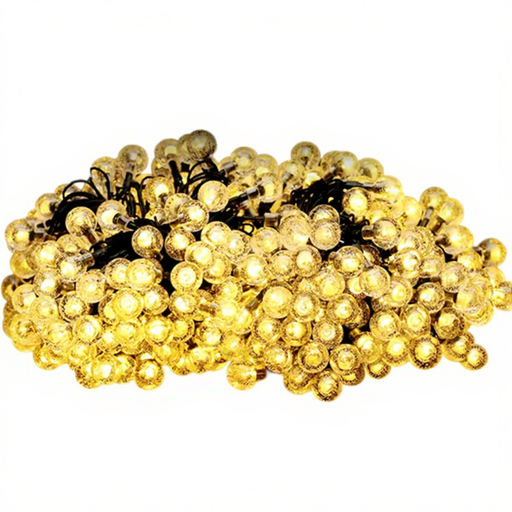
Why it suits this profile: This 5-metre battery-powered string of lights can be used without a power socket on a balcony, shelf or railing, or in a sheltered outdoor area.
The length, power supply and IP44 rating are clearly stated. The battery compartment must not be submerged in water.
50 LEDs, eight modes, a timer and memory function; runs on three AA batteries.
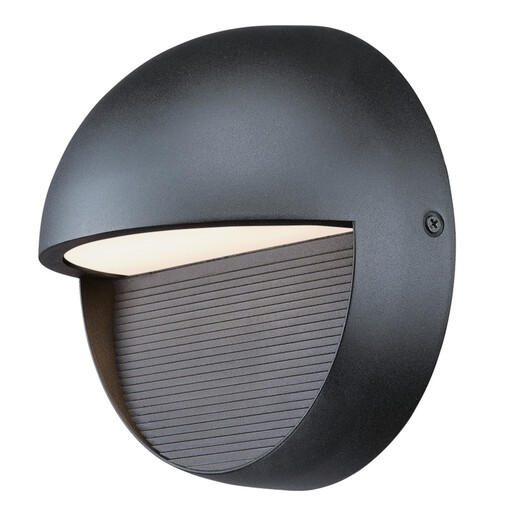
Why it suits this profile: This fixed outdoor wall light combines a compact housing with integrated LED lighting, making it suitable for an entrance, patio or garden wall.
The IP44 rating isn’t presented as complete waterproofing. The light must be installed correctly to maintain its level of protection.
10 W LED module, opal glass, 220–240 volts and dimming with a compatible external LED dimmer.
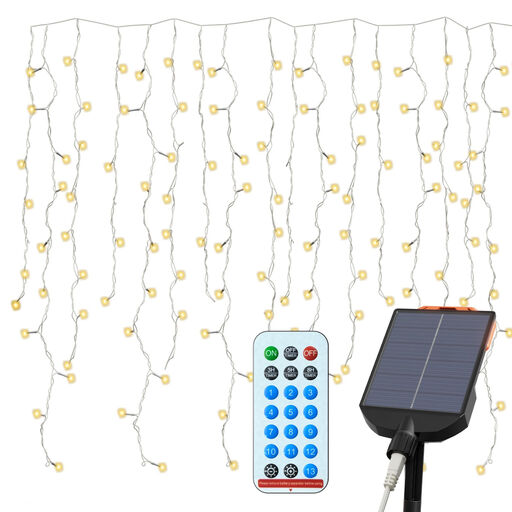
Why it suits this profile: This 50-metre solar-powered string of lights is designed for gardens, balconies, hedges and seasonal Christmas displays, without the need for a power socket.
The IP65 rating is specified for outdoor use. Even so, the panel should be installed in a spot that gets as much sunshine as possible.
200 warm-white LEDs, integrated light sensor, 13 lighting modes and cable-free installation with a ground stake.
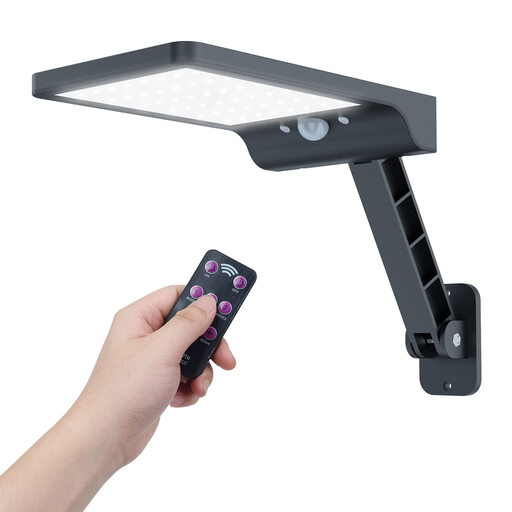
Why it suits this profile: This solar light is suitable for front entrances, steps, fences and paths where light is only needed when movement is detected.
The 120-degree PIR sensor and three operating modes let you choose between constant light, low-level lighting or motion-activated illumination.
IP65 housing, 2,200 mAh battery, detection range of 1–5 metres and remote control.
We’ve put together a complete, regularly updated selection of products that meet these strict criteria and fully comply with the safety regulations in force in the EU.
Energy use depends on the wattage, operating time and number of lights. A 10-watt LED module running for ten hours uses 0.1 kilowatt-hours. Solar and battery-powered lights don’t need a direct mains connection, but their run time depends on battery capacity, charge level and the weather.
IP44 is commonly used in sheltered outdoor areas. IP65 may be more suitable for locations that are more exposed. It’s important to consider not just the LEDs, but also the plugs, power supply, controller and installation position.
Lifespan depends on the LED module, electronics, battery, temperature, moisture and how often the lights are used. Any stated number of operating hours is a manufacturer’s estimate, not a guarantee of how long the lights will last in your particular outdoor space. Regular visual checks and dry storage when they’re not in use can help keep them working well.