
Lieferung heute & morgen

Qualitätsgarantie

Willkommens-Angebote freischalten: KOSTENLOSE Lieferung | Bis zu 80 % RABATT | Kostenlose 30-Tage-JoyPlus-Testphase
App herunterladen
An LED light bar can brighten worktops, make dark cupboard areas easier to access or provide indirect lighting for furniture. However, not every model is suitable for every application. Unclear information about colour temperature, power supply or IP rating often leads to unsuitable purchases.
Marketing terms such as “extra bright” say very little. More useful information includes luminous flux in lumens, wattage and colour temperature in Kelvin. For additional lighting inside a cupboard, a compact bar offering around 150 lumens may be sufficient. For a worktop or larger recess, the design, length and mounting position are just as important as the lumen value itself.
A self-adhesive LED strip usually sticks well to smooth, dry and grease-free surfaces. Dust, moisture, rough walls or silicone-based cleaning products can affect adhesion. Before installation, the surface should be cleaned and allowed to dry completely. In rented homes, magnetic holders or removable mounting systems are often more practical than permanent adhesive tape.
A USB-rechargeable LED lamp does not require a fixed power connection, but it does need to be charged regularly. A mains-powered LED light bar is better suited to continuous operation, but requires a socket. A smart LED light bar offers app, voice or Matter control, but may require a Wi-Fi connection and additional set-up steps. Before buying, decide whether portability, continuous operation or automation is your priority.
Colour temperature is measured in Kelvin (K):
An LED light strip with an adjustable colour temperature offers greater flexibility. With RGB or RGBIC LED strips, however, the focus is on colour effects. RGBIC can display several colour areas at the same time; this is not the same as showing one uniform colour across the entire length.
Measure the planned route before ordering. With a self-adhesive LED strip, you also need to allow for the power supply, connection cable and any necessary bending radii. Cutting is only permitted at the points marked by the manufacturer. Cutting in the wrong place can affect the electrical function.
For cupboards and kitchens, narrow LED light bars are often easier to align than a flexible strip. For example, a 42 cm bar is suitable for smaller compartments, mirrors or shelves. For longer areas, 5 m systems are a practical option, provided the power supply and mounting method are suitable.
Check whether the product uses a USB charging port, batteries or a mains adapter. For rechargeable models, capacity, charging time and expected operating time are important points of comparison. Motion sensors can reduce energy consumption, but their performance varies depending on the detection range and run-on time.
For dry indoor areas, IP20 is often sufficient. Areas that may be exposed to splashing water require a suitably higher IP rating. An IP44 model is not automatically suitable for immersion in water. Power supplies must not be covered and should be kept adequately ventilated.
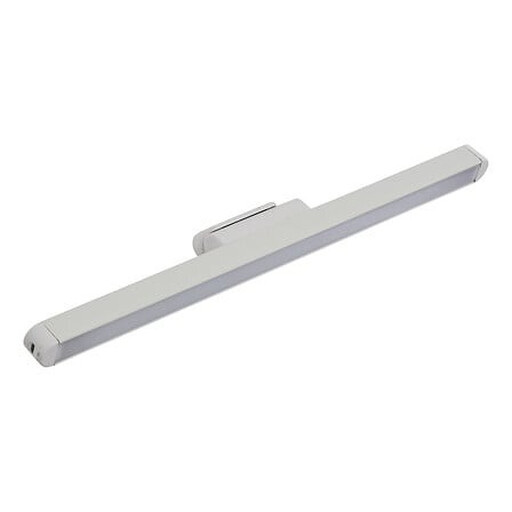
Why this product suits this profile: This compact LED light bar is designed for mirrors, cupboards, shelves and smaller indoor areas. USB charging and cordless operation are practical when there is no fixed power connection.
The specifications state a length of 42 cm, around 150 lumens and 4,000 K. This makes it easier to compare the bar with the available space before buying.
Integrated 2,000 mAh battery, USB charging and adjustable light direction. Designed for indoor use.
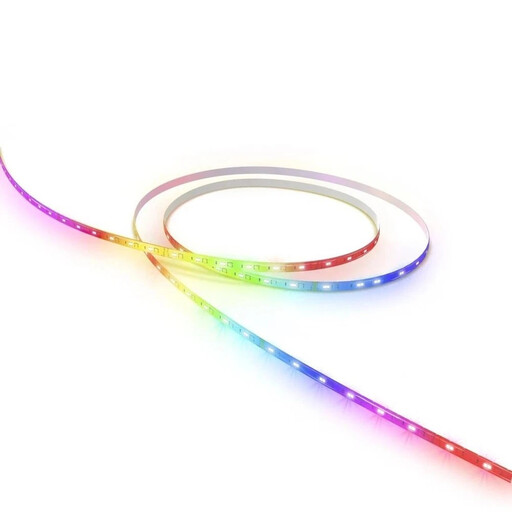
Why this product suits this profile: This Wi-Fi LED strip combines RGB colours with adjustable white light, seamless dimming and Matter support. It is well suited to smart homes where app and voice control are preferred.
The technical specifications explicitly state IP20 and use in dry indoor areas. Marked cutting points and a 2.4 GHz Wi-Fi connection are also required.
5 m length, 2,700–6,500 K, seamless dimming and Matter compatibility without an additional hub, according to the product description.
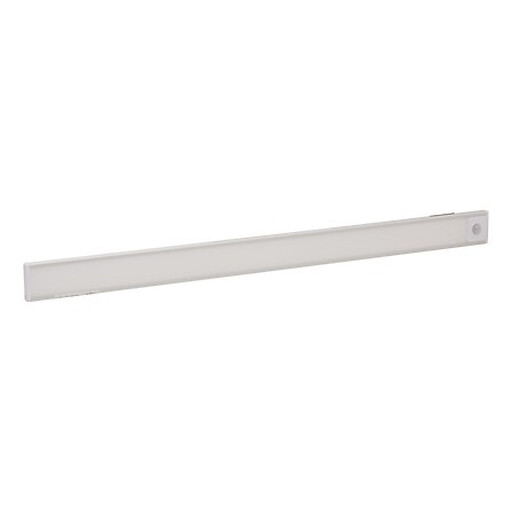
Why this product suits this profile: For wardrobes, dressing areas, kitchens or hallways, the 60 cm bar provides broader coverage and switches on automatically when movement is detected.
The product data states a detection range of around 2 m, a run-on time of approximately 30 seconds and a charging time of roughly 5 hours. This makes everyday planning easier.
3.7 V battery with 2,200 mAh capacity, magnetic support and 3M adhesive mounting without screws; designed for indoor use.
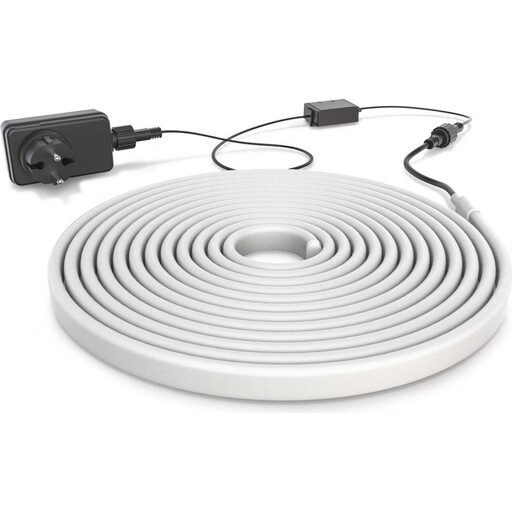
Why this product suits this profile: The flexible neon design is suitable for indirect accents on furniture, walls or covered outdoor areas. Matter, app, voice control and remote control provide several ways to operate it.
The stated IP44 rating clearly limits where it can be used: splashing water is acceptable, but immersion is not. Suitability should be checked separately for permanently exposed outdoor areas.
5 m length, RGBIC colour effects, dimming, 300 lumens and Matter compatibility according to the product specifications.
We have put together a complete, regularly updated list of products that fully meet these strict selection criteria and the safety regulations applicable in the EU.
First, check the length and position, unroll the strip and remove dust and grease from the surface. Allow it to dry completely, then gradually remove the protective film and press the LED strip down evenly. Tight 90-degree bends should be avoided. In rented properties, magnetic holders or reversible mounting solutions may be a suitable alternative.
The actual service life depends on factors including operating time, heat dissipation, power supply and product quality. An LED light bar should not be operated while permanently coiled, as heat can build up. With rechargeable models, usable battery capacity also decreases over the course of charging cycles. For a realistic assessment, specific manufacturer information about service life and warranty is more relevant than general marketing claims.
Consumption depends on wattage, operating time and the brightness setting. A 2.5 W model used for four hours a day requires significantly less energy in theory than a 24 W system. A smart LED light bar may also have a small standby consumption. To compare running costs, multiply the stated wattage by the daily operating time and your electricity price.