
Lieferung heute & morgen

Qualitätsgarantie

Willkommens-Angebote freischalten: KOSTENLOSE Lieferung | Bis zu 80 % RABATT | Kostenlose 30-Tage-JoyPlus-Testphase
App herunterladen
An LED light with a motion sensor is a practical solution for illuminating dark corners in your home, increasing safety in hallways and on stairs, or making the contents of cabinets visible without fumbling for a switch. The market offers a plethora of models, but not all of them deliver on their promises.
Many buyers experience frustration after a short time because their chosen light works unreliably or requires constant maintenance. Before you make a decision, you should be aware of three common weaknesses that can severely limit its everyday usefulness and lead to a bad buy.
To avoid these pitfalls, it helps to focus on a few crucial technical features. These parameters determine whether an LED light with a motion sensor is reliable and practical for daily use.
The choice of power source directly impacts flexibility and running costs.
A good automatic light needs two types of sensors to work efficiently:
The lighting atmosphere significantly contributes to your well-being. Many models offer customisable options here.
Based on these criteria, we have identified some products that represent a well-thought-out solution for different user profiles and applications.
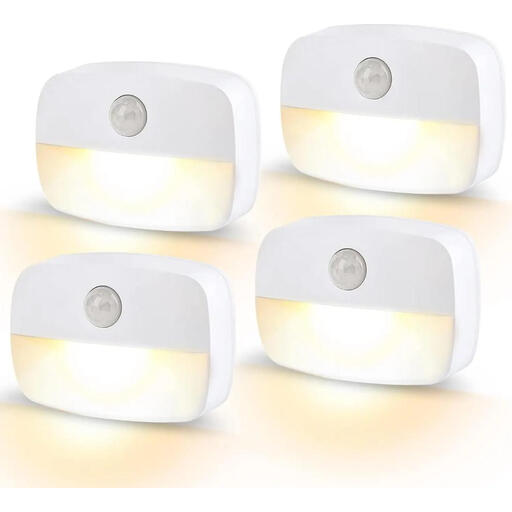
Why This Fits Their Persona: Ideal for renters or families who want to make multiple areas like hallways, stairs, and children's rooms safer at a low cost and without drilling. The 4-pack offers a straightforward solution for the entire house.
Instead of a built-in battery with a limited lifespan, this model uses replaceable AAA batteries. This gives you full control over its runtime and prevents the entire device from becoming useless if the battery fails.
Simple installation with adhesive pads and a set that covers multiple locations. The low energy consumption of 0.5W ensures a long battery life.

Why This Fits Their Persona: Perfect for anyone looking for a customisable wireless under-cabinet kitchen light or a bright cabinet light with a sensor. The three selectable colour temperatures allow for adaptation to any environment—from the workshop to the bedroom.
The integrated 1100mAh battery offers a solid runtime and is USB-rechargeable, reducing reliance on disposable batteries. The ultra-thin design and adhesive strip mounting provide a stable installation solution.
Three adjustable colour temperatures (Warm, Neutral, and Cool White) and USB charging. The 2-pack allows you to equip multiple areas with a single purchase.
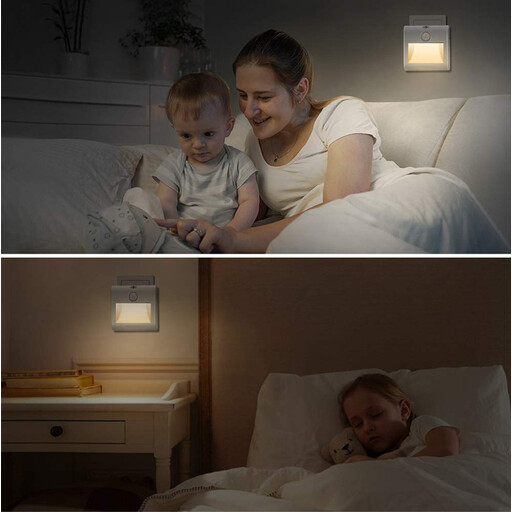
Why This Fits Their Persona: This dimmable night light is designed for users who want a permanent, maintenance-free solution for bedrooms or hallways. The memory function remembers the last brightness setting—ideal for waking up at night without being blinded.
As a mains-powered model, it completely eliminates worries about battery life or replacements. The sensor is calibrated to react only in darkness (≤20 LUX), preventing unnecessary daytime activations and saving electricity.
Stepless touch dimming with a memory function for personalised comfort. The dual operating mode also allows switching between continuous light and automatic mode.
We have compiled a complete, up-to-date list of products that fully meet these strict selection criteria and UK safety regulations.
How long does the battery last on an LED strip with a motion sensor? The battery life heavily depends on the battery capacity (mAh), the frequency of activations, and the set brightness. Models with a capacity of 1000 mAh or more can often run for several weeks to months with average use (approx. 5–10 activations per day) before needing to be recharged via a USB cable.
Can you easily install a cabinet light with a sensor yourself? Yes, most models are designed for easy self-installation. Magnetic mounts that are attached to the desired surface with an adhesive strip are common. The light itself then magnetically attaches to the mount and can be easily removed for charging. For a permanent bond, it is important to thoroughly clean and dry the surface before applying the adhesive.
Does the light also activate in daylight? High-quality models feature an integrated dusk or light sensor. This prevents the light from turning on when there is sufficient ambient light. This is an important energy-saving feature and should be considered when choosing, especially for rechargeable and battery-operated devices.