
Lieferung heute & morgen

Qualitätsgarantie

Willkommens-Angebote freischalten: KOSTENLOSE Lieferung | Bis zu 80 % RABATT | Kostenlose 30-Tage-JoyPlus-Testphase
App herunterladen
An LED light strip can flexibly illuminate furniture, TV walls, gaming setups or your car interior. In practice, however, people often end up with the wrong purchase because of unclear length specifications, unsuitable power supplies or exaggerated promises about app and colour effects. If you check a few technical points before buying, you’ll find it much easier to choose the right solution for where you plan to use it.
For many products, the length refers to the total strip length. Connection cables, control boxes or unusable end sections are sometimes included in that figure. For a TV backlight, you also need to consider not just the screen diagonal but the route the strip will take around the back.
Before you buy, measure the distance you need to cover and check:
An LED TV backlight set may be designed for a specific screen size. The Govee Envisual TV Backlight T2, for example, is intended for televisions from 55 to 65 inches and should not be cut, according to the product information.
A standard RGB LED strip usually shows one colour across the whole strip. With RGBIC LED strips, multiple sections can display different colours at the same time. This allows colour gradients, chasing light effects and dynamic scenes.
RGBCCT adds adjustable white tones to the RGB colours. The Hama LED Strip RGBCCT, for instance, offers colour temperatures from 2,700 to 6,500 Kelvin, according to the product details. This matters if you want the strip not just as ambient lighting but also for a more neutral or warmer light mood.
The figure “16 million colours” describes the range of colours available, but on its own it tells you little about brightness, colour transitions or how evenly the light is spread. Also look out for:
An LED strip with app control can communicate via Bluetooth, Wi-Fi or both. Bluetooth is usually fine for controlling the strip when you’re nearby. A Wi-Fi LED strip can typically be operated remotely too, but it needs the right network connection.
For Matter-compatible products, check whether you have a compatible smart home hub and whether the platform you want is supported. Matter makes it easier to integrate with systems like Apple Home, Google Home, Amazon Alexa or Samsung SmartThings, but it doesn’t necessarily replace every manufacturer-specific app.
Many smart home products also require a 2.4 GHz Wi-Fi connection. The Govee model with Matter support lists Wi-Fi, Bluetooth and Matter as connection options. With other products too, the setup, features and voice control may depend on the specific app.
For indoor use, LED light strips are usually powered by a mains adapter. Check that the voltage and power rating of the adapter match the product. A power supply that’s too weak or not designed for the strip can cause flickering, malfunctions or damage.
For LED car interior lighting, the conditions are different. The vehicle products mentioned here operate on 12 volts (or a range of 10 to 16 volts), according to the product information. They are designed to be connected in a vehicle and cannot be used with a standard household power supply. Cables should be routed so they don’t interfere with pedals, airbags, the steering wheel or seat adjustments.
The level of protection is given by the IP code. IP20 is for dry indoor areas and offers no protection against water. IP44 protects against solid objects and splashing water from any direction, but it isn’t suitable for immersion.
An LED strip with IP44 could therefore be used in sheltered areas such as a covered terrace, depending on where you mount it. For bathrooms, kitchens or outdoor areas, follow the specific installation instructions and any limitations from the manufacturer. Power supplies and connections must be kept dry unless the product explicitly states otherwise.
Adhesive surfaces hold best on clean, dry, smooth surfaces. Dust, grease, rough walls and heat can all affect adhesion. An LED light strip should not be operated while tightly coiled for long periods, as heat can build up.
Also check whether the product:
An LED light bar with a motion sensor is ideal for cupboards, hallways or work surfaces, for example. The 60 cm model from OSRAM is designed for indoor use. Another 60 cm model, according to the product details, features USB charging, a magnetic mount, a detection range of around two metres and an automatic light duration of roughly 30 seconds.
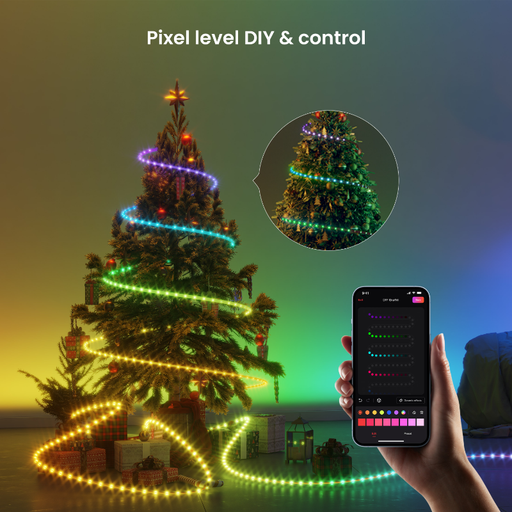
Why this product fits the profile: The compact length is ideal for desks, shelves, smaller TV areas and gaming setups where space is limited.
The stated length of 2 m makes planning easier when you don’t need large-scale room lighting.
RGBIC technology and flexible use for rooms, TVs, desks and gaming ambience.
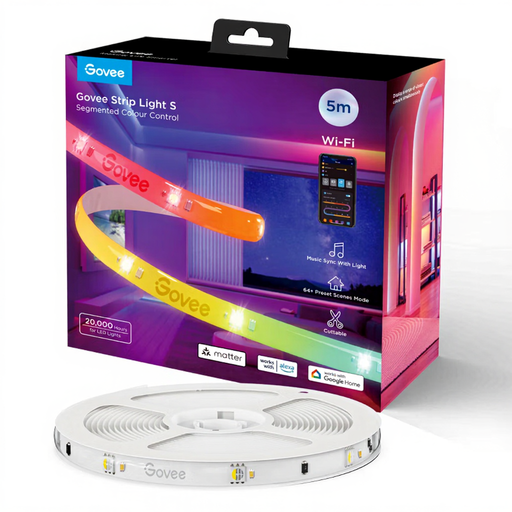
Why this product fits the profile: For users who want a 5 m solution with segmented colour display, app control and integration with multiple smart home platforms.
Matter, Wi-Fi and Bluetooth are clearly stated; there is also a warning against operating it while coiled up.
5 m length, RGBIC segment control, Matter support and built-in music sync, according to the product details.

Why this product fits the profile: This set is aimed at drivers who want to light up several areas individually, such as the footwell, door handles and dashboard.
The vehicle voltage of 12 V, multiple separate strips and the intended app control are all stated in the product details.
Acrylic light guides, multiple controllers, Bluetooth app, music sensor and cuttable strips, according to the product description.
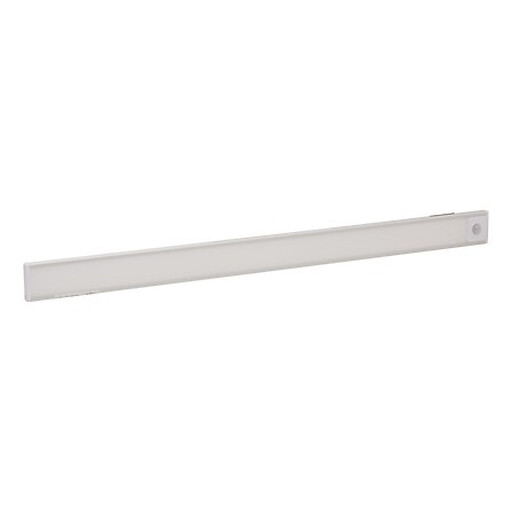
Why this product fits the profile: Suitable for wardrobes, shelves, work surfaces and other indoor areas where you need light without a fixed wiring installation.
Motion detection, USB battery and magnetic mount make installation independent of a fixed power supply.
2,200 mAh battery, 6,000 Kelvin light, motion detection up to around two metres and automatic switch-off, according to the product details.
We’ve put together a full, regularly updated list of products that meet these strict selection criteria and the safety regulations that apply in the EU.
The lifespan depends on the quality of the LEDs, heat dissipation, how long it’s used for, the power supply and the installation. It’s not possible to give a reliable general figure without specific information from the manufacturer. To get the longest life from your strip, don’t cover it, don’t keep it tightly coiled and always use the correct power supply.
The running costs depend on the power rating and how many hours a day you use it. Here’s the simple calculation:
Power in watts ÷ 1,000 × hours of use × electricity price per kilowatt-hour
For a 24-watt strip used for three hours a day, that works out at 0.072 kilowatt-hours per day. To calculate the exact cost, use your current electricity tariff.
No. Many models can only be cut at marked points. With TV sets like the Govee Envisual T2, cutting is not intended, according to the product details. Cutting can also affect the control, sync or ingress protection. So check the instructions before you install it and plan your route carefully.