
Lieferung heute & morgen

Qualitätsgarantie

Willkommens-Angebote freischalten: KOSTENLOSE Lieferung | Bis zu 80 % RABATT | Kostenlose 30-Tage-JoyPlus-Testphase
App herunterladen
An LED light strip can illuminate dark shelves, worktops or wardrobes without extensive installation. Even so, unclear product specifications and unsuitable features often lead to disappointing purchases. The key consideration is not simply the number of LEDs, but whether the length, power supply, colour temperature and installation method suit the intended use.
A high wattage does not automatically mean suitable illumination. Lumens and the distance from the illuminated surface provide a more useful indication. For example, a strip producing around 150 lumens can provide additional visibility inside a wardrobe or around a mirror. A much higher light output may be needed for a longer worktop.
Also check whether the stated brightness applies to the entire strip or to individual LEDs only. For an under-cabinet LED light in the kitchen, the light distribution should be as even as possible to prevent pronounced shadows across the worktop.
An LED light strip with a motion sensor is practical for wardrobes, hallways and kitchen cupboards. However, the sensor only responds within a specific range. With a model offering a detection range of around two metres, positioning can be crucial. The time the light stays on after motion is detected is also important: automatic shut-off after around 30 seconds saves energy, but may require you to move frequently during longer tasks.
You should therefore check whether the strip can also be operated manually and whether the sensor could be obstructed by doors, shelves or other objects.
A rechargeable LED strip or wireless LED light does not require permanent wiring. However, the integrated battery needs to be charged regularly. Information such as battery capacity, charging time and expected operating time helps with planning. With an LED strip featuring a 2,200-mAh battery, for example, a charging time of around five hours and a stated operating time of approximately 4.5 hours may be relevant.
For areas that need continuous illumination, a mains-powered solution is more suitable. A USB LED light strip should also only be operated with a suitable USB power source.
Measure the available space before buying. A 20-cm strip fits into narrow compartments, while 42 or 60 cm can provide broader illumination. With a 5-m light strip, you should also check whether the length can be adjusted and whether the socket and cable route are accessible.
For rented properties, magnetic mounts, adhesive strips or self-adhesive backings are worth considering, as they usually require no drilling. The mounting surface should be clean, dry and free from grease. Adhesion may be limited on rough or damp surfaces.
Colour temperature is measured in Kelvin:
An RGB LED strip is mainly suitable for decorative applications. For preparing food or reading labels, white light is usually more practical. With an LED light strip with remote control, check the range, battery type and available functions.
Not every light strip is suitable for damp areas or outdoor use. The level of protection is indicated by an IP rating. A product with IP20 is designed for dry indoor spaces and should not be used in direct contact with water or high humidity. USB charging ports and batteries must also be protected from moisture.
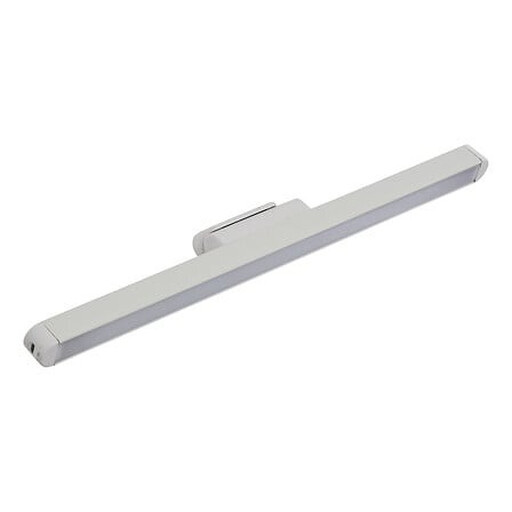
Why this product suits this profile: The 42-cm strip is designed for mirrors, cupboards, shelves and smaller indoor areas. USB charging and an integrated 2,000-mAh battery allow you to use it without a permanent power cable.
The stated light output of around 150 lumens and neutral colour temperature of 4,000 K make the expected performance easier to assess than a wattage figure alone.
USB charging, detachable strip and adjustable light direction; suitable for dry indoor spaces.
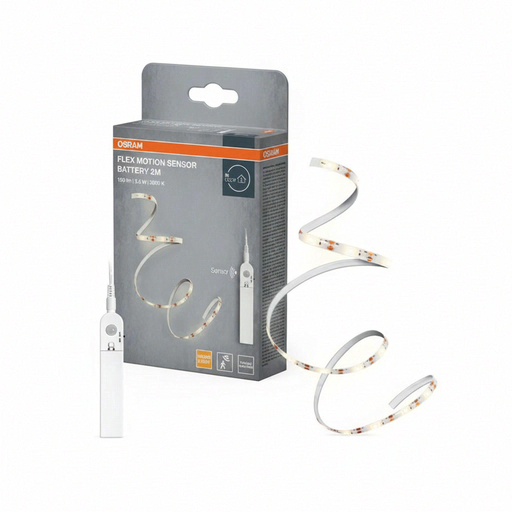
Why this product suits this profile: The product name specifies a white LED strip with a motion sensor and a length of two metres. This makes it suitable for longer indoor areas such as cupboards or hallways, provided the installation conditions are suitable.
The motion sensor helps prevent the common problem of difficult operation in hard-to-reach areas. Before buying, check the range, power supply and installation instructions.
White light and an integrated motion sensor according to the product name; designed for indoor use.

Why this product suits this profile: Two 30-cm strips with a PIR sensor, three selectable colour temperatures and USB charging are suitable for several cupboards, kitchen areas or hallways.
The three colour temperatures mean you do not have to use a single colour of light in every room. However, the sensor range of around 3 to 5 metres still depends on how the light is installed.
2-pack, 41 LEDs per strip, PIR detection and 1,100-mAh battery; adhesive-strip installation with no drilling.
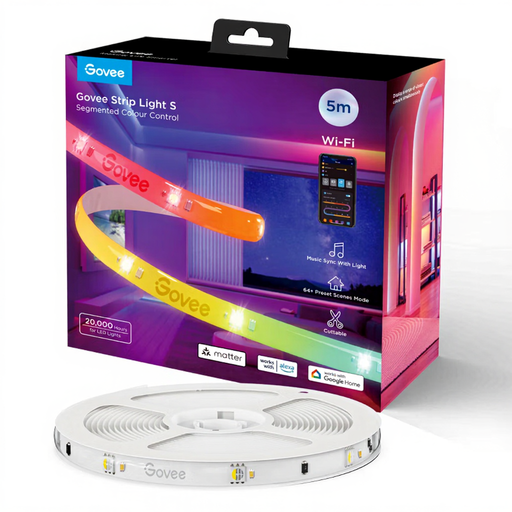
Why this product suits this profile: The 5-m strip is aimed at users looking for colourful scenes, app control and smart home integration for living spaces, gaming areas or home cinemas.
The stated indoor-only use makes the product’s limitations clear. The strip should not be left coiled while operating and should not be used in damp areas.
Wi-Fi, Bluetooth and Matter support according to the product description; RGBIC control of individual sections and app integration.
We have put together a complete, regularly updated list of products that fully meet these strict selection criteria and the safety regulations applicable in the EU.
For an under-cabinet LED light, the mounting surface should be dry, clean and as level as possible. Self-adhesive or magnetic models can often be installed without drilling. With mains-powered strips, you need to consider the socket, cable routing and distance from water sources. An IP rating such as IP20 is intended only for dry indoor spaces.
The actual operating time per charge depends on brightness, sensor use and battery capacity. Manufacturer specifications such as 800, 1,100 or 2,200 mAh describe battery capacity, not the operating time directly. Usable capacity may decrease as the number of charging cycles increases. For a realistic choice, compare the stated operating time and charging time with your daily usage pattern.
LEDs generally require less electrical power during operation than many older light sources. With a USB or battery-powered strip, most of the energy is used during charging. Motion control can reduce the amount of time the light is switched on. For a mains-powered 5-m strip, multiply the stated power consumption, for example 22 W, by the daily operating time to estimate ongoing energy use.