
Lieferung heute & morgen

Qualitätsgarantie

Willkommens-Angebote freischalten: KOSTENLOSE Lieferung | Bis zu 80 % RABATT | Kostenlose 30-Tage-JoyPlus-Testphase
App herunterladen
An LED light strip can provide targeted lighting for rooms, shelves or worktops. However, when buying one, the number of colours or the advertised app is not all that matters. Incompatible lengths, weak adhesive surfaces or missing power-supply details often lead to disappointment in everyday use.
This guide explains which technical features matter and which LED strip is best suited to different uses.
An LED strip 5 m is suitable for longer furniture edges, TV walls or indirect room lighting. However, this length may be unnecessary for a shelf or wardrobe. Before buying, measure the distance and also consider where the power supply, control box or connector will be positioned.
Also pay attention to the bend radius. An LED strip should not be sharply folded around corners, as this can put strain on the tracks and LEDs. For longer runs, a suitable LED strip extension may be a better choice than an overly long strip with an awkward leftover section.
A conventional RGB strip generally displays one uniform colour across its entire length. An RGBIC LED strip can control multiple segments independently at the same time. This makes colour gradients, running-light effects and separate colour zones possible.
This is useful for ambient lighting or gaming lighting. However, if you simply need even lighting behind a cabinet or beneath a shelf, you may not need this feature. Check whether your intended use will genuinely benefit from segmented control.
‘App control’ does not automatically mean that a product works with every smart home platform. Check whether the device connects via Wi-Fi, Bluetooth or a standard such as Matter.
Depending on the hub you already use, a Matter LED strip can make integration with Apple Home, Google Home, Alexa or Samsung SmartThings easier. For a Wi-Fi LED light strip, it should also be clearly stated which frequency band is supported. According to the product details, the Govee model featured here uses 2.4 GHz Wi-Fi. A Bluetooth LED strip can be convenient for local setup, but it does not necessarily offer the same range or remote-control options as a Wi-Fi model.
Measure the area you want to illuminate in advance. Flexible LED light strips are commonly used behind TVs, on desks and along longer sections of wall. For cabinets, hallways and worktops, a rigid LED light bar with motion sensor may be more practical.
The light colour is also important:
Mains-powered LED light strips provide a consistent power supply but require a socket. A USB-rechargeable LED light bar can be installed more flexibly and is suitable for areas without a permanent power connection. However, the charging time and battery life must suit how you intend to use it.
According to the product details, the 60 cm model featured comes with a 3.7 V, 2200 mAh battery, a charging time of approximately five hours and a runtime of around 4.5 hours. Actual runtime may vary depending on the operating mode and charge level.
Adhesive surfaces generally stick better to dry, smooth and dust-free surfaces. Rough walls, greasy surfaces or frequent temperature changes can affect how long the installation remains secure. A magnetic holder or aluminium housing can provide extra flexibility when installing lights on furniture.
Pay attention to the intended area of use. According to the product description, the Govee product is designed for indoor use. It should not be used in damp areas. An LED light strip should also not be left rolled up for long periods while switched on, as heat can build up.
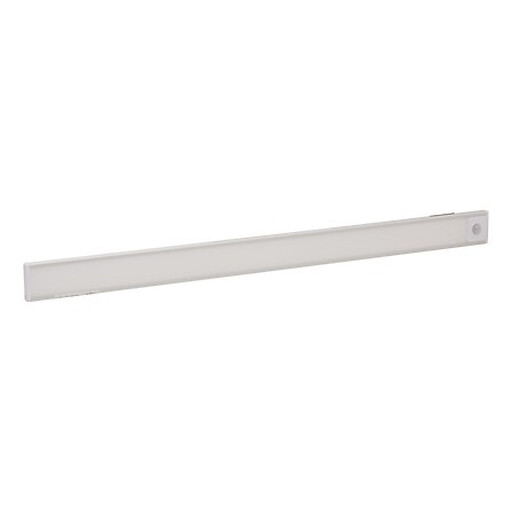
Why this product suits this profile: The compact light bar is designed for cabinets, shelves, worktops and hallways, with no permanent wiring required.
The length is clearly stated, the battery charges via USB and a motion sensor handles automatic switching on and off.
60 cm length, 6000 K light colour, USB-rechargeable 2200 mAh battery, plus installation with adhesive strips and magnets.
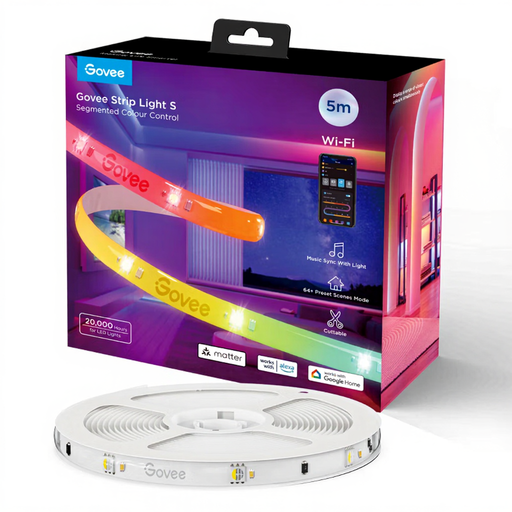
Why this product suits this profile: The 5 m strip is aimed at users who want to combine segmented colour effects with multiple smart home integrations in one product.
The product details specify the length, power consumption, connection types and intended indoor use. This makes it easier to check compatibility with your own installation.
5 m length, RGBIC segment control, 2.4 GHz Wi-Fi, Bluetooth, Matter support and protective coating according to the product description.
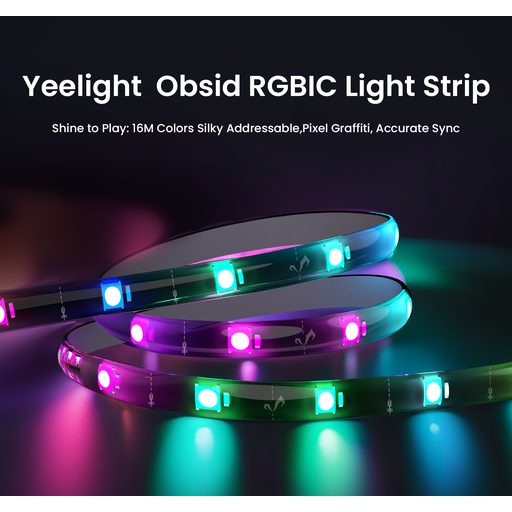
Why this product suits this profile: The one-metre extension is designed for users who want to extend a compatible Yeelight system, for example around a desk, TV or gaming setup.
As an extension, the additional length is clearly stated. Before buying, check that you already have a compatible Yeelight strip.
1 m extension and RGBIC lighting according to the product name; suitable for room, TV, desk and gaming applications within a compatible system.
We have put together a complete, regularly updated list of products that fully meet these strict selection criteria and the safety regulations applicable in the EU.
Clean the surface, allow it to dry completely and measure the area before applying the strip. Press the strip into place section by section. Sharp 90-degree bends should be avoided. With longer models, the control box and power supply must remain accessible.
Service life depends on factors including operating hours, heat generation, power supply and installation. An LED strip should not be operated while permanently rolled up. With battery-powered light bars, battery ageing is also an important factor. Manufacturer lifespan claims should be treated as a guide rather than a guaranteed period.
You can estimate the costs using the following formula: power in watts × operating hours ÷ 1000 = kilowatt-hours. For a product rated at 24 W and used for four hours per day, for example, daily consumption is 0.096 kWh. To calculate the actual cost, multiply this figure by your current electricity tariff. Dimming functions and shorter operating times can reduce consumption.