
Lieferung heute & morgen

Qualitätsgarantie

Willkommens-Angebote freischalten: KOSTENLOSE Lieferung | Bis zu 80 % RABATT | Kostenlose 30-Tage-JoyPlus-Testphase
App herunterladen
LED light strips are suitable for vehicle interiors, furniture, shelving, worktops and gaming areas. The choice ranges from simple 230-volt models with remote controls to connected RGBIC systems with app control, voice control and music synchronisation. What matters is not the longest list of features, but the right combination of power supply, installation, controls and intended use.
A product description such as “5 metres” does not automatically indicate the usable lighting performance. Check whether the length includes the connection cable and how many LEDs are installed per metre. With long LED strips, brightness may decrease towards the end if the power supply, voltage or conductor tracks are not suitably designed.
A high number of LEDs alone is not a sufficient indicator of quality. Colour technology, LED spacing, diffuser and power supply all affect light distribution. Indirect lighting behind a television has different requirements from lighting for a worktop or a car footwell.
A self-adhesive LED strip adheres most reliably to clean, dry and smooth surfaces. Dust, grease, silicone, rough wood grain and damp surfaces can reduce adhesion. When installing strips on furniture or shelving, clean the surface beforehand and press the strip down evenly once it has been attached.
When fitting around curves, do not sharply bend the strip at the LED components. Gentle curves or suitable corner connectors are ideal for corners. With an acrylic or fibre-optic system, you should also ensure that the optical fibre is not cut in half or bent excessively.
Depending on the model, an LED light strip with app control may require Bluetooth, Wi-Fi or both. Bluetooth is suitable for local control, while Wi-Fi- and Matter-enabled products can be integrated into a smart home system. Also check whether a power supply is included and what voltage is required.
For an LED strip for a car interior, a 12-volt power supply is usually intended. A household power adapter must not simply be used in a vehicle. Installation should ensure that cables, the controller and the lights do not interfere with pedals, airbags, the driver’s field of vision or operating controls.
Compare the input voltage specified by the manufacturer with your intended place of use:
An LED light strip with USB is practical for cupboards, shelving or mobile workstations. However, it is not automatically designed for permanent room lighting. Pay attention to charging time, battery capacity and the stated operating time.
A basic RGB LED strip typically produces mixed red, green and blue colours. RGBIC systems can display different colours across individual sections, creating gradients or running-light effects. This feature is particularly interesting for gaming set-ups or entertainment areas.
For ambient car lighting, control may be provided via an app, touch button or remote control. Music synchronisation responds to a microphone or audio signal. Its reaction depends on the surroundings and the sensor’s sensitivity, and should not be confused with a direct connection to the vehicle’s audio system.
The IP20 rating generally indicates use in a dry indoor area without special protection against water. A model with this rating does not belong in damp rooms or on unprotected outdoor surfaces. For kitchens, bathrooms or covered outdoor areas, you need a suitable IP rating that is explicitly approved for the intended use.
Inside a car, acrylic and fibre-optic strips should sit without tension in the designated gaps. Test the lighting before final installation and follow the manufacturer’s instructions regarding voltage, bending radius and cutting.
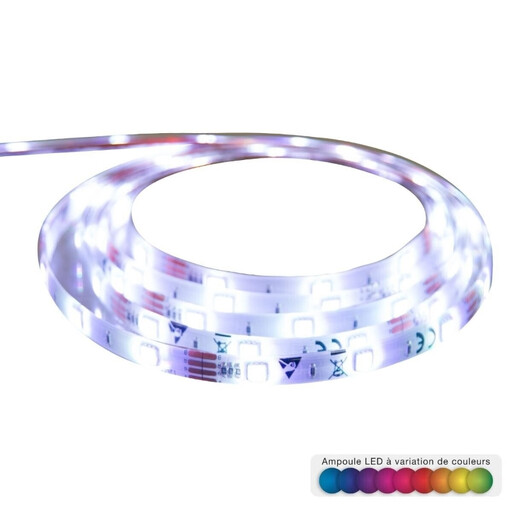
Why this product suits the profile: For simple indirect lighting behind furniture, along shelving or behind a television, the infrared remote control is easy to use.
The specifications state a length of 5 m, 150 LEDs, 22 W, 230 V, IP20 and an included power supply. This makes it easier to assess the intended use and power requirements.
5 m length, self-adhesive backing, mains operation and remote control; suitable for dry indoor areas with an IP20 rating.
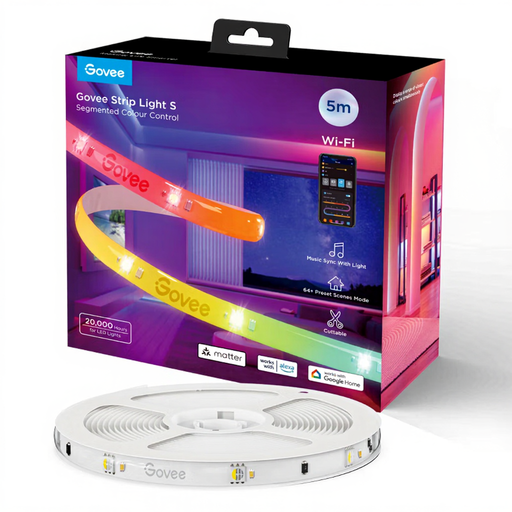
Why this product suits the profile: This smart home LED strip is designed for users who want to combine app control and segmented colours with integration into compatible smart home platforms.
The specifications state 5 m, 24 W at 24 V, 24 LEDs per metre, a protective coating, as well as Wi-Fi, Bluetooth and Matter. The product is intended for indoor use.
RGBIC segment control, 64 preset scenes according to the product description and support for common smart home platforms via Matter.

Why this product suits the profile: For tuning enthusiasts looking for multi-part ambient car lighting with footwell, door-handle and storage-compartment lights, the 18-in-1 set offers several installation positions.
The product data states 12 V, six main strips, four sub-controllers and an operating temperature of -20 °C to 60 °C. A function test is recommended before installation.
600 LEDs, dual-zone control, Bluetooth app, touch button, sound sensor and a stated remote-control range of 0 to 10 m.
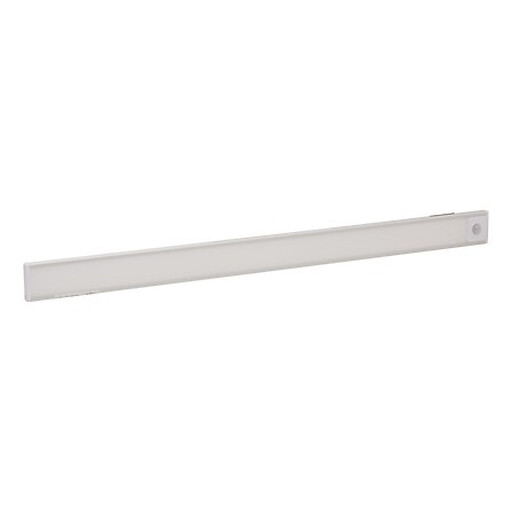
Why this product suits the profile: This light is designed for cupboards, shelving, dressing rooms, worktops and other dry indoor areas without fixed wiring.
The product description states that it has a battery, USB charging, motion detection up to approximately 2 m and an automatic lighting duration of around 30 seconds.
60 cm housing length, 6000 K colour temperature, 3.7-V 2200 mAh battery, plus magnetic and 3M adhesive-strip mounting.
We have put together a complete, regularly updated list of products that fully meet these strict selection criteria and the safety regulations applicable in the EU.
Clean the surface, allow it to dry completely and apply the strip without tension. Avoid sharp bends at the LEDs. Additional retaining clips may be useful for heavier or longer strips. Test the connection, colours and controls before applying the adhesive permanently.
The lifespan depends on LED quality, heat dissipation, operating time, power supply and installation. Continuous operation while still wound up can cause heat to build up. Check the manufacturer’s stated lifespan and operate the product within the specified voltage and ambient temperature range.
You can calculate the cost using the power consumption: wattage divided by 1,000, multiplied by the operating hours and the electricity price. For example, an LED light strip with a power consumption of 24 W uses 0.24 kWh after ten hours of operation. For an accurate calculation, you need the current price of your electricity tariff.