
Lieferung heute & morgen

Qualitätsgarantie

Willkommens-Angebote freischalten: KOSTENLOSE Lieferung | Bis zu 80 % RABATT | Kostenlose 30-Tage-JoyPlus-Testphase
App herunterladen
An LED light strip can highlight furniture, shelves, televisions or a gaming setup. The choice ranges from a simple LED strip with remote control to a connected RGBIC LED strip with app, voice and music control. Many products look similar at first glance, but differ significantly in length, power supply, installation and intended use.
The description 5 m LED strip initially tells you only the total length. What matters is whether the strip is designed for continuous installation, may be cut at marked points or consists of several segments. The size of the screen is also relevant for a television. A TV set for 55 to 65 inches cannot automatically be used with every other screen format.
With modular sets, you should also check whether connectors, the power supply and mounting materials are included. A cheaper individual strip can become more expensive and complicated once additional components are needed.
The IP20 protection rating is intended for dry indoor areas. A product with IP44 is protected against splashing water from certain directions, but is not suitable for immersion. IP44 also does not mean that the power supply and plug connections may be exposed to rain or moisture continuously.
For bathrooms, kitchens, balconies or vehicles, you should check the protection rating of the complete system. With an LED strip for a car, you also need to consider the vehicle’s electrical system, cable routing and secure installation.
RGB, RGBIC and RGBCCT describe different lighting functions. A classic RGB LED strip usually displays one colour across the entire strip. An RGBIC LED strip can display several colour zones at the same time, depending on the model. RGBCCT adds adjustable white tones, from warm to cooler white.
The control method also deserves attention: a remote control works differently from Wi-Fi, Bluetooth or Matter. Check whether your smartphone, Wi-Fi network and existing smart home system are compatible. Many Wi-Fi products require a 2.4 GHz network.
Measure the area before ordering and plan for corners, the position of the power supply and cable routes. A self-adhesive LED strip adheres most reliably to a dry, smooth surface free from dust and grease. Painted, rough or heavily textured surfaces can reduce adhesion.
LED strips may only be cut at the points marked by the manufacturer. This is particularly important for smart and RGBIC models. Cutting may be expressly prohibited for TV backlights. Sharp bends can damage conductive tracks or LEDs; gentle curves or suitable connectors are advisable around corners.
For purely ambient LED lighting, an indirect light source is often sufficient. For workspace or cabinet lighting, however, brightness, colour temperature and even light distribution are more important. Specifications such as lumens, watts and colour temperature should be considered together.
A dimmable LED strip lets you adjust the brightness to suit the time of day and how you are using it. RGBCCT models also offer adjustable white light, while standard RGB products are mainly designed for colourful accents. Music or microphone control responds to detected sounds; it should not be confused with precise synchronisation of every individual image or audio cue.
Use only the supplied power adapter and observe the specified voltage. A 12-volt system for a vehicle cannot simply be exchanged for a 230-volt power supply designed for use in the home. Power supplies need adequate ventilation and should not be covered.
For indoor use, an IP20 LED light strip is sufficient as long as it is installed in a dry location. For products with IP44, you must also consider the actual installation conditions and the manufacturer’s instructions. In vehicles, cables must not interfere with pedals, your field of vision or any controls.
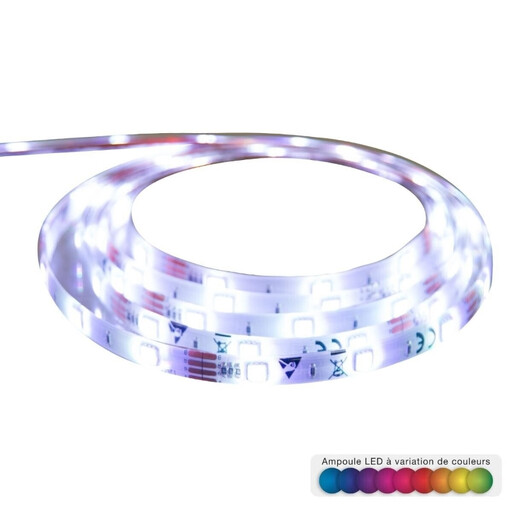
Why this product suits this profile: The 5-metre strip is designed for simple decorative applications such as shelves, stairways or the back of a television, and is controlled by remote control.
The length, mains operation, 150 LEDs and IR remote control are specified. The IP20 protection rating limits use to dry indoor areas.
5 m length, self-adhesive backing, power supply and remote control included.
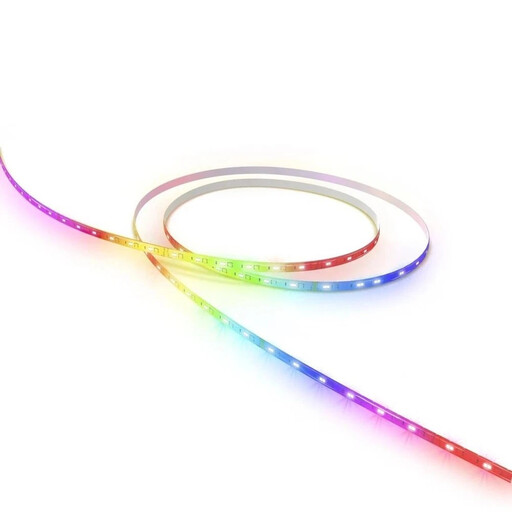
Why this product suits this profile: Ideal for smart home users who want to manage colours, white tones, brightness, scenes and schedules via an app or voice control.
The specifications state IP20 for dry indoor areas, marked cutting points and the required 2.4 GHz Wi-Fi connection.
RGBCCT from 2,700 to 6,500 K, stepless dimming, Matter compatibility and 5 m length.
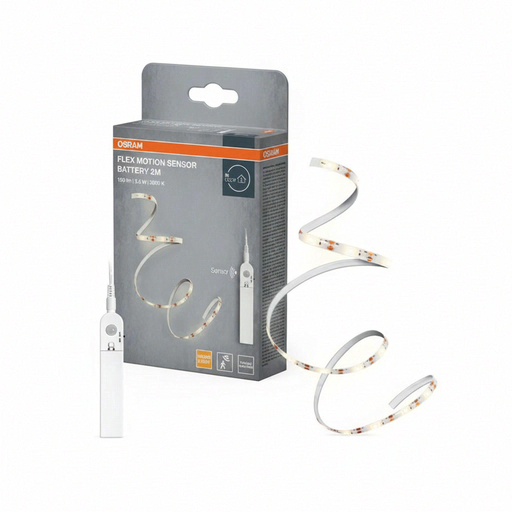
Why this product suits this profile: Ideal for cupboards, hallways or storage areas where automatic activation is more practical than decorative colour control.
The motion sensor directly addresses practical needs. Before installation, check whether the detection range is suitable for your intended location.
2 m LED light strip with motion sensor, designed for automatic lighting.
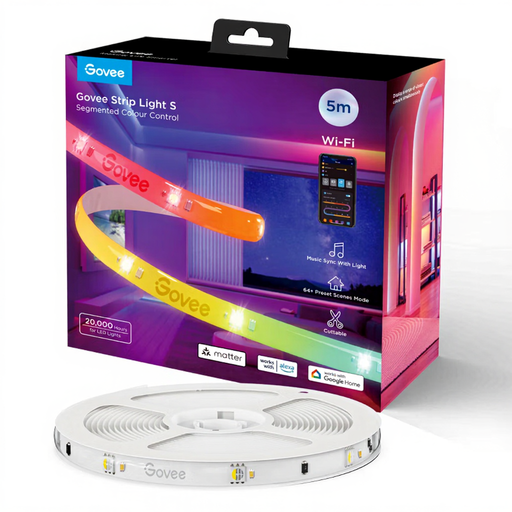
Why this product suits this profile: The combination of RGBIC segment control, app, Bluetooth, Wi-Fi, Matter and music mode is designed for gaming rooms and home cinema environments.
The technical specifications state 2.4 GHz Wi-Fi, 24 W, a protective coating and indoor use. The strip must not remain rolled up while operating.
5 m length, multiple colour zones displayed simultaneously, Matter support and integrated microphone.
We have put together a complete, regularly updated list of products that fully meet these strict selection criteria and the safety regulations applicable in the EU.
First, clean the surface with a suitable lint-free cloth and allow it to dry. Plan the route before removing the protective film. Press the strip firmly into place section by section and avoid sharp bends. For delicate surfaces, mounting clips may be an alternative to adhesive backing.
The actual service life depends on factors including operating time, heat dissipation, the power supply, ambient temperature and mechanical stress. Do not leave a strip switched on while rolled up, and keep the power supply’s ventilation unobstructed. If you notice visible damage to the cable, controller or power supply, stop using the system.
Consumption depends on the power rating, length, brightness and operating time. A model with a maximum power consumption of 24 W would theoretically use 0.24 kWh over ten hours if it ran continuously at full power. In practice, the figure may be lower when dimming or changing scenes. For a more accurate estimate, check the manufacturer’s power rating and your current electricity tariff.