
Lieferung heute & morgen

Qualitätsgarantie

Willkommens-Angebote freischalten: KOSTENLOSE Lieferung | Bis zu 80 % RABATT | Kostenlose 30-Tage-JoyPlus-Testphase
App herunterladen
LED lighting has long been much more than just a source of light in British homes. An LED ceiling light can illuminate a living room, bedroom or home office evenly, while a 5 m LED light strip behind the TV, on a desk or in a gaming setup creates atmospheric indirect lighting. Smart models also offer app control, schedules and voice commands.
However, technical specifications and marketing terms are not always easy to interpret. Three common buying misconceptions particularly often lead to the wrong choice:
Colour temperature is measured in Kelvin (K). Warm white light of around 2,700 to 3,000 K tends to create a softer atmosphere in many living rooms and bedrooms. Neutral or cool white light can be more practical in a home office, kitchen or when carrying out detailed tasks.
A dimmable LED lamp gives you greater flexibility, provided the dimming function is genuinely continuous or offers a sufficient number of brightness levels. For ceiling lights, lumens are also more important than watts: lumens describe the amount of light emitted, while watts indicate power consumption.
An RGBW ceiling light combines coloured LEDs with a white-light source. This means it can display both colourful scenes and different shades of white. With RGBIC LED strips, individual sections can be coloured independently. This creates colour gradients or flowing-light effects that are not possible in the same way with a basic RGB strip.
For subtle ambient lighting behind the TV, a classic strip is often sufficient. For gaming lighting or dynamic scenes, an RGBIC LED strip with segmented control may be more appealing.
The IP rating provides a practical indication of protection against solid objects and water. A product with IP20 is generally intended for dry indoor areas. IP54 offers protection against splashing water and may be more suitable for locations such as kitchens or bathrooms, depending on how it is installed. However, this does not mean that the light is suitable for a direct jet of water or immersion.
Fixed-wired LED ceiling lights should be installed according to the manufacturer’s instructions by a qualified electrician. LED strips must not remain tightly coiled during operation, as heat can build up. Before installation, check the surface, the required length, the proximity of a socket and whether there is a suitable route for the cable.
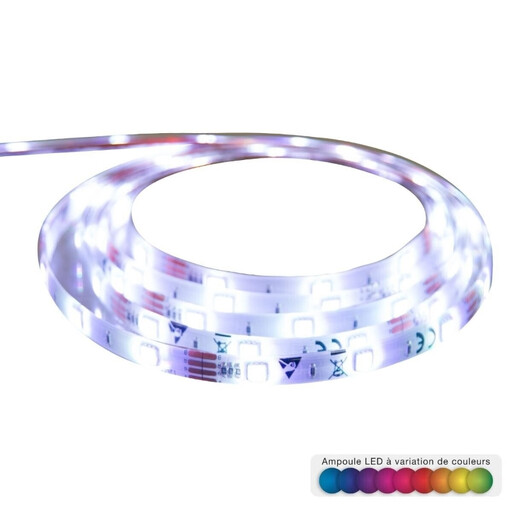
Why this product suits this profile: The 5 m LED light strip comes with a power supply and infrared remote control, making it suitable for simple decorative applications behind furniture or the TV.
The product specifications state the length, number of LEDs, mains operation and IP20 rating. This makes it easier to assess realistically whether it is suitable for dry indoor areas.
5 m length, 150 LEDs, remote control and 22 W power consumption according to the product description.
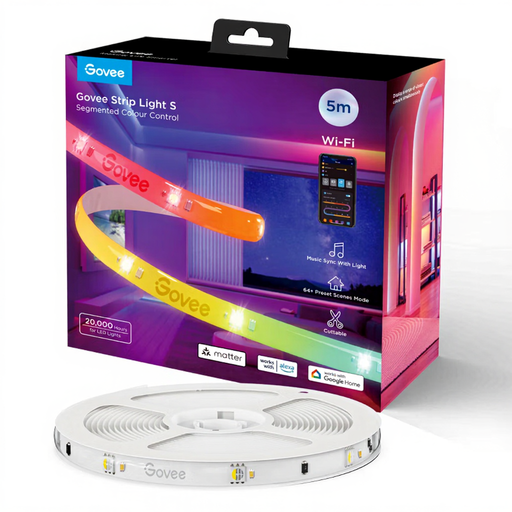
Why this product suits this profile: This strip is aimed at users who want to combine segmented colour effects, app control and Matter-compatible lighting in the living room, home cinema or gaming area.
The specifications explicitly state that the product is for indoor use and should be kept away from water. The protective coating is therefore not a substitute for a suitable IP rating in the bathroom.
5 m length, RGBIC segment control, Wi-Fi, Bluetooth, Matter support and 24 W input power according to the product data.
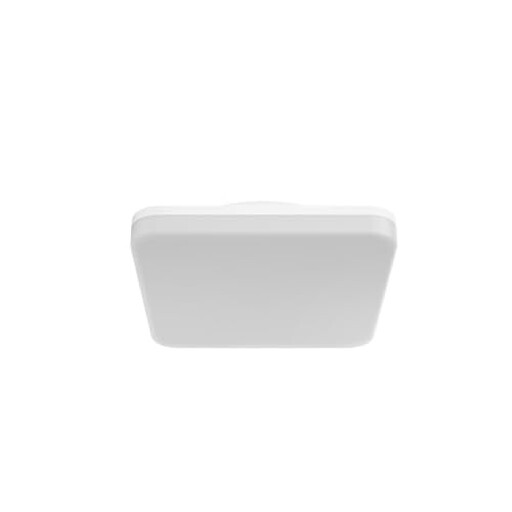
Why this product suits this profile: This light is designed for users who want to equip a central ceiling light in the living room or bedroom with app, voice and Matter control.
Matter, 2.4 GHz Wi-Fi, RGBW, dimming and IP54 are listed separately. This allows buyers to check smart home compatibility and suitability for the intended location more precisely.
18 W, up to 1,800 lm, 2,700–6,500 K, continuously dimmable, plus support for Apple Home, Google Home and Alexa according to the product specifications.
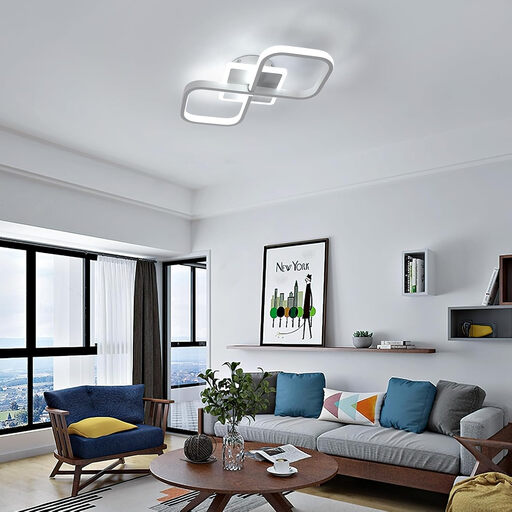
Why this product suits this profile: If you do not need an app but want a bright, permanently installed light for the bedroom, living room or home office, this model offers a clearly defined range of functions.
The light is not advertised as dimmable or smart. If you are looking for a straightforward standard solution, you will not be paying for features that go unused in everyday life.
36 W, 4,000 lm, 6,500 K and integrated LED technology with a stated service life of 50,000 hours according to the product information.
Running costs depend on power consumption, daily operating time and your electricity tariff. The simple calculation is:
Power in kW × operating hours × electricity price = cost
For example, an 18 W light uses 0.018 kWh per hour. An LED strip with 24 W consumes 0.024 kWh over the same operating period. RGB colours, maximum brightness and activated effects can affect actual consumption. Wattage alone therefore does not provide a complete comparison of running costs.
We have put together a complete, regularly updated list of products that fully meet these strict selection criteria and the safety regulations applicable in the EU.
Service life is stated in hours and depends on heat generation, operating conditions and the quality of the electronics. Any stated number of hours is a manufacturer’s figure, not a guarantee that the product will last for exactly the same length of time in every home. With LED strips, you should also ensure adequate heat dissipation and suitable installation.
That depends on the individual model. Check whether Amazon Alexa, Google Assistant, Apple Home or Matter are explicitly listed in the product data. Wi-Fi lights may also require a 2.4 GHz network. Matter makes cross-platform integration easier, but it does not replace correct setup in the relevant smart home app.
Not automatically. An LED light strip with IP20 is intended for dry indoor areas. For damp rooms, the IP rating, installation area and manufacturer’s instructions must all be considered together. A protective coating is not a free pass for use in the immediate vicinity of water.