
Lieferung heute & morgen

Qualitätsgarantie

Willkommens-Angebote freischalten: KOSTENLOSE Lieferung | Bis zu 80 % RABATT | Kostenlose 30-Tage-JoyPlus-Testphase
App herunterladen
LED lighting has become a staple in many British homes, offices and outdoor gear. LED lamps typically use less power than traditional bulbs and, depending on the design, offer extra features such as dimmability, RGB colours, USB charging or smart home control. Even so, an attractive product description doesn't automatically lead to the right purchase decision.
Wattage describes energy consumption, not the amount of light. For brightness, the key measurement is lumens (lm). An LED ceiling light with 2,500 lm can illuminate a room very differently to a decorative USB lamp with 105 lm, even if both are marketed as modern LED lighting.
RGB light, music sync or app control can be great for a gaming setup or living room lighting. For a workspace, however, even illumination, a suitable beam angle and flexible brightness adjustment are more important. Smart lighting also needs a stable connection and, where applicable, a compatible system such as Wi-Fi, Bluetooth Mesh, Matter, Alexa or Google Assistant.
A lamp for the bathroom, balcony or outdoors shouldn't be chosen on design alone. The IP rating indicates the level of protection against dust and moisture. IP20 is typically for dry indoor spaces, while IP44 offers limited protection against splashing water. For road use, an LED bike light also needs StVZO approval. A high brightness figure doesn't replace this.
An LED floor lamp needs enough floor space and should be positioned securely. An LED ceiling light must be compatible with your existing electrical installation and room size. For a monitor lamp, the clamp mechanism, monitor format and cable routing are crucial. For wide or curved screens, compatibility should be explicitly stated.
USB lamps often run on 5 V DC and can be connected to a computer, power adapter or power bank. Pay attention to the required current: the Leair monitor lamp is specified for 5 V and 2 A. A power adapter that's too weak can cause flickering or reduced brightness.
You can roughly calculate the running costs as follows:
Power in kW × hours of use × electricity price = cost
An 8-watt lamp used for five hours a day consumes roughly 14.6 kWh per year. Actual consumption may vary with dimmable or smart models depending on settings and standby mode.
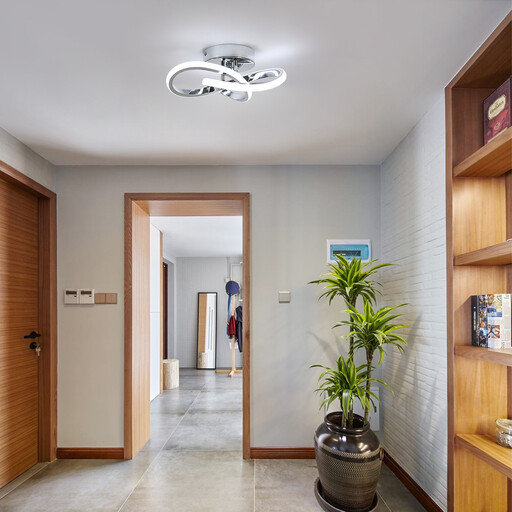
Why this product fits the profile: This compact LED ceiling light measures 25 × 25 × 10 cm and delivers 2,500 lm at 22 W according to the product specs. It's suitable for smaller rooms, hallways or bedrooms needing cool, even light.
The specifications for power, luminous flux, colour temperature and CRI are clearly stated. This makes it easier to match the light to your actual room and brightness needs.
22 W power consumption, 2,500 lm luminous flux and a stated CRI of at least 83; integrated LED light source.
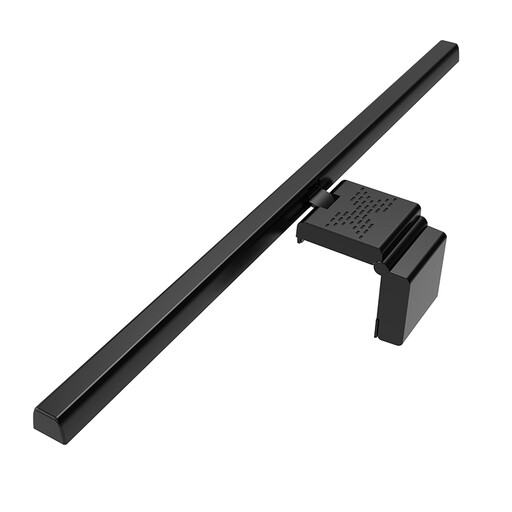
Why this product fits the profile: This 50 cm wide monitor lamp is designed for larger screens from 24 inches, curved monitors and laptops. Three colour temperatures of 3,000, 4,500 and 6,500 K, plus stepless brightness adjustment, support different workstation scenarios.
The asymmetric optics direct light onto the work surface and, according to the manufacturer, are designed to reduce reflections on the screen. The clamp mount saves desk space.
500 mm light bar, USB power supply at 5 V/2 A and three selectable colour temperatures.
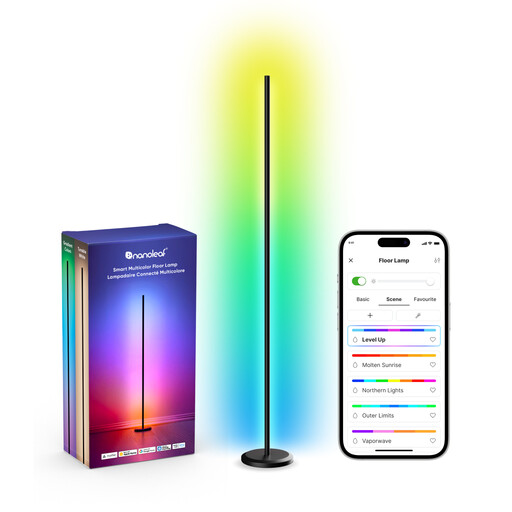
Why this product fits the profile: This LED floor lamp combines RGB lighting with Matter support, app control and voice control. It suits living spaces, gaming setups and users who want to manage lighting scenes centrally.
Before buying, you can check the required platforms and control methods. The product name mentions Matter, app and voice control; you should still verify compatibility with your own smart home system.
RGB IC lighting, dimming function, 1,700 lm according to the product name, plus Matter and voice control.
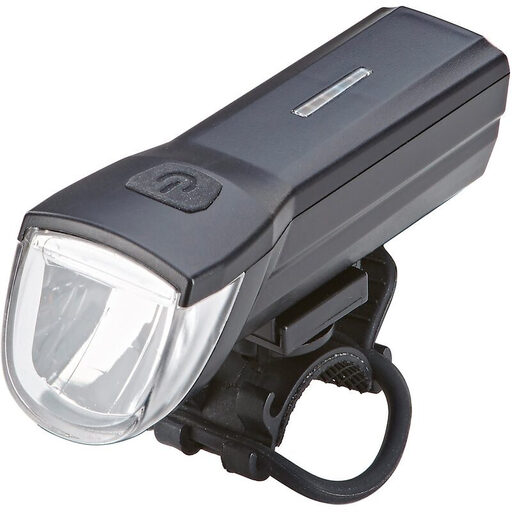
Why this product fits the profile: This LED bike light is designed for bicycles and e-bikes and features a built-in rechargeable battery, charge level indicator and two brightness settings of 30 and 15 lux.
The stated StVZO approval addresses a key requirement for road use. Before every ride, check the mounting, alignment and charge level.
Rechargeable lithium-ion battery, tool-free silicone mount, 30/15 lux switch and, according to the product specs, StVZO compliant.
For a desk lamp, position the light source so that no annoying shadows fall on your work surface. A monitor lamp is attached to the top of the screen and needs a secure clamp. With a dimmable lamp, check whether the lowest brightness level is sufficient for your intended use.
A rechargeable torch is handy for the home, camping or repairs, but should be chosen based on its IP rating and charging port. The Olight ArkPro Series, according to the product specs, offers USB-C and magnetic charging options plus an IPX7 rating. The Aigostar torch, on the other hand, provides 115 lm, adjustable focus, a side light and IP44. These figures show that you should consider both the intended use and the technical specifications together.
With integrated LEDs, the light source is often not user-replaceable. So check the stated lifespan, warranty terms, spare parts availability and disposal options before buying. At the end of their useful life, electronic lamps should be taken to the designated collection points for waste electrical and electronic equipment.
That depends on room size, ceiling height, wall colour and usage. For hallways or small utility rooms, a lower luminous flux may be sufficient; living and working areas usually need more even and stronger illumination. So don't just compare wattage, but above all lumens, beam angle and light distribution.
Not every LED lamp is dimmable. Look for an explicit statement about dimmability and, with permanently installed lights, check whether your existing dimmer is compatible. With smart models, control is often via app, remote or voice assistant.
The lifespan depends on factors such as heat dissipation, operating hours, switching cycles and the quality of the electronics. With integrated LED lights, the light source is usually not replaceable. Lifespan figures should therefore be treated as manufacturer values and considered alongside warranty and return conditions.