
Lieferung heute & morgen

Qualitätsgarantie

Willkommens-Angebote freischalten: KOSTENLOSE Lieferung | Bis zu 80 % RABATT | Kostenlose 30-Tage-JoyPlus-Testphase
App herunterladen
LED lighting can enhance furniture, walls, windows and festive decorations. However, there are significant differences between a basic LED strip, an RGB LED strip and smart LED lighting when it comes to connections, light colour, controls and where they can be used. If you focus only on the number of LEDs or a high wattage, you could end up with a product that doesn’t suit the size of your room or your existing smart home setup.
The number of LEDs alone tells you little about perceived brightness or light quality. Factors such as luminous flux in lumens, the spacing between LEDs, the diffuser and the colour temperature all matter. An LED strip with lots of individual light points can have a decorative effect, while a COB LED strip can create a more uniform line of light.
A self-adhesive LED strip needs a clean, dry, grease-free surface. Adhesion may be reduced on rough walls, dusty furniture backs or silicone-based surfaces. Before fitting the strip, measure the area and unroll it fully. Using it while still coiled can cause heat to build up.
Wi-Fi LED strips, Bluetooth products and Matter LED strips use different connection types. If you’re considering a Matter product, check that it works with your chosen system – for example, Apple Home, Google Home, Alexa, Samsung SmartThings or Home Assistant. Many Wi-Fi products also require a 2.4 GHz network. App compatibility alone doesn’t necessarily mean that every automation you want will be available.
For work surfaces or indirect lighting, lumens, colour temperature and colour rendering are all important. Warm white light around 2,700 to 3,000 K often feels more subdued, while more neutral or cooler whites up to 6,500 K create a more functional feel.
With an RGB LED strip, it’s worth distinguishing between basic RGB and RGBCCT. RGBCCT combines coloured light with separately adjustable white light. This lets you change not only the colour, but also the colour temperature. Dimmable LED lights should have a clearly stated dimming function, ideally with stepless adjustment.
An LED strip needs to be the right length for the area you have in mind. For a 5-metre LED strip, the power supply needs to support the full length. You can only cut the strip at the marked cut points. Cutting it elsewhere could damage the circuit.
Check the output voltage of the power supply too. A 24-volt system must only be used with a compatible power supply. The wattage can help you estimate energy consumption, but it doesn’t replace checking the adapter supplied with the product.
For the strips featured here, IP20 means they’re intended for use in dry indoor spaces. They’re therefore not suitable for bathrooms, outdoor areas or damp window areas unless a higher IP rating is specified. Power supplies should be left uncovered and not placed under fabrics.
The same basic rules apply to Christmas lights and decorative LED lights: check the cables, plugs and casing before use, and don’t continue using damaged products. A lit snowman or LED star should only be used in the environment specified for it.
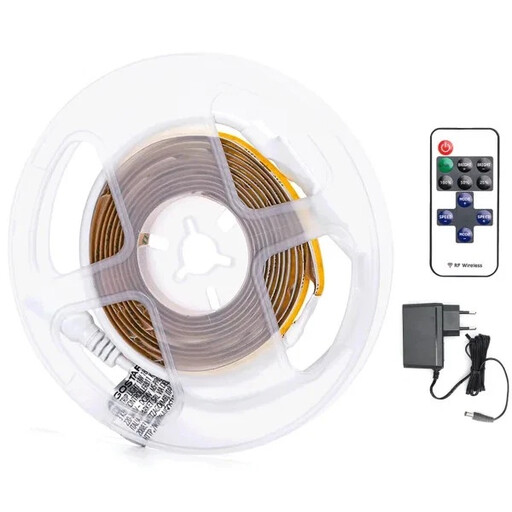
Why it suits this profile: This 2 m strip provides warm white light at 3,000 K and comes with a power supply. It’s well suited to shelving, sideboards or smaller areas of furniture, without the need for a complex smart home setup.
The specifications clearly state the length, 24-volt operation, 18 W rating and IP20 rating. This makes it easier to check that the strip is suitable for a dry indoor space before fitting it.
2 m length, 1,800 lm according to the product details, 3,000 K and a power supply included.
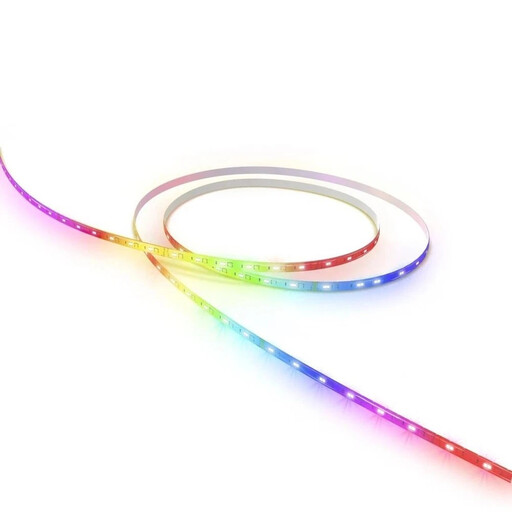
Why it suits this profile: This 5-metre strip combines coloured light, adjustable white light and Matter compatibility. It’s a good choice if you want to integrate lighting into your home and control it by app, schedule or voice.
The specifications list RGBCCT, 2,700 to 6,500 K, stepless dimming, IP20 and the required 2.4 GHz Wi-Fi connection.
According to the product details, it supports Matter, Apple Home, Google Home, Alexa and other systems. The strip can be cut at the marked points.
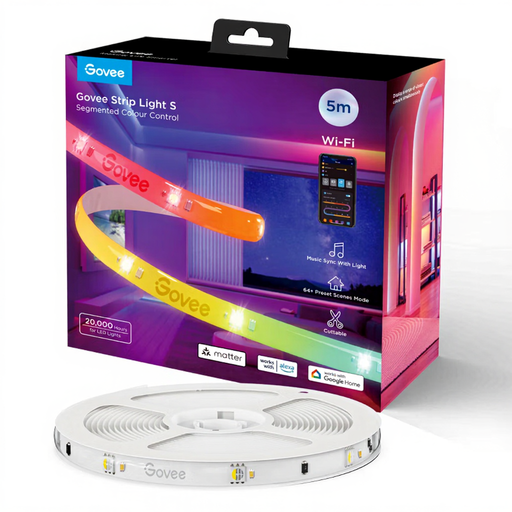
Why it suits this profile: According to the product description, RGBIC control lets you display several colours across different sections of the strip. It’s designed for gaming areas, home cinemas and parties where you want dynamic lighting effects.
Matter, Wi-Fi, Bluetooth and indoor use with a protective coating are all specified. This makes it easier to check that the controls suit your needs before buying.
5 m length, 24 W according to the product details, segmented RGBIC effects and control via an app or voice assistant.
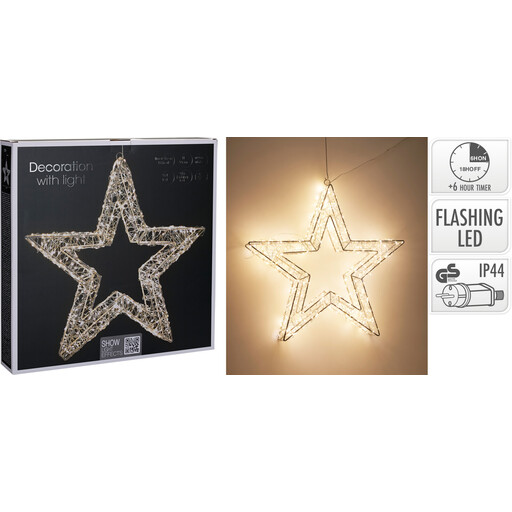
Why it suits this profile: This 50 cm LED star makes a decorative centrepiece for tables, windowsills or sideboards, and can be used for seasonal displays or celebrations.
Its fixed shape means there’s no need to cut or fit a strip. Before buying, though, check that the chosen location is dry and large enough.
50 cm size and 720 integrated LEDs according to the product description; designed for seasonal decoration and indoor use.
We’ve put together a complete, regularly updated list of products that meet these strict selection criteria and fully comply with the safety regulations in force in the EU.
Running costs depend on wattage, daily usage and your electricity tariff. Here’s a simple calculation:
Wattage ÷ 1,000 × hours of use × price per kilowatt-hour = cost
For example, using an 18 W light for four hours a day consumes 0.072 kWh per day. The actual cost depends on your electricity tariff. Timers and schedules can help prevent LED lighting from being left on for longer than necessary.
First, plan the length and position, then clean the surface and let it dry. Only cut the strip at the marked points, and use a suitable power supply. With Wi-Fi models, set up the connection before fitting the strip in its final position.
Lifespan depends on product quality, heat dissipation, usage time and having the correct power supply. Claims such as ‘up to 20,000 hours’ are manufacturer estimates, not a guarantee for every situation. Using the strip uncoiled and ensuring the power supply has enough ventilation will help you use it as intended.
A product with an IP20 rating is intended for dry indoor spaces only. For gardens, balconies or damp areas, the product must explicitly have a suitable higher IP rating. If no such rating is given, don’t use the strip outdoors.