
Lieferung heute & morgen

Qualitätsgarantie

Willkommens-Angebote freischalten: KOSTENLOSE Lieferung | Bis zu 80 % RABATT | Kostenlose 30-Tage-JoyPlus-Testphase
App herunterladen
LED lighting for your home can enhance living rooms, hallways, children’s bedrooms, workspaces and outdoor areas. However, technical details such as lumens, Kelvin, IP ratings and sensor range are not always explained clearly. If you focus only on a high wattage or eye-catching RGB features, you may end up buying a lamp that is too dim, too cool or impractical for everyday use.
With LED lamps, wattage mainly describes energy consumption. The luminous flux in lumens determines the actual brightness. A 15-watt LED lamp producing 1,500 lumens may appear considerably brighter than a model with a higher wattage but a lower luminous flux.
As a general guide:
The right brightness also depends on the size of the room, the lampshade and the colour of the walls.
Colour temperature is measured in Kelvin:
A 6,500-Kelvin lamp may feel very cool in a child’s bedroom or a main bedroom. Conversely, warm white light is not always suitable for focused work.
A sensor night light reduces the need for manual operation, but the sensor needs an unobstructed view. Furniture, curtains or light sources positioned directly beside it can affect how it works. With motion sensors, the detection angle, range and switch-off time are also important.
An indoor light should not simply be used outdoors. The IP rating indicates protection against dust and water. IP20 is intended exclusively for dry indoor areas. IPX4, for example, protects against splashing water, but does not mean that a torch can be fully submerged. An IP68 rating is designed for more demanding outdoor and emergency situations, but the light should always be used in accordance with the manufacturer’s instructions.
First check whether you need an E27 LED bulb, a GU10 fitting or an LED light with an integrated light source. An E27 lamp has a large screw thread and fits many floor, table and ceiling lights. A GU10 LED spotlight, on the other hand, is usually used in spotlights.
The dimensions are important too. For example, a spiral-shaped E27 lamp may be taller than a classic A60 design. Compare its diameter and length with the existing lampshade.
As well as luminous flux, the beam angle is important. A 360-degree beam distributes light all around, while a narrower angle directs it towards a specific surface or wall. The CRI or Ra value describes colour rendering. A value of Ra 80 or above is a common guideline for many living areas.
A dimmable LED lamp must be explicitly labelled as dimmable. The same applies to an RGB lamp: with smart models, brightness may be controlled via an app or Bluetooth rather than a conventional wall dimmer.
Energy consumption is measured in watts. You can use the following formula to calculate running costs:
Wattage ÷ 1,000 × operating hours × electricity price = electricity cost
For example, a 15-watt LED operating for 1,000 hours consumes 15 kWh. Claims such as “replaces 99 watts” or “replaces 129 watts” are comparisons with conventional light sources and do not indicate the lamp’s actual power consumption.
Also check the rated lifespan, switching cycles and permitted ambient temperature. A light with a long lifespan should not be used in an enclosed fitting if the manufacturer advises against it.
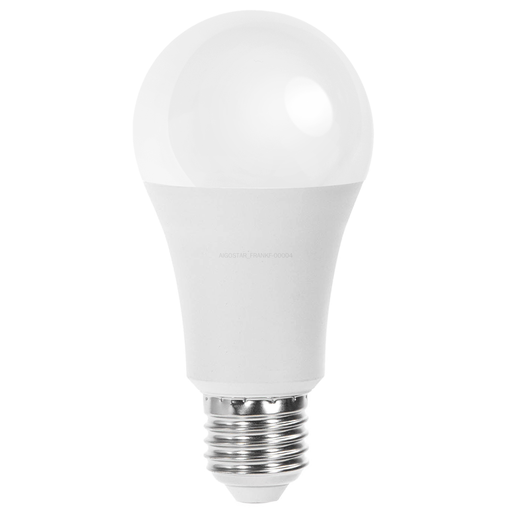
Why this product suits this profile: The classic E27 design is suitable for many existing light fittings. With 1,500 lumens and 3,000 Kelvin, it offers a useful reference point for a wide range of living areas.
The 15-watt power consumption is clearly distinguished from the 1,500-lumen brightness. This makes it easier to check whether it meets the requirements of your existing light fitting.
E27 base, 190-degree beam angle, Ra ≥ 80 and a stated lifespan of 15,000 hours.
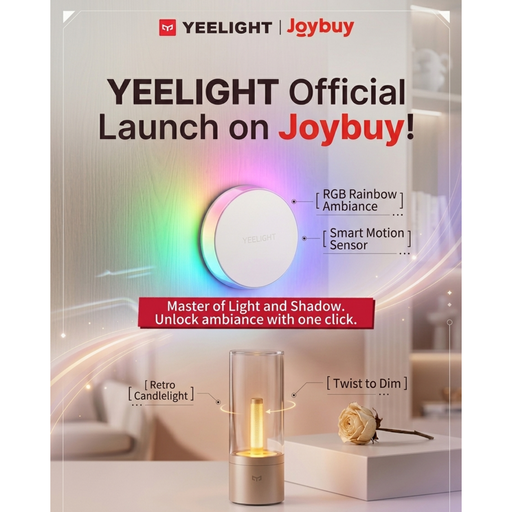
Why this product suits this profile: This rechargeable ambient light combines RGB features with motion sensors and USB-C charging. It can be used flexibly in the bedroom, living room or playroom.
The sensor function and portable power supply mean that a socket does not need to remain occupied. Before buying, you should still check the available controls and charging times.
11 preset effects, motion sensor, magnetic mounting and USB-C port.
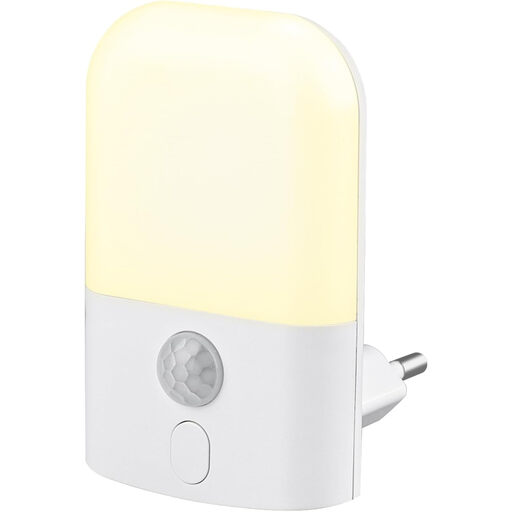
Why this product suits this profile: This plug-in night light uses motion and dusk sensors and offers five brightness levels. It is intended for dry indoor areas such as children’s bedrooms, hallways and staircases.
The brightness can be adjusted rather than relying on a single fixed light level. At 0.5 watts, its stated energy consumption remains low.
Five brightness levels, a detection range of up to 3 metres and automatic switch-off after 60 seconds without movement.
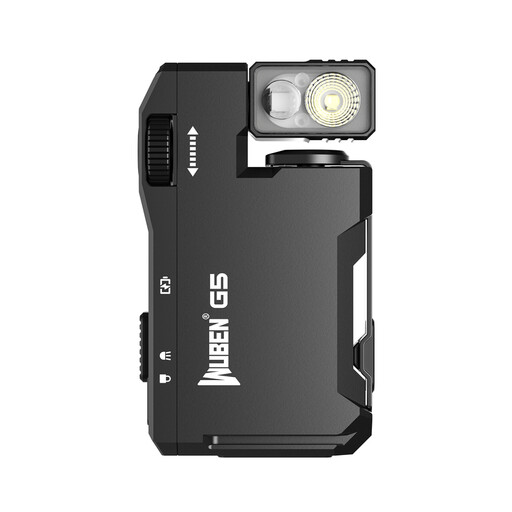
Why this product suits this profile: For camping, hiking, emergency equipment or working in the dark, this rechargeable torch offers six modes and a USB-C port.
The IP68 rating and aluminium housing provide specific reference points for outdoor use. The charging port should be dry before charging.
Stated light output of 1,200 lumens, six light modes, USB-C battery and IP68 protection.
A floor lamp such as the Keli Straight Floor Lamp can be combined with a suitable E27 lamp. It is 150 cm tall, has an E27 base and is supplied without a bulb. For daylight-style illumination, you can choose LED light sources with 6,500 Kelvin or separate daylight lamps.
With daylight lamps, you should check the stated illuminance, measuring distance and operating instructions. Medical or therapeutic claims cannot be inferred from the lux figure alone. If you have an eye condition, take certain medicines or have health concerns, it is advisable to consult a doctor before use.
We have put together a complete, regularly updated list of products that fully meet these strict selection criteria and the safety regulations applicable in the EU.
For general lighting, around 800 to 1,500 lumens per light source is often a useful guide. More light may be needed in larger rooms, with dark walls or when using several lamps. For a cosy atmosphere, several weaker light sources are often more flexible than one very bright lamp.
Lifespan depends on the model, heat dissipation, switching frequency and ambient temperature. Many products state lifespans of between 15,000 and 25,000 hours. This is a technical guideline rather than a guarantee of a specific service life in every household.
Multiply the wattage by the operating hours and divide by 1,000. The result is the consumption in kilowatt hours. A 1-watt night light uses 1 kWh over 1,000 operating hours. To calculate the actual cost, multiply this figure by your electricity price.