
Lieferung heute & morgen

Qualitätsgarantie

Willkommens-Angebote freischalten: KOSTENLOSE Lieferung | Bis zu 80 % RABATT | Kostenlose 30-Tage-JoyPlus-Testphase
App herunterladen
Choosing the right ceiling light is crucial for a room's atmosphere. An unsuitable fixture can not only clash with your style but also be a daily annoyance. Many buyers are drawn to attractive product images, but overlook technical details that later lead to disappointment. To help you avoid a bad purchase, we're highlighting the three most common pitfalls and showing you what to look for when making your selection.
A hasty decision often leads to problems that only become apparent after installation. These three points are particularly critical:
To avoid these mistakes, you should focus on three key technical metrics. These will give you an objective basis for your decision.
A light's brightness is measured in lumens. The wattage only indicates its energy consumption. An efficient LED ceiling light can achieve a high lumen output with low wattage. Use the following guidelines for general ambient lighting:
For a 20 m? living room, you would therefore need one or more lights that together produce around 2,000 to 3,000 lumens.
The colour temperature determines whether the light is perceived as warm and cosy or cool and functional.
A dimmable ceiling light with adjustable colour temperature offers maximum flexibility to adapt the lighting to different situations—from focused work to a relaxing evening.
Here, two concepts compete: lights with replaceable bulbs (e.g., E27 socket) and those with permanently integrated LED modules.
Instead of making a one-size-fits-all recommendation, we have matched products to different needs and interior styles.
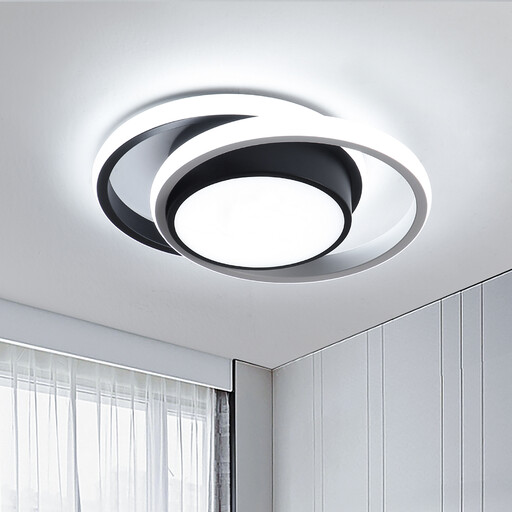
Why this model is a great fit: Ideal for anyone seeking a functional and straightforward solution for a kitchen, hallway, or home office. The ability to control brightness and colour temperature via remote control offers high practical value for everyday use.
Solves the lumen and colour temperature problems with full adjustability (4500 lm, 3000K-6000K). The integrated LED module avoids compatibility issues with bulbs or dimmers.
An all-in-one solution with a remote for brightness and light colour. High light output for bright and even illumination.
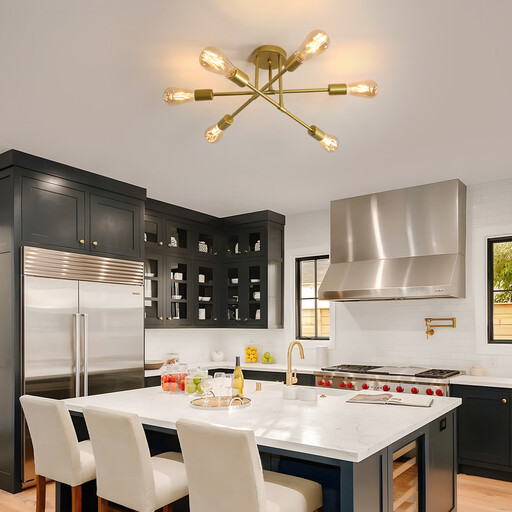
Why this model is a great fit: This Sputnik light is a clear statement piece. Its gold finish and molecular design make it a central focal point in a modern or mid-century-inspired living or dining room.
The E27 sockets provide full control over the light's character, avoiding the colour temperature mistake. The user can choose between warm vintage bulbs or smart LEDs.
Sculptural design with adjustable arms for customised alignment. Maximum flexibility thanks to standard E27 sockets.
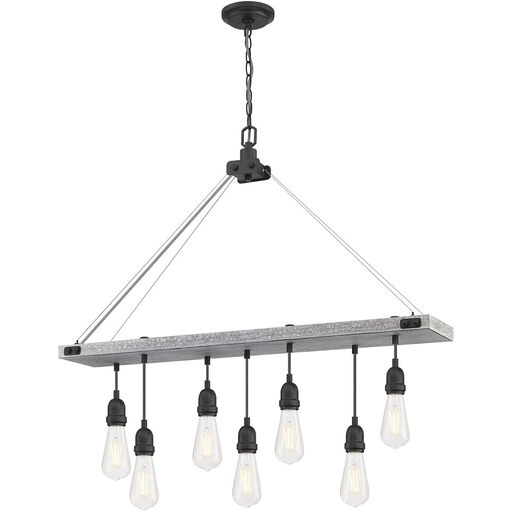
Why this model is a great fit: Perfect for creating a rustic or industrial ambiance. The material mix of antique ash wood and matte brushed metal is distinctive and especially suitable for dining rooms or entryways with higher ceilings.
Bypasses the compatibility trap by using seven standard E27 sockets. This allows for the use of common bulbs, such as energy-efficient vintage-style filament LEDs.
A characterful material mix of wood and metal. According to the manufacturer, it is also suitable for mounting on sloped ceilings.
We have compiled a complete, up-to-date list of products that meet these strict selection criteria and safety regulations.
For general ambient lighting in a living room, a value of 100 to 150 lumens per square metre is recommended. For a room size of 20 m?, this corresponds to a total luminous flux of 2,000 to 3,000 lumens. This can be achieved with a single, powerful ceiling light or by combining multiple light sources.
A ceiling light with an E27 socket gives you the freedom to choose and replace the bulb yourself. This allows for flexible adjustment of brightness, light colour, and even the use of smart home bulbs. An LED ceiling light with integrated LEDs has the light source permanently built-in. This often allows for slimmer designs and is maintenance-free over its long lifespan. However, if the LED fails, the entire fixture usually needs to be replaced.
That depends on the specific model. Many models in the dimmable ceiling light category with integrated LEDs are controlled via an included remote or an app and will work with a standard on/off switch. For lights designed for dimmable E27 bulbs, you will also need a compatible wall dimmer to use the dimming function. Always check the product description for this information.