
Lieferung heute & morgen

Qualitätsgarantie

Willkommens-Angebote freischalten: KOSTENLOSE Lieferung | Bis zu 80 % RABATT | Kostenlose 30-Tage-JoyPlus-Testphase
App herunterladen
The right LED lighting can transform a room from a functional workspace into a cosy sanctuary. But the market is filled with products whose marketing promises often dazzle more than the lights themselves. Incorrect colour temperatures, incompatible smart home systems, or an unexpectedly short lifespan are common problems. This guide will help you identify the crucial features and make an informed decision that meets your needs.
Before you make a decision, it's important to be aware of three common issues that often lead to disappointment:
To avoid the problems mentioned above, focus on a few technical specifications that determine the quality and suitability of an LED solution.
Two of the most important values for any light source are lumens and Kelvin.
The type of control determines the flexibility of your lighting.
Different products are suitable for different user profiles. Here are some recommendations tailored to specific needs.
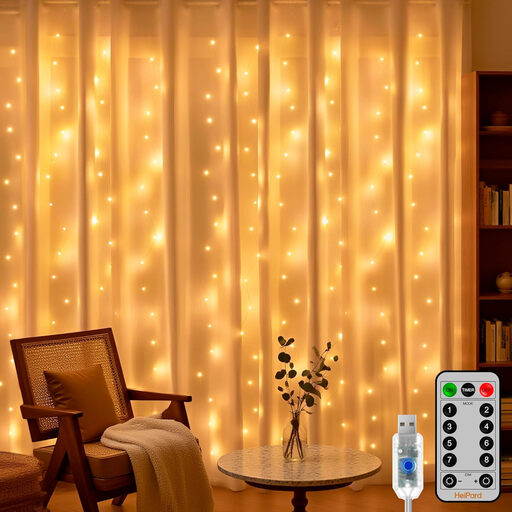
Why This Fits Their Persona: Ideal for those who want to quickly and easily create an impressive atmosphere for parties, holidays, or as permanent decoration. The large 3x3 metre area is perfect for windows, walls, or as a backdrop.
This product focuses on one clear function: decorative light. It doesn't promise complex smart home integration, but with 8 modes and a remote control, it delivers exactly what's needed for ambient lighting. The light colour is specified as Warm White.
Large-area coverage (3x3 m) with 300 LEDs. USB-powered with a remote control for easy operation. Includes a timer function.
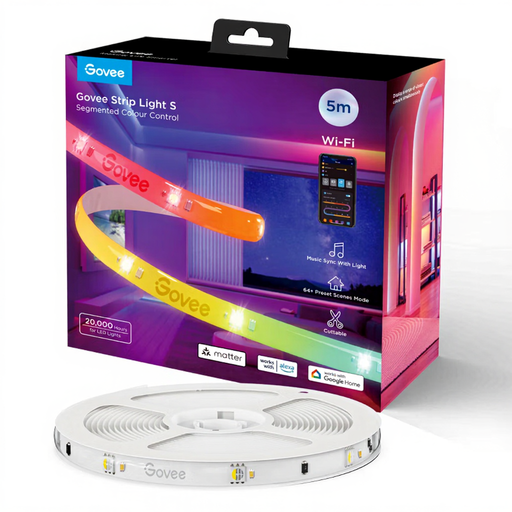
Why This Fits Their Persona: Perfect for users seeking dynamic and fully customisable lighting for their gaming setup, home cinema, or as modern indirect lighting. App control and music synchronisation are key features.
This product avoids the incompatibility trap with its explicit Matter certification. This guarantees seamless integration into all major smart home ecosystems. The RGBIC technology is clearly defined and delivers the promised segmented colour effects.
Supports Matter for universal compatibility. Segmented RGBIC control for colour gradients. Music sync mode via a built-in microphone.
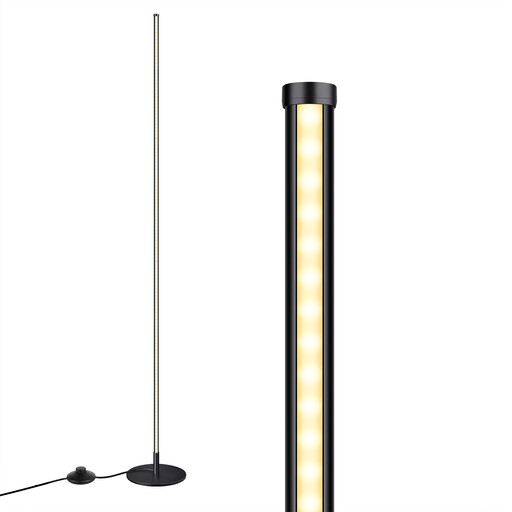
Why This Fits Their Persona: A functional and stylish solution for anyone needing reliable, bright, and adjustable lighting for the living room, bedroom, or office. The focus is on durability, ease of use, and a timeless design.
This floor lamp concentrates on essential quality features. It offers a clear colour temperature of 3000K (Warm White) and a high brightness of up to 1100 lumens. The robust metal construction ensures longevity and good heat dissipation.
Steplessly dimmable via a footswitch with a memory function. Height-adjustable design for flexible adaptation. Integrated, energy-efficient LED with even light distribution.
We have compiled a complete, up-to-date list of products that fully meet these strict selection criteria and safety regulations.
A standard RGB strip can only display a single colour across its entire length at one time. While you can change the colour, the whole strip will always be uniform. RGBIC (RGB + Independent Control) strips have integrated chips that allow multiple segments of the strip to light up in different colours simultaneously. This enables dynamic effects like rainbows, flowing colour gradients, or chasing effects.
Most LED strips are designed to be cut, but only at the designated markings. These are usually indicated by a scissors icon and are located at regular intervals (e.g., every 5 or 10 cm). Cutting at an unmarked spot will interrupt the circuit and cause the subsequent segment to stop working. It is crucial to follow the manufacturer's instructions carefully.
The power consumption of LED lighting is very low compared to traditional incandescent or halogen bulbs. Consumption is measured in watts (W). A typical LED lamp that replaces the brightness of a 60-watt incandescent bulb consumes only about 7-9 watts. A 5-metre LED strip consumes between 15 and 30 watts, depending on the brightness and colour. The exact details can always be found in the product specifications.