
Lieferung heute & morgen

Qualitätsgarantie

Willkommens-Angebote freischalten: KOSTENLOSE Lieferung | Bis zu 80 % RABATT | Kostenlose 30-Tage-JoyPlus-Testphase
App herunterladen
Choosing the right LED lighting can be overwhelming. Whether it's for the workshop, your next camping trip, or home security, the market is filled with products whose marketing promises often suggest more than the technology can deliver. As your Joybuy Product Recommendation Officer, I'll help you identify the crucial features and make an informed decision based on facts, not advertising slogans.
Many buyers invest in products that prove to be impractical or unreliable after a short time. Three problems are particularly common:
rechargeable flashlights use low-quality batteries that lose capacity after just a few charging cycles. In contrast, battery-powered lights can incur high running costs with regular use.To avoid these pitfalls, you should carefully examine three technical specifications. These provide objective information about the actual performance and longevity of an LED light.
The brightness of a light is measured in lumens (lm). This value describes the total amount of light a source emits. However, more important than a maximum lumen value is how the light is focused. An ultra-bright flashlight with 1200 lumens that casts a wide, scattered beam can be less useful at a distance than a well-focused 400-lumen light.
night light: 20 to 150 lumens are usually sufficient.camping lantern): 300 to 1000 lumens offer a good balance of brightness and battery life.work light) or special requirements: Over 1000 lumens can be useful here, often in combination with various light modes.The IP rating (Ingress Protection) indicates how well a device is protected against the entry of foreign objects (first digit) and water (second digit). This is crucial for durability, especially for a waterproof light.
bike light in light rain.The choice of power source depends on the intended use.
Based on these objective criteria, we have identified some products that represent a well-thought-out solution for specific user profiles.
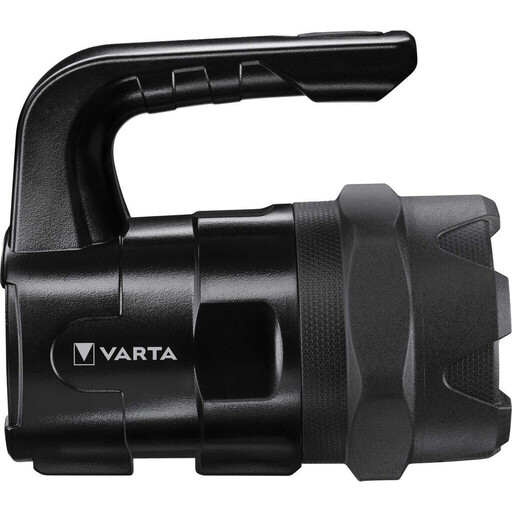
Why This Fits Their Persona: Ideal for demanding tours where robustness and reliability are paramount. This lantern is designed as a rugged camping lantern and work light that can withstand drops and bad weather.
Avoids the inadequate water resistance trap with an IP67 certification. Its shock resistance (IK08, drop-proof from 4m according to the manufacturer) addresses the problem of fragile casings.
Extremely robust aluminum housing and a very long runtime of up to 85 hours with standard AA batteries, ensuring independence from the power grid.
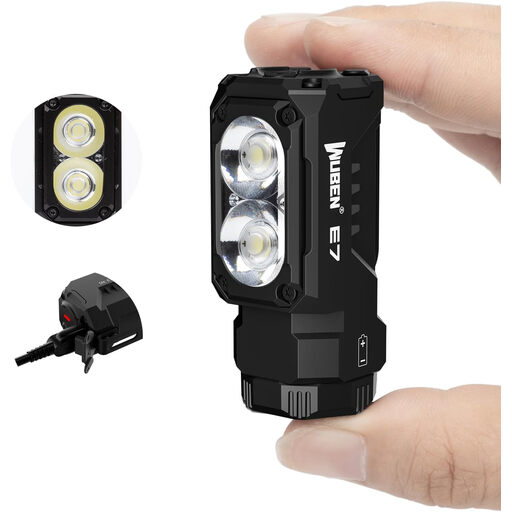
Why This Fits Their Persona: Perfect for work in the workshop, on the car, or in the fuse box. The magnetic tail cap allows for hands-free work, while the high brightness and compact design offer maximum flexibility.
Bypasses the battery trap with a modern Type-C charging port and a replaceable battery. The IP68 certification ensures the light functions reliably even in damp or dusty environments.
The combination of very high brightness (up to 1800 lumens according to the manufacturer), magnetic attachment, and the ability to use it as a headlamp makes it a versatile work light.
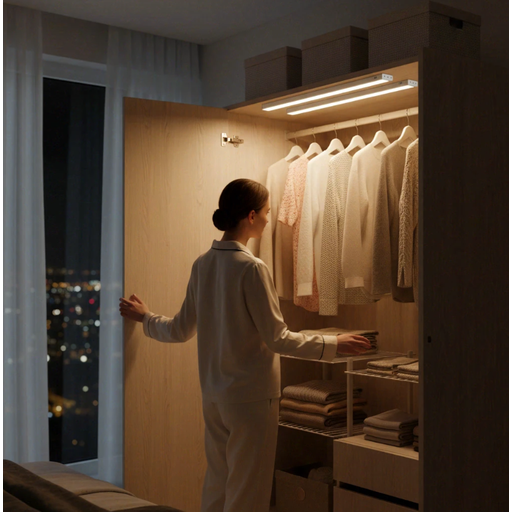
Why This Fits Their Persona: Provides automatic and safe lighting in closets, hallways, or children's rooms. Ideal as a night light that only turns on when needed, providing orientation without disturbing sleep.
Solves the problem of impractical operation in the dark with a reliable PIR motion sensor. The integrated 1100 mAh battery is USB-rechargeable, avoiding the follow-up costs of batteries.
Simple, drill-free installation using adhesive strips and the choice between three color temperatures (cool white, neutral, warm white) to adapt to any environment.
We've compiled a complete, up-to-date list of products that fully meet these strict selection criteria and German safety regulations.
The IP rating consists of two digits. The first digit (0-6) describes the protection against solid foreign objects like dust. The second digit (0-9) indicates the level of protection against water. For everyday use, the second digit is often more critical. A light with IPX4 is splash-proof, while IPX7 or IPX8 can even withstand submersion.
The required brightness depends heavily on the application. As a guide:
Not necessarily. Rechargeable lights are convenient for regular use and more environmentally friendly. However, for an emergency kit that sits unused in a closet for months, or for long expeditions without a power source, battery-powered lights can be more reliable, as spare batteries can be easily carried and there's no risk of battery self-discharge.