
Lieferung heute & morgen

Qualitätsgarantie

Willkommens-Angebote freischalten: KOSTENLOSE Lieferung | Bis zu 80 % RABATT | Kostenlose 30-Tage-JoyPlus-Testphase
App herunterladen
LED lighting can brighten living spaces, patios and gardens in a targeted way, or be used as a decorative feature. However, there are significant differences between an LED string light, a garden solar light and smart ambient lighting when it comes to power supply, ingress protection, brightness and operation. If you choose based solely on design or advertising claims, you can quickly end up with a light that is unsuitable for its intended location.
A product description stating that an item is “suitable for outdoor use” does not replace a technical rating. The IP rating indicates how well a product is protected against dust and water. The following applies:
Even with a waterproof solar string light, you should check whether the IP rating applies to the entire construction or only to the light string. The solar panel, battery compartment and connections may have different requirements.
Warm white light at around 2,700 Kelvin often creates a decorative, understated effect. It is intended more for ambience than for illuminating large areas. For paths, work areas or a patio, the luminous flux in lumens is also important. A higher lumen figure generally means more light is emitted, but on its own it says nothing about how the light is distributed.
A decorative string light with many LEDs can therefore be visually striking without fully illuminating a seating area. For warm white garden lighting, you should consider the colour temperature, lumen rating and beam angle together.
With battery-powered or solar-powered lights, runtime and brightness depend on operating conditions. For a garden solar light, sunlight, the time of year, shading and dirt on the panel all affect charging performance. Figures such as “up to” should therefore be understood as maximum or reference values.
With a battery-powered LED string light, the battery type, number of batteries, timer function and operating modes should also form part of your purchasing decision. A timer can reduce consumption in everyday use, while continuous flashing or high brightness will drain the batteries more quickly.
Rechargeable-battery or battery-powered lights are suitable for flexible positioning, as they do not require a mains connection. A rechargeable-battery night light with a USB-C charging port can be used beside the bed, on a shelf or when camping. A mains-powered light, on the other hand, is a sensible choice when you need consistent operation without recharging.
When choosing smart ambient lighting, buyers should check whether it is controlled via Bluetooth, an app or a remote control. Timers, group control, brightness adjustment and compatibility with the smartphone being used are also important. A Bluetooth solar light can connect several devices, but it requires a functioning app connection for setup.
Before placing your order, compare the dimensions with the space where you intend to use the product. For string lights, the total length, illuminated length and distance between the lights are important. For a table lamp, the footprint and weight matter, particularly if there are children or pets in the household.
For outdoor use, UV-resistant materials, a suitable IP rating and secure attachment are essential. A lightweight product is easy to position, but may require additional securing in windy conditions. With solar lights, the panel must be kept as free from shade as possible and cleaned regularly.
LED decorative lights should not shine directly at eye level or towards seating areas. For products with small decorative elements, cables or battery compartments, follow the manufacturer’s safety instructions. Lights intended for children’s bedrooms or family areas should be kept out of the reach of young children if small parts, cables or batteries are accessible.
The following recommendations match specific products to different usage scenarios. The technical details are based on the information provided for each product.
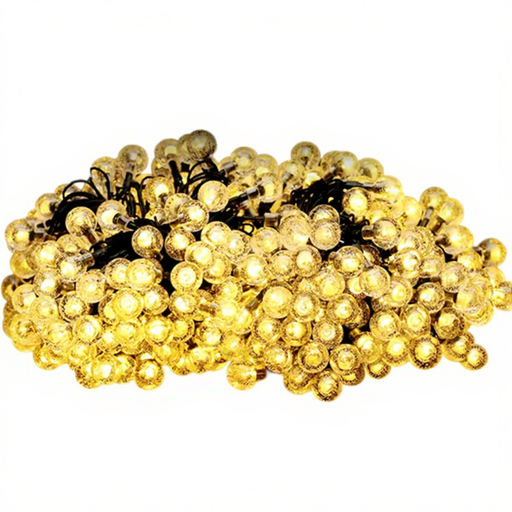
Why this product suits the profile: This battery-powered string light can be placed on a balcony, shelf or at a celebration without needing a socket. Its 50 LEDs, eight modes, timer and memory function cater to a range of decorative needs.
The specifications explicitly state the IP44 rating, operation with three AA batteries, as well as the timer and modes. However, the string light is not intended for continuous exposure to unprotected wet conditions.
5 m length, 50 LEDs, eight lighting modes, plus timer and memory function.
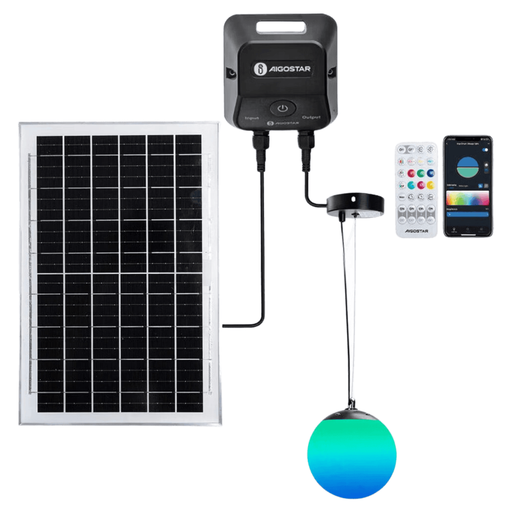
Why this product suits the profile: For larger outdoor areas, this solar light offers Bluetooth Mesh control, scheduling and brightness adjustment. Its 120-degree beam angle is designed for paths, gardens and patios.
The IP65 rating is not confused with suitability for underwater use. The supplied solar panel is intended to power the light, and the charging area must remain free from shade.
10 W solar panel, 350 lumens, 8 Ah LiFePO4 battery and Bluetooth Mesh for connecting multiple devices.
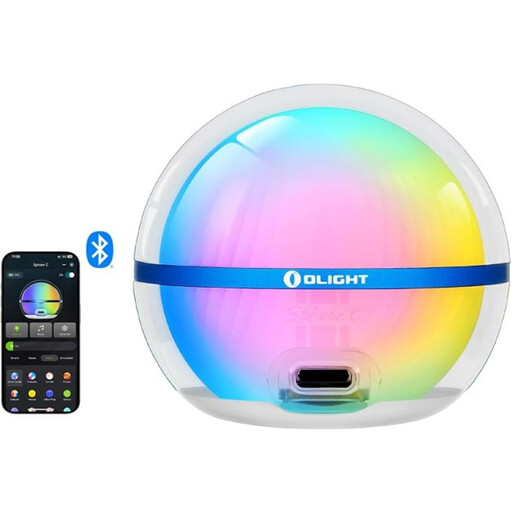
Why this product suits the profile: This compact rechargeable light is suitable for a bedside table, living room, camping or events. App control, Bluetooth, colour modes and a magnetic base support a range of uses.
Runtime is specified by operating mode: up to 3 hours in bright mode and up to 40 hours in soft white mode. The USB-C cable is not included.
700 mAh battery, seven basic effects, 14 app-exclusive themes and a magnetic base, all in a compact 5.7 × 5.7 × 6.7 cm form.
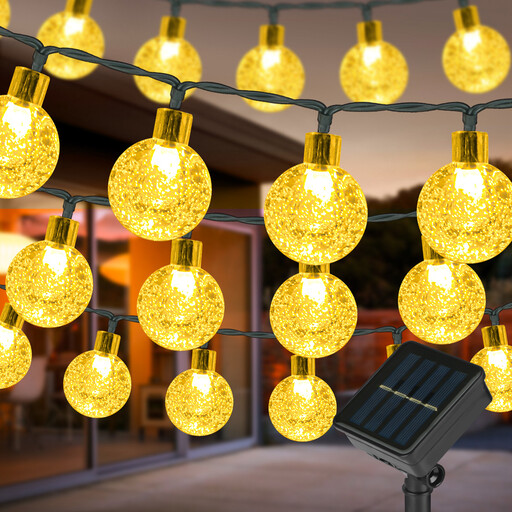
Why this product suits the profile: This 7 m solar string light is designed for decorative outdoor areas such as gardens, balconies, patios or events, and does not require a permanent mains connection.
The product details distinguish between the IP65-rated light string and the solar panel or battery compartment. The 8 to 14-hour runtime depends on the weather and charging conditions.
50 warm white LEDs, eight lighting modes, solar power and a stated charging time of approximately 6 to 8 hours in direct sunlight.
We have put together a complete, regularly updated list of products that fully meet these strict selection criteria and the safety regulations applicable in the EU.
Consumption depends on the wattage and daily operating time. A light with a lower wattage uses less electrical energy than a higher-powered model when used for the same amount of time. Solar and battery-powered lights do not incur direct mains electricity costs while operating, although rechargeable batteries need to be charged and standard batteries replaced.
Lifespan is often stated in operating hours. Actual service life depends on factors including heat generation, moisture, switching cycles, battery quality and operating conditions. For outdoor lights, you should consider the IP rating, installation and care, as moisture ingress or heavy soiling can affect performance.
No. The manufacturer’s stated area of use and the IP rating are decisive. A string light with IP20 is intended for indoor use, while IP44 or IP65 may be suitable for certain outdoor areas, depending on its construction. The battery compartment, power supply and solar panel must be checked separately.