
Lieferung heute & morgen

Qualitätsgarantie

Willkommens-Angebote freischalten: KOSTENLOSE Lieferung | Bis zu 80 % RABATT | Kostenlose 30-Tage-JoyPlus-Testphase
App herunterladen
LED lighting is a popular choice in many British homes, with options for the living room, bedroom, hallway, bathroom, staircase, balcony and garden. The range includes everything from LED wall lights and dimmable lamps to smart light strips. That variety can make it difficult to compare products: an attractive design tells you little about installation, light distribution or where the light is actually suitable for use.
A warm white LED bulb at around 2,700 to 3,000 Kelvin gives off a yellowish, warm light. This can work well in the living room or bedroom, but it won’t necessarily provide bright task or general lighting. For a desk, kitchen or utility room, lumens, beam angle and mounting height are also important.
A light designed for indoor use isn’t automatically suitable for a balcony, carport or bathroom. For outdoor areas, check the stated IP rating. The first digit indicates protection against solid objects, while the second indicates protection against water. An outdoor wall light with a motion sensor also needs to be mounted in a suitable position and connected in a way that’s approved for the intended location.
For a lamp to dim properly, the bulb, light fitting and dimmer must be compatible. Lights with built-in LEDs often have a suitable control mechanism built in or require one. For a wall light with a replaceable bulb, the bulb itself must be explicitly marked as dimmable. Smart products are often controlled through an app, remote control or smart home system, rather than a traditional wall dimmer.
An LED wall light with a colour temperature of 3,000 K can be used as accent or supplementary lighting in a hallway, bedroom or living room. For full room lighting, check whether you’ll need more than one light.
For a hardwired LED wall light, consider the distance between the fixing holes, connection type, installation depth and weight. A model with a hardwire connection should only be installed with the circuit switched off and by someone with sufficient electrical knowledge. If you’re unsure, contact a qualified electrician.
Battery-powered models, on the other hand, need to be checked for their charging connection, battery capacity, run time and charging time. A rechargeable table lamp is a flexible option for a dining table, bedside table or balcony, but it can’t provide continuous main lighting when the battery runs flat.
Aluminium, glass, acrylic and coated finishes all affect a light’s weight, appearance and cleaning requirements. For a bathroom light, it’s not just the moisture-resistant finish that matters: the electrical components must also be suitable for the intended installation location. When choosing LED cupboard lighting, important factors include sensor range, mounting method, switching behaviour and how the light can be recharged.
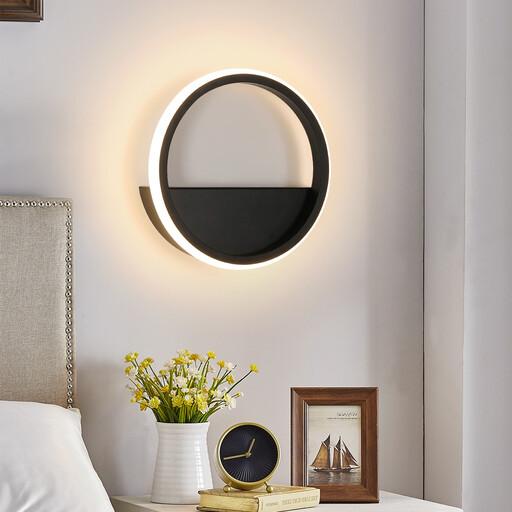
Why it’s a good fit: This round aluminium light is designed for indoor use. Its specifications clearly state a power rating of 12 W and a warm white colour temperature of 3,000 K.
The product details specify where the light can be used, along with its power, diameter and colour temperature. This makes it easier to check whether it suits your wall and the atmosphere you want to create before you buy.
12 W, 3,000 K, a round design and an aluminium housing; suitable for the living room, bedroom and hallway.
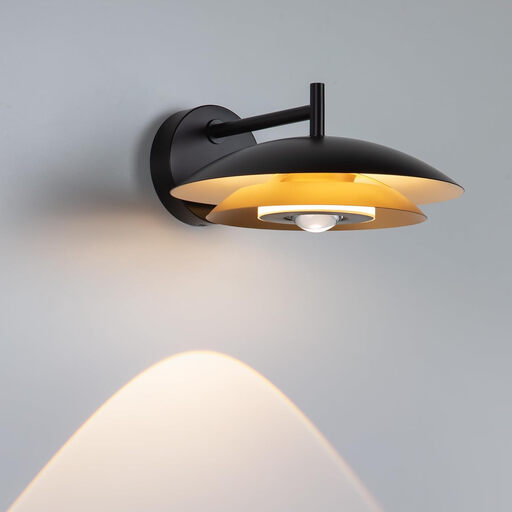
Why it’s a good fit: The combination of clear glass, galvanised steel and a 360-degree globe is ideal for buyers looking to pair quality materials with flexible lighting options.
Dimming requires a dimmable bulb and a compatible dimmer. Knowing this upfront helps avoid expecting the light to dim straight out of the box.
Glass globe measuring around 17 cm in diameter, hardwired installation and dimming with compatible accessories; designed for use in several indoor spaces.
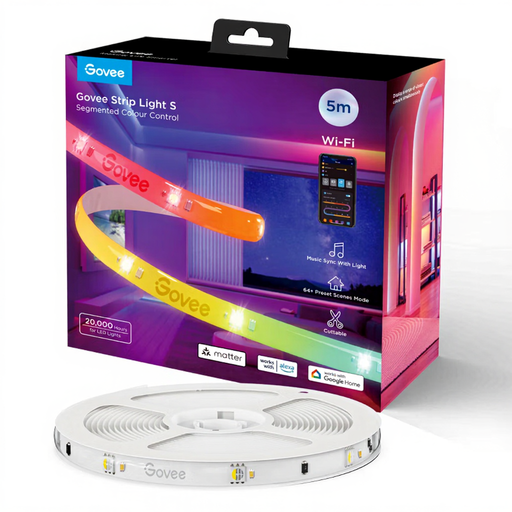
Why it’s a good fit: This smart LED light strip offers RGBIC segment control, app connectivity, Wi-Fi, Bluetooth and Matter support for compatible smart home systems.
The product details specify its 5 m length, 24 W power rating, indoor use and protective coating. This makes it easier to check that it’s suitable for your intended installation location.
5 m length, RGBIC segment control, Matter support and voice control through compatible systems; for indoor use only.
For dark drawers or cupboards, LED cupboard lighting with a sensor could be a better choice. The Yeelight LED Sensor Drawer Light 4 Pack is designed as a multi-pack. Before you buy, check the sensor type, mounting surface and charging or battery setup.
An outdoor wall light with a motion sensor could be a good option for an entrance, garage, garden or balcony. According to the product description, the Pheashine U-shaped model has light and motion sensors, a 24 W power rating and a colour temperature of 3,000 K. Check the exact IP rating and installation requirements in the product specification sheet before ordering.
If you need a portable light, consider the Yeelight Portable Dimmable Candela Lamp, which has a rechargeable battery and a colour temperature of 1,800 K. Its low colour temperature is designed to create warm ambient lighting. For longer use, check the charging time and stated battery life.
We’ve put together a complete, regularly updated list of products that meet these strict selection criteria and fully comply with the safety regulations in force across the EU.
Energy use depends on the power rating in watts and how many hours the light is on each day. A simple calculation is: Watts ÷ 1,000 × hours of use × electricity price. With smart light strips, the control unit may also use extra power, depending on how it’s used.
Lifespan varies by model and should be listed in the manufacturer’s product specification sheet. Heat, frequent switching, poor ventilation and unsuitable power supplies can all affect operating conditions. For lights with built-in LEDs, also check whether the LED module can be replaced.
No. The light or bulb must be explicitly marked as dimmable. The dimmer, power supply and light must also be compatible. Smart LED light strips are usually dimmed using an app, remote control or voice control.