
Lieferung heute & morgen

Qualitätsgarantie

Willkommens-Angebote freischalten: KOSTENLOSE Lieferung | Bis zu 80 % RABATT | Kostenlose 30-Tage-JoyPlus-Testphase
App herunterladen
LED lighting for your home can be functional, decorative or part of a smart home system. The choice ranges from a classic LED ceiling light and an LED floor lamp to a connected Wi-Fi LED lamp and colourful RGBIC LED lighting for your TV. However, technical terms and eye-catching marketing claims can make comparisons difficult.
This buying guide explains which details really matter, which common purchasing mistakes you can avoid and which products are suitable for different living situations.
The wattage mainly indicates energy consumption, not brightness. For a direct comparison, the luminous flux in lumens is what matters. For example, a light with 1,200 lumens produces a significantly different amount of light from a decorative night light with a lower luminous flux.
For rooms, you should also consider the size of the space and how the light will be used. A kitchen worktop needs different lighting from an indirect light source behind the TV.
Many colourful LED products offer RGB lighting. With RGBIC LED lighting, individual segments can display different colours. This is useful for dynamic scenes, gaming setups or music modes. Depending on its design, a conventional RGB strip may only display one colour across its entire length.
Also check whether the light is controlled by remote control, app, Bluetooth, Wi-Fi or voice assistant. A product with app connectivity is not necessarily compatible with every smart home system.
An LED light strip needs to fit the back of your TV, monitor or piece of furniture. For example, the Govee Envisual TV Backlight T2 is designed for TVs measuring 55 to 65 inches. Another Govee TV LED Backlight is specified for 46 to 60 inches.
Dimensions are also important for cabinet lighting: a 20-centimetre light will not fit every compartment. Before buying, check the mounting surface, cable routing, power supply and whether the surface is suitable for adhesive mounting.
Colour temperature is measured in Kelvin:
A dimmable lamp does not always change its colour temperature automatically. If you want to adjust both brightness and light colour, the product must explicitly support both functions.
The luminous flux in lumens describes the amount of light emitted. The beam angle shows how widely the light spreads. An angle of 190° on an E27 LED bulb provides broad light distribution, while a narrower beam is more suitable for accent lighting.
For a ceiling light, you should consider the size of the room, ceiling height and existing light sources. According to the product specifications, the OSRAM Leste LED Ceiling Fan is designed for rooms of up to around 13 m² and provides 1,200 lumens at 21 watts.
The protection rating is indicated by the IP rating. IP20 is intended for dry indoor areas, not bathrooms exposed to splashing water or outdoor spaces. LED strips with a protective coating are not automatically waterproof, so always check the specific product information.
For battery-powered products, battery capacity, charging port and charging instructions are important. For mains-powered lamps, the voltage, lamp fitting and maximum power rating should match. An E27 light fitting may only be used with suitable bulbs within the specified power limit.
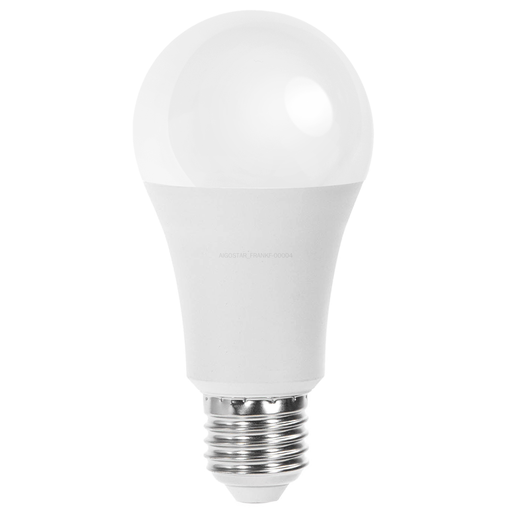
Why this product suits this profile: The E27 bulb fits many existing light fittings and provides warm white light for living rooms or bedrooms.
The specifications list the fitting, voltage, luminous flux and colour temperature. This allows you to check before buying whether the bulb is compatible with your existing light fitting.
15 watts, 1,500 lumens, 3,000 Kelvin, E27 fitting and 190° beam angle.
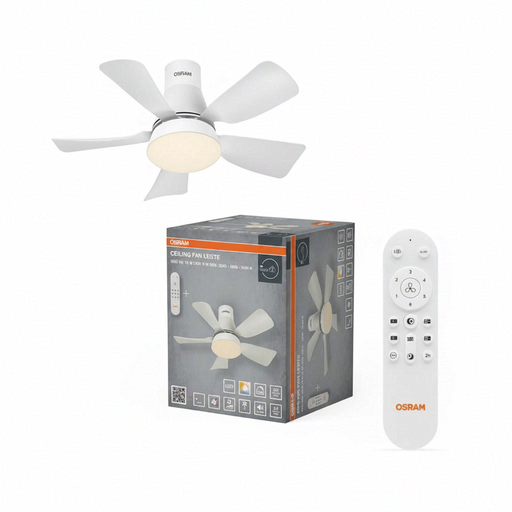
Why this product suits this profile: This ceiling solution combines lighting with a fan and offers multiple light colours plus remote control for a small indoor space.
The product data specifies the room size, luminous flux, colour temperatures and IP20 rating. This makes it easier to match the intended location with the technical requirements.
21 watts, 1,200 lumens, 3,000/4,000/6,500 Kelvin, continuously dimmable and remote control included.
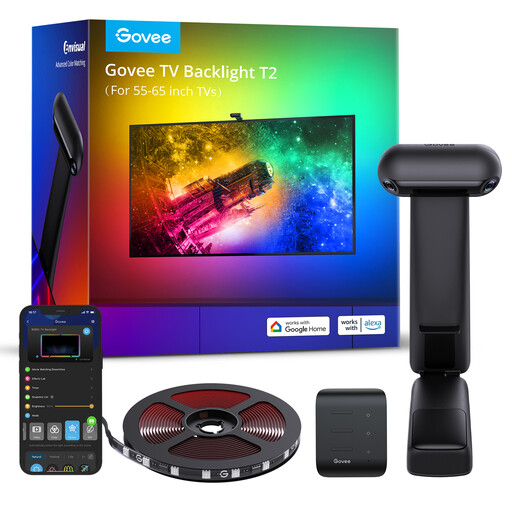
Why this product suits this profile: For TV, film and gaming setups, this system offers camera-based colour matching, app control and compatibility with voice assistants.
The specified TV size of 55 to 65 inches and support for 2.4 GHz Wi-Fi help prevent purchases of incompatible devices.
RGBIC technology, dual cameras, 12-foot strip length, app and voice control, plus music mode.

Why this product suits this profile: The combination of a motion sensor, three colour temperatures and a USB-rechargeable battery makes it suitable for kitchens, cabinets, hallways or bedrooms.
The 20-centimetre dimensions, PIR detection range of 3 to 5 metres and USB charging function are clearly specified, making installation planning easier.
Two lights, 800 mAh battery per light, PIR sensor and 2,800 to 7,000 Kelvin across three settings.
For a child’s bedroom, a children’s bedroom night light should ideally be stable, designed for indoor use and positioned out of the reach of small children. A decorative silicone light such as the VIVREAL Reclining Duck is battery-powered; nevertheless, the product information recommends supervising younger children.
In the living room, an LED ceiling light is suitable for general illumination, complemented by decorative lighting. For gaming and home entertainment areas, a TV backlight or an LED floor lamp with RGBIC segments may be a good choice. With LED strips, pay attention to ventilation, installation without kinks and the maximum length.
Cabinet lighting with a motion sensor saves you from having to operate a manual switch, but it does require regular recharging. So check how easy the charging port is to reach and whether the sensor area will remain unobstructed.
We have put together a complete, regularly updated list of products that fully meet these strict selection criteria and the safety regulations applicable in the EU.
This depends on the size of the room, ceiling height and intended use. For general lighting in a small room, a light with around 1,000 to 1,500 lumens may be sufficient. For worktops or larger rooms, additional light sources are useful. Even, glare-free distribution is key.
Lifespan is specified in operating hours, but depends on temperature, switching cycles, power supply and usage. A stated lifespan of 15,000 or 20,000 hours is therefore a technical guide rather than a guarantee for every application. Effective heat dissipation and operation within the intended environment help ensure reliable use.
During operation, consumption depends on wattage and how long the light is used. Smart LED lighting may also require additional energy in standby mode if Wi-Fi or Bluetooth functions remain active. When choosing a product, you should therefore consider not only its features but also power consumption, automatic schedules and switch-off options.