
Lieferung heute & morgen

Qualitätsgarantie

Willkommens-Angebote freischalten: KOSTENLOSE Lieferung | Bis zu 80 % RABATT | Kostenlose 30-Tage-JoyPlus-Testphase
App herunterladen
LED lights differ in more than just their shape and colour. Key considerations include brightness, controls, installation, energy use and suitability for the room. If you choose based solely on design or the number of available colours, you could overlook important details.
Three common marketing traps can lead to disappointing purchases:
Brightness is measured in lumens (lm). The higher the lumen value, the more light the lamp produces under the stated conditions. Lower light output is often enough for ambient lighting alone. A reading lamp or task light, on the other hand, needs a suitably positioned and sufficiently bright light source.
Colour temperature is measured in kelvin (K):
A warm-white lamp at 3,000 K, such as the Dewenwils Edishine Floor Lamp, is a good fit for living rooms and bedrooms where you want even, unobtrusive lighting.
A dimmable floor lamp may be operated using a foot switch, remote control, Bluetooth, Wi-Fi or an app. Before you buy, check exactly which control options are included.
Key differences:
For smart lamps, check which platforms they support too. Alexa, Google Assistant, Apple Home and Matter are not interchangeable. Make sure the lamp is compatible with your existing smart home system.
Measure the space before you buy. An LED floor lamp around 150 cm tall needs a stable base and enough clearance from walkways. Slim models fit neatly into corners, but shouldn’t be so unstable that they could tip over easily.
IP20 is a common rating for indoor use. It is intended for dry indoor areas and doesn’t mean the light is protected against water. For bathrooms, balconies or sheltered outdoor areas, pay particular attention to the manufacturer’s guidance on the protection rating.
For wall lights, you should also check the installation method, cable routing and available power connection. Depending on the design, an LED wall light can be installed horizontally or vertically. If you’re unsure, consult a qualified professional before installing electrical lights.
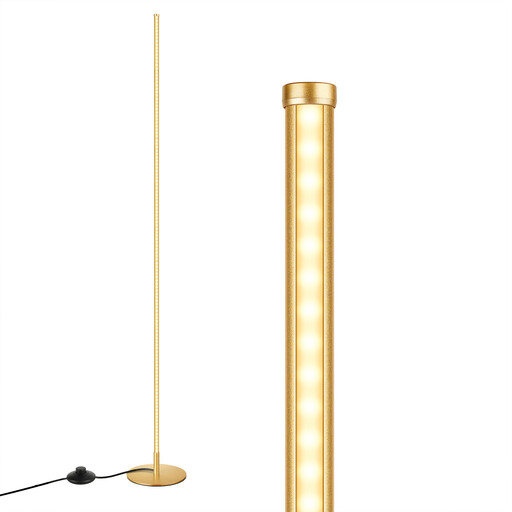
Why it suits this profile: This 146 cm floor lamp is designed for living rooms, bedrooms or offices. It combines warm-white light with stepless dimming via a foot switch.
The specifications clearly state 3,000 K, stepless dimming and a memory function, rather than making vague claims about dimming.
Integrated LED, metal construction, weighted base and tool-free assembly in sections.
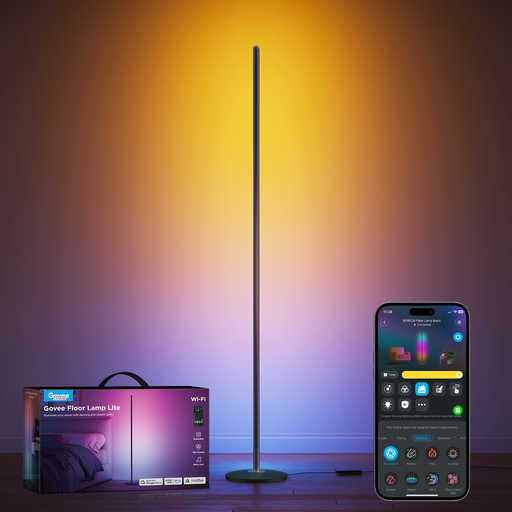
Why it suits this profile: For anyone looking for a controllable RGB LED lamp with app, Wi-Fi and voice assistant connectivity for the living room, gaming room or home cinema.
The controls and features are clearly specified: app, Wi-Fi, Bluetooth, Alexa, Google Assistant, 58 scenes and 16 million colours.
1,000 lumens, 24 watts, dimming options and customisable segmented lighting with a music mode.
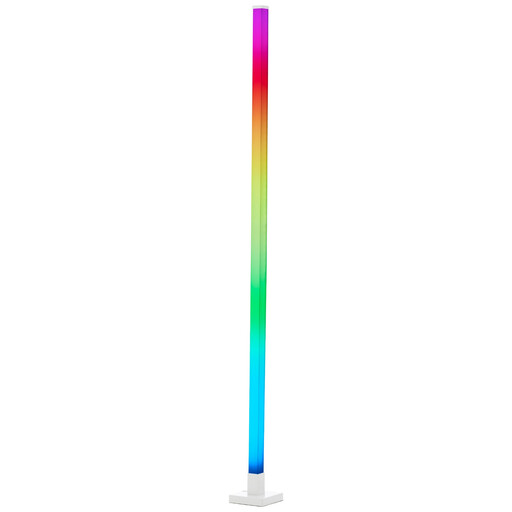
Why it suits this profile: A good choice if you want to combine colourful lighting effects, a remote control and a built-in music sensor for your living room or party space.
It comes with a remote control, and the product details state that you can adjust the brightness and speed of the effects.
150 cm tall, integrated RGB LED, music sensor, remote control and G energy efficiency class.
Use this formula for a rough estimate:
Cost = power in kilowatts × operating hours × electricity price
A 10-watt lamp uses around 10 kWh over 1,000 hours of operation. The actual cost depends on your electricity tariff. Also check the stated energy efficiency class. It shows how the product is rated under the current EU energy label and shouldn’t be considered in isolation from brightness and usage time.
For lights with built-in LED modules, the manufacturer’s stated lifespan is also important. If it’s not clear whether the module can be replaced, bear in mind that a fault may mean you have to replace the entire light.
We’ve put together a complete, regularly updated selection of products that meet these strict criteria and fully comply with the safety regulations in force in the EU.
Lifespan depends on the LED module, heat dissipation, electronics and daily operating time. Treat manufacturers’ estimates as a technical guide. For integrated LEDs, it’s especially important to check whether the module can be replaced and what the warranty covers.
For a bedside lamp, compact dimensions, warm-white light and simple controls are useful. A rechargeable ambient light can be placed wherever you need it. If your bedside lamp plugs into the mains, consider the cable, switch position and stability.
It depends on the features you want. A smart lamp is particularly useful if you’ll use timers, scenes, voice control or integration with an existing smart home system. For simple warm-white lighting, a foot switch or a lamp with a remote control may be enough.