
Lieferung heute & morgen

Qualitätsgarantie

Willkommens-Angebote freischalten: KOSTENLOSE Lieferung | Bis zu 80 % RABATT | Kostenlose 30-Tage-JoyPlus-Testphase
App herunterladen
LED lights are available for almost every room in the home: as LED ceiling lights, LED recessed spotlights, under-cabinet lights, LED table lamps or LED floor lamps. However, the wide selection doesn't automatically make the search easier. Unclear product specifications, unsuitable IP ratings or incorrect installation dimensions often lead to buying mistakes.
The wattage describes the power consumption, not directly the brightness. For comparison, the luminous flux in lumens (lm) is what matters. A compact table lamp with 210 lm is better suited for accent or bedside lighting, whereas a recessed spotlight with 780 lm can illuminate larger areas.
With a dimmable LED light, you should check how the brightness is controlled. Some models use a touch switch, others an app or a remote control. With several smart recessed spotlights from the range, dimming is done via the app and not via an external wall dimmer.
The IP rating is indicated by the IP code. IP20 is intended for dry indoor spaces and is not suitable for bathrooms or outdoor areas. IP54 protects against dust and splashing water, while IP65 offers higher protection against pressurised water. The specific installation situation still remains decisive: even a light with a higher IP rating should not be permanently exposed to the weather without protection if the manufacturer does not specify this.
For brightness, the rule is: the higher the lumen value, the more light the lamp gives off under comparable conditions. The colour temperature in Kelvin describes the light effect:
A warm white LED light at 3000 K creates a different atmosphere from a lamp with variable colour temperature. With the colour rendering index CRI or Ra, a value of Ra 80 or above indicates basic colour rendition suitable for many living areas. For tasks with high colour requirements, the value should be checked carefully in the technical specifications.
For an LED recessed spotlight, cut-out size, installation depth and supply voltage are essential. An Aigostar model with 9 W, for example, requires a ceiling cut-out of approximately 120 to 130 mm and is connected to 220 to 240 V. Another flat 12 to 24 V model, on the other hand, requires a separate transformer and a cut-out of 55 to 58 mm. This model must not be connected directly to the mains.
Work on 230 V circuits should be carried out by a qualified electrician in accordance with applicable regulations. Before installation, cleaning or maintenance, the power supply must be disconnected at the circuit breaker.
Smart LED lighting can control colour temperature, brightness and scenes via an app. With Bluetooth Mesh lighting, several lights can be networked via a compatible gateway. Before buying, you should check:
RGB functions are not automatically compatible with every platform. Matter support, Bluetooth, Wi-Fi and Bluetooth Mesh are different standards and should not be equated.
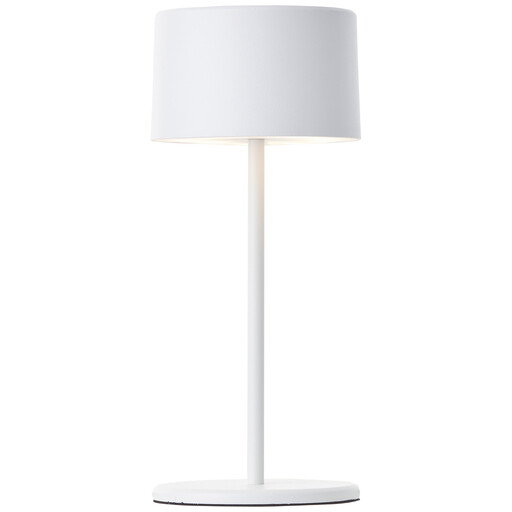
Why this product fits the profile: The compact LED table lamp is intended for bedside tables, desks, shelves or sideboards and, thanks to its USB-rechargeable battery, doesn't need a fixed power socket at the installation location.
The stated luminous flux of 210 lm and the colour temperature of 3000 K make its intended use as accent or orientation lighting clear.
Integrated battery, touch dimmer with three levels, 2 W power and a white metal housing.
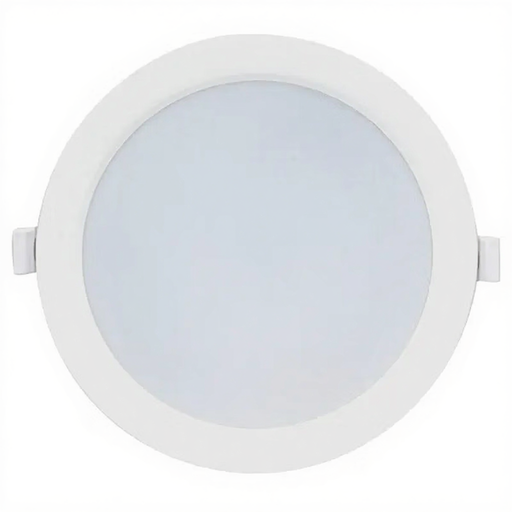
Why this product fits the profile: The flush-fitting light combines CCT adjustment, RGBW colours and Bluetooth and Wi-Fi control for indoor use.
The specifications state the ceiling cut-out of 150 to 160 mm, IP20 for dry indoor spaces and the intended Haodeng app control.
1430 lm, 2700 to 6500 K, RGBW function, dimming via app and voice control.
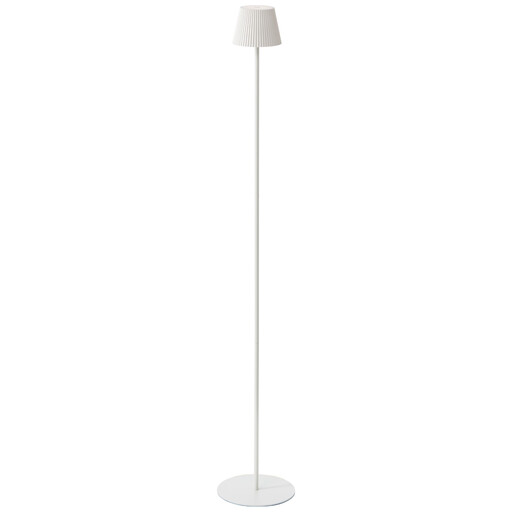
Why this product fits the profile: The cordless LED floor lamp is suitable for balconies, patios, gardens or indoor areas without a directly accessible power socket.
The IP54 rating, the integrated battery and the clearly stated maximum brightness of 340 lm show which environments and lighting tasks the lamp is designed for.
125 cm height, 3000 K warm white light, three dimming levels via touch and USB charging function.
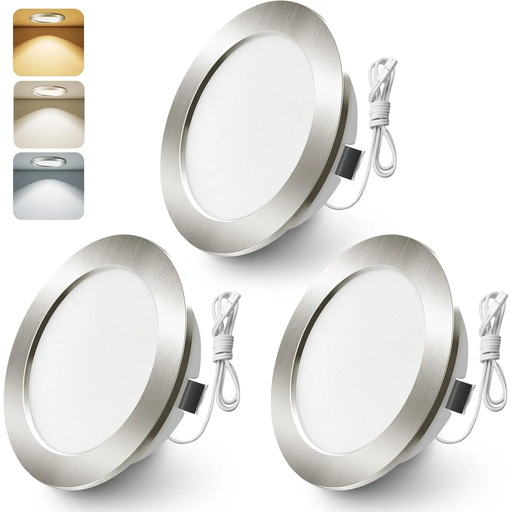
Why this product fits the profile: The under-cabinet light is intended for worktops, kitchen cabinets and other mounting surfaces where touch-free operation is practical.
The technical specifications state 780 lm, 10 W, three colour temperatures and an adjustable brightness from 10 to 100 per cent.
Sensor control via hand gesture, 3000/4000/6500 K and mounting accessories for various surfaces.
We've put together a complete, regularly updated list of products that fully meet these strict selection criteria and the safety regulations in force in the EU.
The consumption depends on the power in watts and the daily operating time. A light with 10 W, when operated for five hours a day, theoretically uses 50 Wh per day. For ongoing costs, this consumption can be multiplied by your own electricity price. With battery-powered lights, charging losses are added.
The stated lifespan is usually given in operating hours, for example 25,000 or 30,000 hours. This value is a manufacturer's specification and depends on factors including heat dissipation, switching cycles, ambient temperature and mains quality. With permanently integrated LEDs, you should also check whether the light module is replaceable.
For the bedroom, warm white light between 2700 and 3000 K is often chosen. A dimmable LED light allows you to adapt to different situations. For small areas, an LED table lamp or a battery-powered LED lamp is often sufficient; as general lighting, a dimmable LED ceiling light may be more suitable. RGB functions are particularly relevant when coloured accent lighting is desired.