
Lieferung heute & morgen

Qualitätsgarantie

Willkommens-Angebote freischalten: KOSTENLOSE Lieferung | Bis zu 80 % RABATT | Kostenlose 30-Tage-JoyPlus-Testphase
App herunterladen
The right lighting can completely transform the atmosphere of a room. LED lights, in particular, offer a flexible and energy-efficient way to create accents—whether for an immersive gaming environment, a relaxed living room ambience, or dynamic party lighting. However, the market is saturated, and many products fail to deliver on their advertising promises. This guide will help you avoid common purchasing pitfalls and understand the parameters that are crucial for a durable and functional solution.
Before making a purchase, you should be aware of the typical flaws that often only become apparent after a few weeks of use.
To avoid the problems mentioned above, you should pay close attention to a few core parameters when making your selection. These largely determine the quality and functionality of your new room lighting.
Not all LEDs are created equal. The designation provides information about their size and performance.
The shape of the light determines its intended use. Think carefully about what you want to illuminate.
The method of control affects convenience and versatility.
Based on the criteria above, we have identified several products that represent a suitable solution for specific user groups and their requirements.
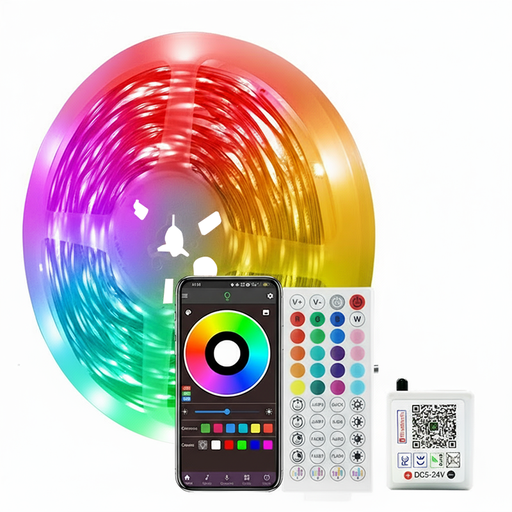
Why This Fits Their Persona: Ideal for users who want to illuminate an entire room on a modest budget. The enormous 30-metre length is sufficient for most bedrooms or living rooms and offers a straightforward entry point into the world of smart lighting.
The product offers dual control via a Bluetooth app and a 40-key infrared remote. If the app connection is unstable, the remote remains a reliable alternative. The use of 5050 LEDs indicates solid brightness and colour mixing for this price point.
Generous 30-metre length for complete room coverage. Flexible control options and an integrated music sync function.
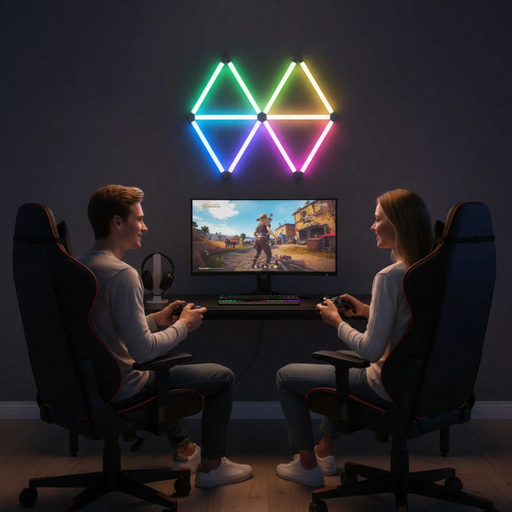
Why This Fits Their Persona: Perfect for gamers and creatives who want to build a unique piece of wall decor. The modular bars can be freely connected to form custom geometric shapes and visually upgrade any gaming setup.
Wi-Fi connectivity ensures stable and reliable integration into smart home systems like Alexa and Google Assistant, bypassing the pitfall of unstable Bluetooth apps. Furthermore, mounting separate, lightweight modules is less prone to adhesive failure than a single long, heavy LED strip.
Modular DIY design for maximum creativity. Stable Wi-Fi connection for voice control and app features, plus a music sync mode that makes the lights dance to the beat of games or music.
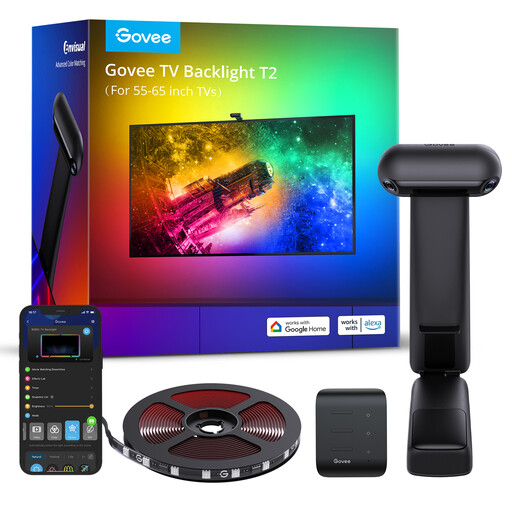
Why This Fits Their Persona: For users who want to maximise the viewing experience for films and series. This system is specifically designed as TV backlighting to project the colours displayed on the screen onto the wall behind the TV in real time.
This system solves the problem of inaccurate colour reproduction in the most technically advanced way. Instead of selecting a static colour, the dual-camera technology continuously analyses the colours at the edge of the screen and dynamically adjusts the lighting. The result is a highly precise and immersive synchronisation.
Govee's patented dual-camera technology ensures extremely accurate colour matching. The RGBIC technology allows for fluid colour transitions along the LED strip.
We have compiled a complete, up-to-date list of products that fully meet these strict selection criteria and German safety regulations.
1. What is the difference between RGB and RGBIC LED strips? A standard RGB strip can only display a single colour across its entire length at any given time. You can change the colour of the whole strip, but you cannot colour different sections differently. RGBIC (Independent Control) strips have an integrated chip that allows individual segments of the strip to be controlled independently. This enables the display of multiple colours simultaneously, facilitating complex effects like flowing rainbows, colour gradients, and dynamic scenes.
2. Do self-adhesive RGB LED strips really stick to a textured wall? Adhesion on rough or dusty surfaces like woodchip wallpaper is a challenge for most adhesive tapes. For a permanent installation, you should thoroughly clean and degrease the surface beforehand. For textured walls, it can be helpful to use additional small, transparent mounting clips or replace the included tape with a stronger double-sided tape suitable for rough surfaces (e.g., from brands like 3M). Gently warming the adhesive strip with a hairdryer before application can also improve the initial bond.
3. How much power do LED lights for a room consume? LED lighting is very energy-efficient. A typical 5-metre RGB LED strip consumes between 15 and 30 watts, depending on the brightness and colour. Even with several hours of daily use, the electricity costs are minimal compared to traditional light bulbs. The exact power consumption is usually indicated on the power supply or in the product specifications in watts (W).