
Lieferung heute & morgen

Qualitätsgarantie

Willkommens-Angebote freischalten: KOSTENLOSE Lieferung | Bis zu 80 % RABATT | Kostenlose 30-Tage-JoyPlus-Testphase
App herunterladen
LED lights with motion sensors only switch on when they detect movement or when the ambient light falls below a certain level. They can be useful in entranceways, on stairs, in hallways, garages and children’s bedrooms. However, unclear technical specifications and unsuitable installation can often lead to the wrong purchase.
Wattage describes energy consumption, not the amount of light produced. Lumens are what matter when it comes to brightness. A night light with 18 or 20 lumens is suitable for finding your way around, while an outdoor LED spotlight with several hundred or over a thousand lumens can illuminate a larger area.
Also check the beam angle. A narrow beam lights a specific spot, while a wider angle may be more suitable for paths, patios or larger entranceways.
A waterproof outdoor light isn’t necessarily suitable for every weather condition. The IP rating describes how well a housing is protected against solid objects and water. IP44, for example, protects against splashes and is suitable for sheltered outdoor areas. For exposed locations, check the manufacturer’s guidance for the specific installation site.
An indoor light, such as a night light with a motion sensor, must not be used in a bathroom or outdoors if the manufacturer specifies that it is for indoor use only.
Fixed-wired lights, such as an outdoor LED wall light, must be installed in Germany by a suitably qualified professional. Before buying, check the voltage, connection type and mounting surface. A product rated at 120 V, 60 Hz is not automatically suitable for the German mains supply of 230 V.
Solar and battery-powered lights offer more flexibility, but need regular charging or sufficient sunlight. The sensor’s range should also suit the installation location: walls, doors and furniture can affect its detection area.
Colour temperature is measured in kelvin:
Warm white LED lighting can feel more comfortable in bedrooms and children’s rooms. For a security LED light at your front door, brightness, beam spread and sensor performance matter more than a particular light colour.
Compare the stated sensor range, detection angle and run-on time. A sensor with a range of up to 3 metres and a 120-degree detection angle may be enough for a hallway or small staircase. A driveway or larger garden area may need a different detection range.
An adjustable switch-off time prevents the light from staying on for too long. For indoor lights, a dusk sensor can be useful to prevent the light from switching on unnecessarily when there is already enough ambient light.
A dimmable LED light should be explicitly compatible with a suitable dimmer. Some 230-volt recessed lights, for example, may require a specific type of dimmer, such as a trailing-edge dimmer. Check technical compatibility before installation.
For stairs and hallways, maximum brightness isn’t the only thing that matters. Even, glare-free lighting and a suitable installation height can make it easier to find your way around. For outdoor lights, also consider the housing material, seals and IP rating.

Why this product suits this profile: This plug-in night light is designed for indoor use in children’s bedrooms, hallways, bathrooms and on stairs. It doesn’t need batteries and uses 0.5 W according to the product details.
Five brightness settings let you adjust the light output. Automatic shut-off after 60 seconds helps prevent unnecessary running time.
2700K warm white light, detection range of up to 3 m and a stated detection angle of 120 degrees.
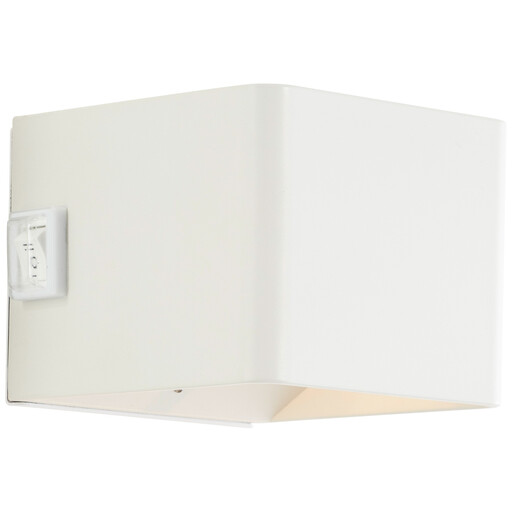
Why this product suits this profile: This battery-powered light is suitable for patios, entranceways and other locations without a fixed power supply.
The IP44 rating and built-in motion sensor are clearly specified, making it easier to assess whether it’s suitable for a sheltered outdoor area.
300 lumens, 3000K, built-in battery, USB charging cable and magnetic fixing, according to the product description.
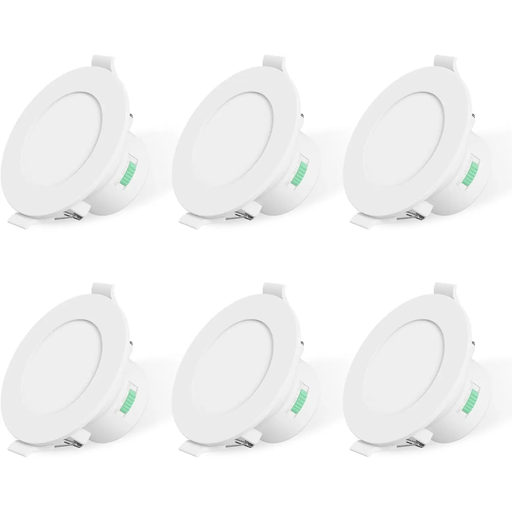
Why this product suits this profile: This set is designed for renovators who want consistent lighting across several steps or a hallway and are planning a fixed 230-volt installation.
Selectable power levels and dimming help you avoid lighting that is too bright or uses too much electricity over time.
Three colour temperatures: 3000K, 4000K and 6500K; dimmable from 10 to 100 per cent; IP44; six lights in the set.
We’ve put together a complete, regularly updated list of products that meet these strict selection criteria and fully comply with the safety regulations in force in the EU.
Consumption depends on the wattage, how long the light stays on and how often it is activated. A 0.5 W model uses significantly less energy than a 20 W LED spotlight. A motion sensor can reduce overall consumption because the light doesn’t stay on continuously. For an accurate estimate, consider the stated wattage alongside the daily operating time.
3000K gives a warm white, subtle effect. 4000K provides more neutral lighting, while 5000K appears daylight white. For front doors, garages and driveways, check the lumens, beam angle and glare as well as the colour temperature.
Only models explicitly approved for the intended damp area and marked with an appropriate IP rating are suitable. An indoor night light isn’t automatically safe to use close to water. The installation zone, IP rating, connection and manufacturer’s instructions all matter.