To capture an etching in full and as evenly as possible, a positionable, dimmable white-light panel with diffusion is a sensible starting point – provided you can set it up safely beside your small table. Compact lights are better suited to close-ups or as supplementary lighting. Check the illumination across the whole sheet and set the white balance appropriately for your shoot. If you’re photographing a delicate paper original, prepare your setup and camera before switching on the light, and only use it while taking the photos.
Who this selection is for
Documenting etchings in full
If you want to photograph the entire sheet and reproduce the paper and print clearly, light positioning, even illumination and consistent white balance matter more than colour effects. Canon Europe explains why setting the white balance correctly is important in challenging lighting conditions.
Photographing on a small table
If space is limited for your etching, camera and light, or you need to pack everything away after each shoot, check the mounting and power supply for the exact model variant. Compact lights can differ in their lighting features and mounting options, for example.
Photographing delicate originals
If you’re photographing a valuable paper original, prepare your camera and setup first, then switch the light off again once you’ve finished. The Library of Congress notes that prolonged exposure to light can damage paper materials.
What to look for when buying
First decide whether you want to photograph the whole sheet or focus mainly on details. Then check that the light’s position, mounting and power supply will work with your table.
| What matters to you |
What to look for |
Who is this important to? |
| Tonal range and paper colour |
Check the white-light range and dimming options for the specific variant; set the white balance under the lighting you plan to use. |
If I want to capture the paper and print as accurately as possible for repeatable documentation, suitable lighting is important. Around 36% of consumers prioritise tonal range and colour. |
| Even coverage and reflections |
Check the diffuser and light positioning; take a test photo of the whole sheet, including the edges. |
For a full view, I want to see whether the edges of the sheet are captured evenly and whether there are any distracting reflections. Around 29% of consumers put even lighting with as few reflections as possible first. |
| Mounting and space |
Check the dimensions, mounting, cable routing and what’s included for the exact variant. |
If my camera, sheet and light all need to fit on my table, I need a mount that can be integrated securely into my setup. Around 21% of consumers say space and mounting are their top priorities. |
| Gentle, practical operation |
Check the power supply and accessories; prepare your camera and setup before switching on the light. |
When photographing a delicate paper original, I want to limit the lighting to the actual shoot while still having the right power supply. Around 14% of consumers prioritise a gentle and practical workflow. |
Common buying misconceptions
-
A high CRI rating guarantees true-to-life photos
A manufacturer’s rating doesn’t tell you what the result will look like with your light, camera position, camera settings and subject.
Set the white balance under the lighting you plan to use, then check the paper white and print in a test photo.
-
A mini panel will automatically light the whole sheet
Compact dimensions don’t prove that an entire etching will be lit evenly.
Factor in the sheet dimensions, distance from the light and mounting when planning your setup, then check the result across the whole sheet.
Depending on your setup, you may need an additional light or a suitable mount to capture the whole sheet.
-
A stand and batteries are always included
With the NEEWER NL660, a stand is included only with certain variants; NP-F batteries are not included.
Check what’s included and how the exact variant is powered before buying.
Depending on the NL660 variant, you may need to buy a separate stand or NP-F batteries.
-
Lights with similar names have the same features
The specifications for the white Ulanzi VL49 don’t automatically apply to the separate VL49-RGB version. Godox specifications can’t necessarily be applied to other models either.
Compare the full model name and white-light features with the manufacturer’s specifications.
Key brands at a glance
NEEWER
The NL660 is a larger bi-colour panel for a setup with enough space to position it to the side.
- NEEWER says the NL660 is dimmable from 0 to 100% and is available with a diffuser and power adapter.
- A stand is included only with certain variants; NP-F batteries are not included. Colour rendition is a manufacturer’s claim, not an independent test using an etching.
Godox
The P260C Pro is a larger, adjustable bi-colour panel for a dedicated photography setup.
- Godox lists a diffuser, a colour temperature range of 2800–6500 K and several power options.
- The manufacturer’s claims about the light, along with the CRI and TLCI ratings, aren’t independent test results for photographing an etching and don’t automatically apply to other Godox models.
SmallRig
The Vibe P96 is a small, battery-powered bi-colour light for close-ups or as an additional light source.
- SmallRig lists a colour temperature range of 2700–6500 K, a built-in battery and a weight of 103 g.
- Its compact design doesn’t guarantee even lighting across the whole sheet; check separately that you can mount it suitably on your table.
Ulanzi
The white VL49 is a very small light for a compact setup that’s easy to pack away.
- For this VL49 version, Ulanzi lists a colour temperature of 5500 K, a built-in battery and a diffusion filter.
- According to the specifications for this version, the colour temperature can’t be adjusted. It’s different from the separate VL49-RGB version.
amaran
The P60x is a panel with a softbox for a setup with enough space to shape the light precisely.
- amaran lists a colour temperature range of 3200–6500 K, along with an included softbox and light control grid.
- Check the mounting and power supply for the specific variant you’re buying, and test the light on your own sheet.
Joybuy products for a compact photography setup
This selection includes compact battery-powered lights and a foldable lightbox for small subjects; the lightbox isn’t a standalone LED panel.
 No image available
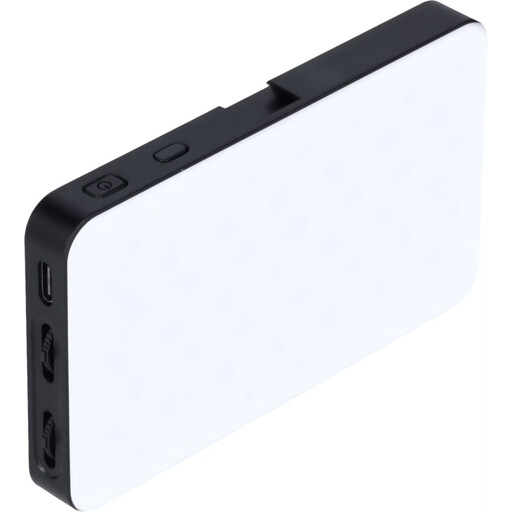
Rollei LUX Compact RGB LED Light, 8W
This compact, battery-powered light could suit a small table setup that can be packed away.
Dimensions: 11,5 × 6,8 × 1,6 cm. Adjustable colour temperature: 2.500–9.000 K; brightness: 0–100 %. Connections: Cold Shoe and 1/4 inch.
Joybuy
 No image available
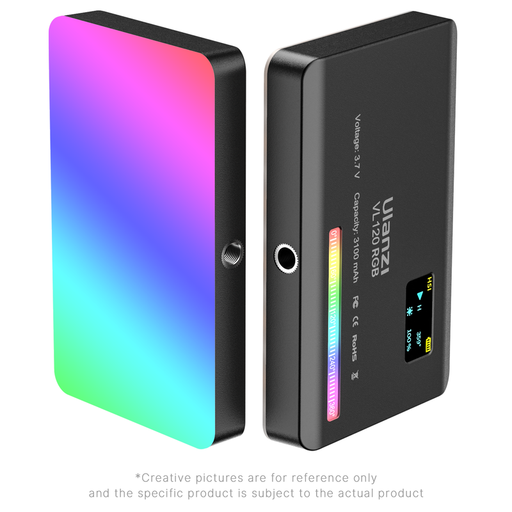
Ulanzi VL120RGB LED light, black
This compact light is an option if you want to attach it to a Cold Shoe and adjust the lighting to suit your setup.
The product description lists a built-in battery, a Cold Shoe adapter, a diffuser, and adjustable colour temperature and brightness.
Joybuy
 No image available
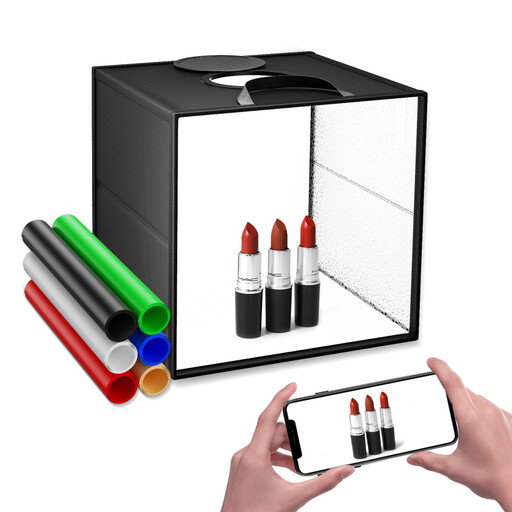
Foldable 30 cm LED photo lightbox with 120 LEDs
According to the product description, this lightbox is designed for small still-life and product photography; it isn’t a standalone panel for photographing an etching.
The description lists three colour temperatures, nine dimming levels and six background sheets.
Joybuy
Frequently asked questions
Is a small LED panel enough to light the whole etching?
You can’t tell from the size of the light alone. Check the whole sheet, including the edges, using the planned distance and position. A mini panel can also work as a detail light or supplementary light.
How should I position the light if the etching is behind glass?
Adjust the position of the light and camera, then check for reflections in a test photo. A diffuser can affect how the light falls, but it won’t necessarily prevent reflections. For accurate documentation, it helps to keep the white balance consistent under the lighting you’re actually using.
What should I bear in mind when photographing a delicate paper original?
Prepare your camera and setup first, and light the original only for as long as you need to take the photo. The Library of Congress warns against prolonged exposure to light for paper materials; its guidance on long-term display doesn’t set a safe limit for a single photography session.
Can I publish a photo of an etching online in Germany?
Not simply because you own the etching or took the photo yourself. Whether the work is protected, who owns the rights and what usage rights apply will depend on the circumstances. The German Patent and Trade Mark Office and Section 53 of the German Copyright Act (UrhG) distinguish private copies from online publication. Check the rights for the specific work and your intended use.


