
Lieferung heute & morgen

Qualitätsgarantie

Willkommens-Angebote freischalten: KOSTENLOSE Lieferung | Bis zu 80 % RABATT | Kostenlose 30-Tage-JoyPlus-Testphase
App herunterladen
An LED mirror can make your daily grooming routine easier while also serving as a practical feature in your home. The requirements vary considerably depending on the room and how you plan to use it: in the bathroom, the protection rating and installation matter; in the bedroom, even illumination is important; and in the hallway, a full-length view is often the main priority.
Before buying, it’s worth checking the technical specifications carefully. Some advertised features may seem useful at first, but aren’t always practical for everyday use.
“Bright LED lighting” on its own doesn’t tell you much about how the mirror will work for you. If details such as light colour, controls or power supply aren’t provided, it’s difficult to tell whether the mirror is suitable for applying make-up, shaving or a quick check of your appearance. The position of the LEDs matters too: lighting around the edge distributes light differently from a single strip along the top.
Not every illuminated bathroom mirror is suitable for damp rooms. A model designed for indoor use may be problematic in a bathroom if no protection rating is specified. IP44, for example, means protection against solid objects larger than 1 mm and splashing water from different directions. It does not mean the mirror is suitable for direct jets of water or immersion.
An illuminated wall mirror needs a sturdy wall, suitable fixings and, where required, an appropriate power connection. With a freestanding or full-length mirror, you’ll need to consider the floor space it takes up, its stability and its distance from doors. Frames, shelves and storage compartments can also increase the mirror’s overall dimensions.
For applying make-up and styling, even illumination across the mirror is ideal. Check the following:
A cosmetic mirror with LED lighting is particularly suited to close-up use, whether you’re sitting or standing. If you also want to check your outfit and posture, you’ll probably need a full-length mirror or a tall freestanding mirror.
Choose a size that suits both the wall and the way you plan to use the mirror. A 60 x 40 cm bathroom mirror is large enough for many washbasins, but offers a much smaller viewing area than a portrait-style model. Before buying, measure the available width, the height of the power connection and the distance from the taps.
With an LED wall mirror, you should also check whether it can be mounted horizontally, vertically or in just one fixed position. A model with flexible mounting options may be better suited to washbasins of different widths. A freestanding mirror gives you more freedom over where to place it, but needs to stand securely on the floor.
The glass, frame and back should all be suitable for the room. Aluminium frames are lightweight and commonly used for modern bathroom mirrors. A soft cloth and mild cleaning product are usually all you need to care for the mirror. Abrasive products, strong acids and rough sponges can damage the glass, coating or frame.
If a product isn’t specifically rated for damp rooms, consider how close it will be to the shower, bath and washbasin. This also applies to a modern mirror with decorative LED lighting.
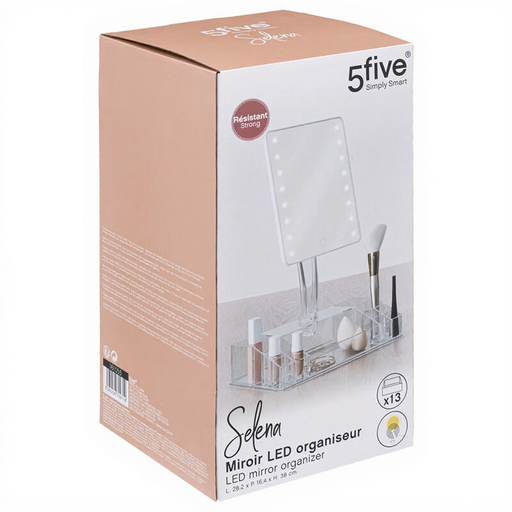
Why this product suits this profile: This model combines an LED mirror with 14 compartments for make-up, jewellery and grooming essentials. It’s suitable for bedrooms, dressing rooms and other dry indoor spaces.
The 14 separate storage compartments help keep accessories tidy. The product information lists mains or battery power; these power options should not be used together. According to the description, the model isn’t designed for direct exposure to moisture.
LED lighting, 14 storage compartments, and a construction of ABS plastic and metal, according to the product description.
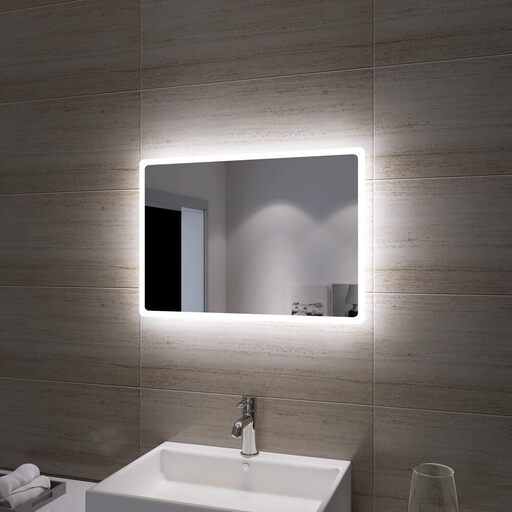
Why this product suits this profile: Clear information about the dimensions and installation makes it easier to plan your washbasin area. According to the product details, this rectangular mirror can be mounted on the wall horizontally or vertically.
The stated protection rating of IP44 makes it clear where the mirror can be used: it’s suitable for splashes, but not direct jets of water. It’s operated by a wall switch, which isn’t included, according to the product details.
60 x 40 cm dimensions, an aluminium frame, front-facing LED lighting and flexible mounting options, according to the product details.
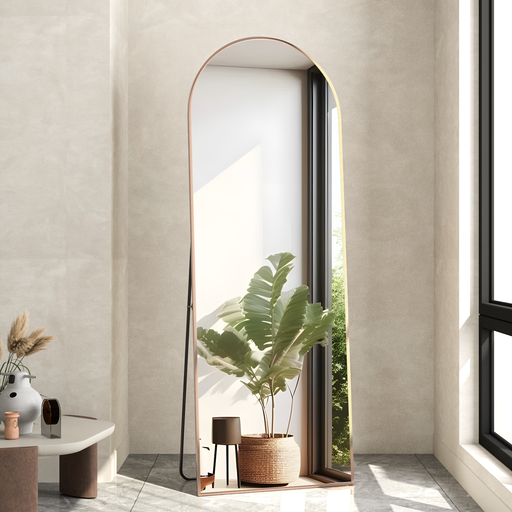
Why this product suits this profile: The 150 x 60 cm arched design is made for a full-length view. Depending on the room, the product name indicates that the mirror can be freestanding, wall-mounted or leaned against a wall.
The different standing and mounting options make it easier to choose a setup that suits your room and tenancy. Before setting it up, check that there’s enough floor space and that the mirror is stable.
A generous 150 x 60 cm mirror, an arched shape and several intended ways to use it, according to the product name.
We’ve put together a complete, regularly updated list of products that meet these strict selection criteria and fully comply with the safety regulations in force in the EU.
For a wall mirror, choose fixings that are suitable for both the wall type and the product’s weight. Take care not to drill into pipes or cables, and have the electrical connections checked by a qualified electrician if necessary. A wall switch isn’t automatically included.
A freestanding mirror needs a level surface. In homes with children or pets, an additional safety fixing is a good idea if the manufacturer recommends one. Also make sure the lighting doesn’t shine directly into your eyes.
Consumption depends on the LEDs’ power rating and how long the mirror is used each day. You’ll find the wattage on the product label or in the data sheet. For a rough estimate, multiply the power in kilowatts by the number of hours used, then multiply the result by your electricity tariff. A mains switch or switching the mirror off completely can help avoid standby consumption.
That depends on the stated protection rating and the installation zone. A model with IP44 is protected against splashing water, but isn’t suitable for direct jets of water or immersion. Also follow the manufacturer’s instructions and, if you’re unsure, have the electrical connection checked by a qualified professional.
Use a soft, slightly damp cloth and, if needed, a mild cleaning product. Don’t let liquid get into the switch, LED housing or connection areas. Abrasive products and strong cleaners can damage the surface. Before cleaning, check whether the mirror needs to be disconnected from the power supply.