
Lieferung heute & morgen

Qualitätsgarantie

Willkommens-Angebote freischalten: KOSTENLOSE Lieferung | Bis zu 80 % RABATT | Kostenlose 30-Tage-JoyPlus-Testphase
App herunterladen
An LED light with a motion sensor promises convenience and security: light exactly when you need it, without flipping a switch. In practice, however, three common product flaws often lead to disappointment and wasted money. Many buyers get frustrated with unreliable sensors that are triggered by every passing moth, or with lights whose weatherproofing only exists on paper and which fail after the first autumn storm. Another problem is the often misleading battery life claims, which fall far short of expectations in reality.
This guide shows you which technical features to look for to make an informed decision and find a light that reliably serves its purpose—whether as a security light for the garden, a guidance light in the hallway, or a convenient battery-powered lamp with a motion sensor for the balcony.
To avoid falling into marketing traps, you should carefully examine three core features. These will determine whether a light is suitable for your intended use or not.
The IP (Ingress Protection) rating indicates how well an electrical device is protected against the ingress of foreign objects and water. For an outdoor light with a motion sensor, this is an essential criterion.
The type of power supply determines the flexibility and installation effort. Each option has specific advantages and disadvantages.
Forget wattage as a measure of brightness. With LED technology, what counts is the lumen value (lm).
Based on these objective criteria, we have identified products that are well-suited for specific needs and locations.
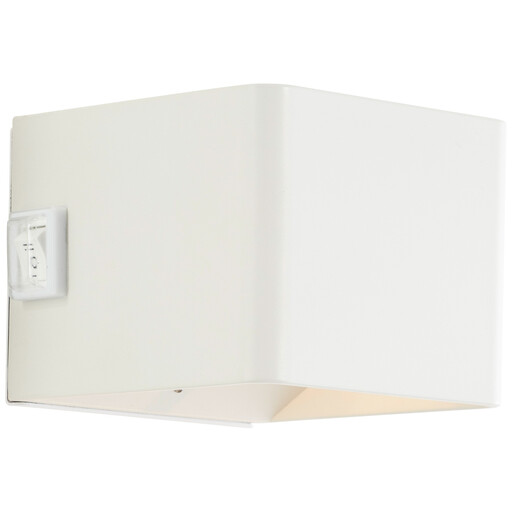
Why It's a Good Fit: Ideal for renters or homeowners who need hassle-free lighting for a balcony, hallway, or garden shed. Thanks to its battery operation and magnetic mount, this battery-powered outdoor wall light can be attached to metallic surfaces without drilling and repositioned at any time.
This model solves the problem of rigid installation. Furthermore, its IP44 rating provides reliable protection against splashing water, which isn't a given for many budget-friendly, battery-powered outdoor lights.
The combination of battery power, USB charging, and a magnetic mount offers a high degree of portability and flexibility. The 3000 K colour temperature provides a pleasant, warm white light.
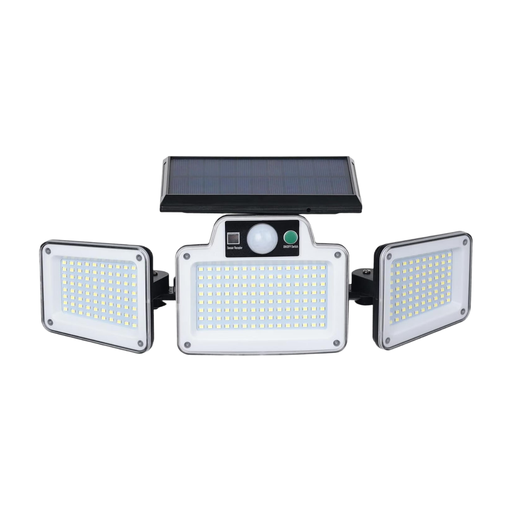
Why It's a Good Fit: For homeowners looking for powerful, self-sufficient lighting for a driveway, garage, or garden. The three adjustable heads allow for wide and targeted illumination of the desired area.
This model addresses the problems of inadequate brightness and poor weather resistance. Its 280 LEDs ensure high luminosity, while the IP65 rating guarantees a long lifespan even in harsh weather conditions. Solar power also eliminates running electricity costs.
Operating as a solar light with a motion sensor makes the product independent of the power grid. The three adjustable light modes and the remote control allow for flexible adaptation to specific security requirements.

Why It's a Good Fit: Perfect for parents looking for a gentle light for a child's room, or for anyone who wants to safely find their way through the hallway or to the bathroom at night without turning on the bright overhead light.
This night light with a motion sensor avoids the trap of light that is too harsh or cool white, which can disrupt sleep. With three selectable colour temperatures and five dimming levels, the lighting can be precisely adapted to any situation.
The high degree of customisation for brightness and light colour allows for eye-friendly, needs-based illumination. The integrated 500 mAh battery ensures a long runtime in sensor mode.
We have compiled a complete, up-to-date list of products that fully meet these strict selection criteria and European safety standards.
1. How important is the motion sensor's range? The range is crucial for functionality. For a hallway or staircase, a range of 3 metres is sufficient. For an outdoor security light, it should be at least 5–8 metres. Also, pay attention to the detection angle. 120 degrees is a common value, while wider angles of 180 degrees cover a larger area. Positioning is also important: mount the sensor so that it detects movement across its field of view, not directly towards it.
2. How long does the battery last on a battery-powered lamp with a motion sensor? The battery life depends on the battery capacity (mAh), the frequency of activation, and the set illumination duration. A model with 500 mAh can last for several weeks or even months in sensor mode with average use (approx. 8–10 activations per night). For outdoor models with higher brightness, the runtime will be correspondingly shorter. Check the manufacturer's specifications, which often detail the runtime in sensor mode.
3. Can I use a solar light with a motion sensor in the winter? Yes, modern solar lights also work in winter. However, the charging performance is reduced due to less sunlight and shorter days. This can shorten the illumination time per night. Models with a large, efficient solar panel and a power-saving mode (e.g., a dim continuous light that brightens upon motion detection) are better suited for winter operation. An optimal south-facing orientation of the panel will maximise energy absorption.