
Lieferung heute & morgen

Qualitätsgarantie

Willkommens-Angebote freischalten: KOSTENLOSE Lieferung | Bis zu 80 % RABATT | Kostenlose 30-Tage-JoyPlus-Testphase
App herunterladen
A well-placed LED motion sensor light can make daily life significantly easier. Whether as a guiding light in a dark hallway at night, for illuminating dim closets, or as a security measure outdoors, automatic lighting is both practical and energy-efficient. However, the market is flooded with products whose real-world performance often fails to live up to their promises.
Many buyers get frustrated with lights that stop working correctly after just a short time. To help you avoid such a bad purchase, we'll show you the three most common pitfalls and what to look for when making your choice.
A thoughtful selection based on objective criteria is therefore crucial.
To make the right decision, you should carefully examine three technical aspects. These are key determinants of the functionality and longevity of your LED motion sensor light.
The choice of power supply depends directly on the location of use and the desired flexibility.
The precision of the sensor is critical for its function. Most models use a PIR (Passive Infrared) sensor, which reacts to body heat. Important parameters here are:
Simple and stable mounting is essential.
We have matched some products to typical usage scenarios based on their objective features.
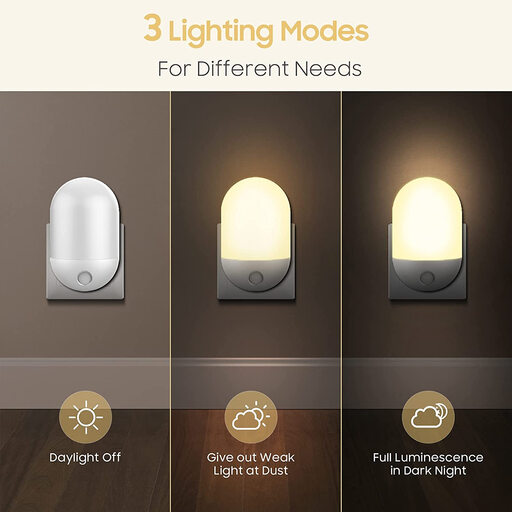
Why This Fits Their Persona: Ideal for users looking for a simple, maintenance-free solution for hallways, children's rooms, or stairs. Just plug it in, and the integrated dusk-to-dawn sensor does the rest.
Since it's powered directly from the mains, it eliminates the problem of short battery life or constant battery changes (Pitfall 2). The simple dusk-to-dawn sensor is reliable for its task and avoids the complexity of error-prone motion detectors.
Very low power consumption of 0.5W. No installation or maintenance required. The warm white light (2800-3200K) creates a pleasant atmosphere.

Why This Fits Their Persona: Perfect for users who need a versatile solution for various areas like the kitchen, wardrobe, or workshop. The 2-pack allows for flexible outfitting of multiple locations.
The magnetic adhesive mount is a robust solution that prevents it from falling (Pitfall 3). The 1100mAh battery offers solid capacity for a rechargeable strip (addressing Pitfall 2), and the PIR sensor with a defined 3-5 meter range ensures reliable operation (addressing Pitfall 1).
Three selectable color temperatures (Warm, Neutral, and Cool White) adapt to any environment. The ultra-thin design (10 mm) is very discreet. Recharges via USB.
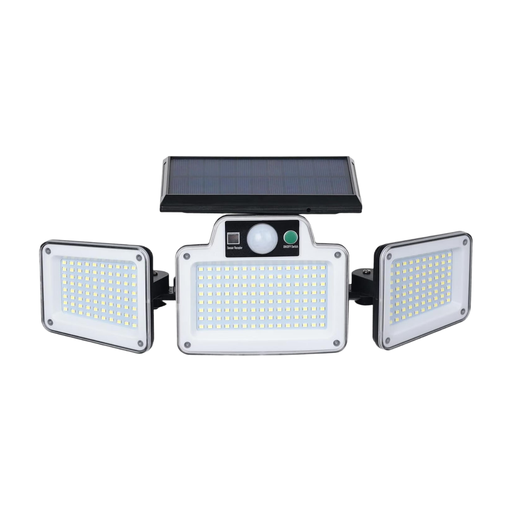
Why This Fits Their Persona: Designed for reliable illumination of outdoor areas like driveways, gardens, or garages. The three adjustable heads allow for wide and targeted light distribution to enhance security.
Solar power with a 2400mAh battery makes it independent of batteries or power cords (avoids Pitfall 2). The IP65 rating ensures weather resistance and durability (addressing Pitfall 3 for outdoor lights). Three modes via remote control offer precise control (avoids Pitfall 1).
Self-sufficient power via solar. High brightness from 280 LEDs and a wide 180° illumination angle. The three lighting modes can be conveniently set with the remote control.
We have compiled a complete, up-to-date list of products that fully meet these strict selection criteria and safety regulations.
The battery life heavily depends on the battery capacity (mAh) and the frequency of use. For a light with 800–1100 mAh that is activated about 5–8 times a day for 20 seconds, a single charge can last several weeks to months. Models with higher capacity and less frequent use will extend this period accordingly.
Yes, many modern models, especially under-cabinet lights for the kitchen or closets, offer this feature. Three settings are common: Warm White (approx. 3000K) for a cozy atmosphere, Neutral White (approx. 4500K) for natural illumination, and Cool White (approx. 6500K) for clear task lighting. Check the product description for details on color temperature.
For optimal performance, the sensor should not be blocked by objects and should face the expected area of movement. Avoid mounting it directly opposite heat sources like heaters or highly reflective surfaces, as this can cause false triggers of the PIR sensor. For a sensor cabinet light, mounting it in the upper front area is ideal, so the light turns on immediately when the door is opened.