
Lieferung heute & morgen

Qualitätsgarantie

Willkommens-Angebote freischalten: KOSTENLOSE Lieferung | Bis zu 80 % RABATT | Kostenlose 30-Tage-JoyPlus-Testphase
App herunterladen
An LED motion sensor light promises both convenience and safety: it switches on automatically when you enter a dark room and off again after you leave. However, not all models live up to this promise. Many buyers find themselves frustrated with unreliable sensors, short battery life, or adhesive strips that fail after just a few weeks. Before you make a decision, it's crucial to understand the common weaknesses that can render an otherwise useful product impractical.
This guide will help you understand the technical features that truly matter and show you how to avoid the typical pitfalls when buying.
Many inexpensive models have design flaws that severely limit their functionality. Pay close attention to these three points to avoid making a bad purchase:
To make the right choice, focus on the following technical parameters. These determine the real-world usability and longevity of your LED light.
The choice of power source depends on the location and your preferences.
A good sensor is the difference between convenience and frustration.
The mounting method must suit the surface and the desired level of flexibility.
Here are some product suggestions tailored to specific needs that meet the quality criteria mentioned.

Why this model is a good fit: Its ultra-thin design and adhesive strip mounting make it the ideal solution for rental apartments, cabinets, and kitchenettes without damaging walls. The USB-rechargeable battery avoids battery waste.
The integrated 800mAh battery provides a solid runtime, bypassing the problem of constantly dead batteries. The no-drill installation is reliable on smooth surfaces and leaves no marks.
Three adjustable colour temperatures (cool, natural, and warm white) allow you to adapt the lighting mood to the specific location—from task lighting in the kitchen to ambient light on a shelf.
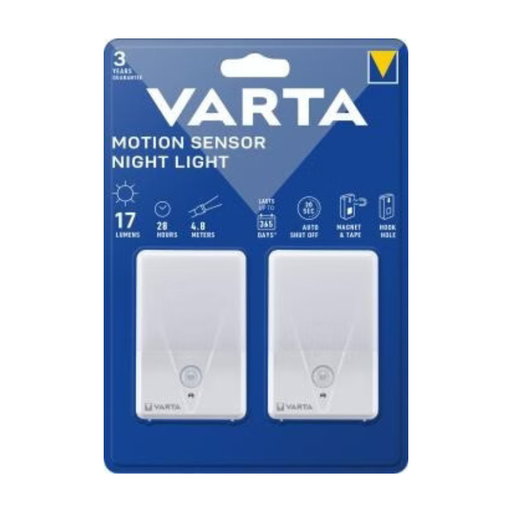
Why this model is a good fit: This battery-operated night light is designed for reliability and ease of use. The warm white light is easy on the eyes and ideal for hallways, stairs, or a child's room to prevent tripping at night.
The sensor has a reliable 120° angle and a 3-metre range. The automatic shut-off after 30 seconds is a good compromise to save energy without leaving you in the dark. The brand manufacturer Varta stands for energy-efficient electronics.
Versatile mounting options (screw, magnet, adhesive tape) offer maximum flexibility in placement. Battery operation ensures it functions even during a power outage.

Why this model is a good fit: This light, with its IP44 protection rating, is explicitly designed for outdoor use and is protected against splashing water. Thanks to its integrated battery and magnet, it's portable and can be flexibly used on a patio wall, garden shed, or in a damp basement.
Unlike indoor-only lights, this model is robustly built and weatherproof. The clear IP44 certification provides assurance that the electronics are protected from moisture, which is not the case with many cheap 'outdoor' lights.
The combination of battery operation, a motion sensor, and a magnetic mount makes it extremely versatile. It can serve as a permanently installed wall light or be detached and placed elsewhere as needed.
Outdoor areas in particular have special requirements. We have compiled a list of products that meet these criteria.
1. How long does the battery of an LED motion sensor light last? The runtime heavily depends on the battery capacity (mAh) and the frequency of use. With average use (5–10 activations per day), a model with an 800–1100 mAh battery can last for several weeks to months before needing to be recharged via USB.
2. Where is the best place to install a motion sensor night light? For optimal motion detection in a hallway or on a staircase, installation at knee to hip height (approx. 50–120 cm) is recommended. Avoid placing it directly opposite heat sources like radiators or windows with direct sunlight, as this can cause false triggers of the PIR sensor.
3. Does a motion sensor also work in bright conditions? Most high-quality models have an integrated dusk-to-dawn sensor (also called a light sensor). This ensures the light only activates in darkness to save energy. On some models, this function can be disabled if activation with every motion is desired.