
Lieferung heute & morgen

Qualitätsgarantie

Willkommens-Angebote freischalten: KOSTENLOSE Lieferung | Bis zu 80 % RABATT | Kostenlose 30-Tage-JoyPlus-Testphase
App herunterladen
Automatic lighting that only turns on when needed is not just convenient—it's also energy-efficient. An LED motion sensor light provides safety in dark hallways, on stairs, or in the basement, and can serve as a gentle orientation light in a child's room. However, the market is flooded with models whose real-world performance varies greatly. Many buyers only discover after installation that the sensor is unreliable or the batteries are constantly drained.
This guide highlights the most common pitfalls to avoid when buying and explains which technical features truly matter. This will enable you to make an informed decision and choose a product that will meet your needs for the long term.
Before choosing a model, it's important to understand the typical weaknesses that often only become apparent in everyday use.
To avoid the problems mentioned above, you should check three key technical aspects before buying. These largely determine the functionality and your long-term satisfaction with your LED light.
The choice of power source depends directly on the location and frequency of use.
The quality of the sensor determines the reliability of the light.
The installation options determine where and how you can use the light.
Here are some recommendations tailored to different needs and applications.
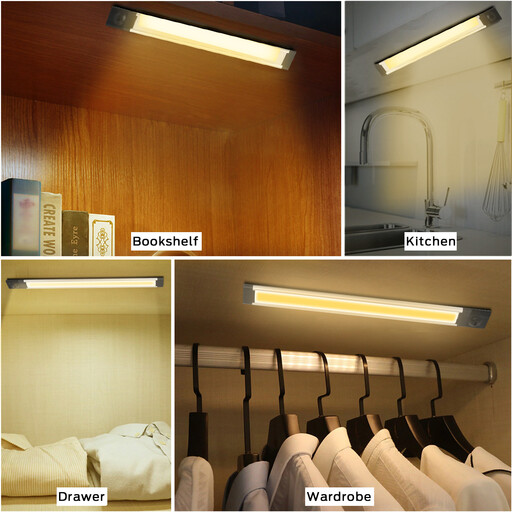
Why it's a great fit: Perfect for anyone seeking a flexible and customisable solution for cabinets, hallways, or workshops. The combination of gesture control, dimmability, and variable colour temperature makes it extremely versatile.
The integrated, USB-rechargeable battery eliminates the running costs and hassle of constant battery changes. Gesture control for adjusting brightness and colour solves the problem of inappropriate, glaring light.
Highly flexible, drill-free mounting via magnetic attachment and hanging hooks. The colour temperature is adjustable from warm white to cool white.
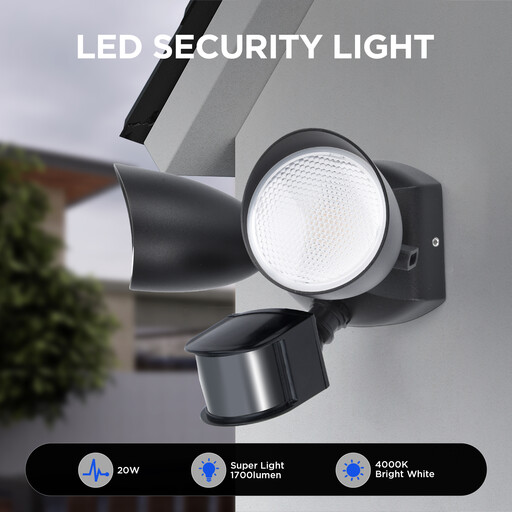
Why it's a great fit: Designed as a robust security light for outdoor use. It's perfect for illuminating driveways, gardens, or entryways where high brightness is needed for deterrence and orientation.
This model is explicitly designed as a weatherproof outdoor motion sensor light. It delivers a high light output intended for security purposes, thus avoiding the mistake of using an inadequate indoor light outdoors.
High luminous flux of 1700 lumens for wide-area illumination. The two pivoting light heads allow for targeted light direction.

Why it's a great fit: A simple and safe solution as a night light for children's rooms, hallways, or bathrooms. It plugs directly into the socket, so no batteries are accessible. The two-pack is practical for multiple rooms.
The adjustable brightness and warm white light (2700K) prevent the light from disturbing sleep. The dusk-to-dawn sensor ensures it only illuminates in the dark, avoiding unreliable sensor activation during the day.
Plug-and-play operation with no battery management required. The brightness is dimmable in 3 steps to provide gentle orientation.
We have compiled a complete, up-to-date list of products that fully meet these strict selection criteria and safety standards.
Battery life varies significantly depending on the model, battery capacity (measured in mAh), and frequency of use. With average use (a few activations per day), many models can operate for several weeks to months on a single charge. You can find precise runtime information in the manufacturer's product specifications.
This is strongly discouraged. Lights intended for outdoor use require a specific protection rating, indicated as an IP rating (e.g., IP44 or higher). This rating guarantees that the housing is protected against splashing water and foreign objects. An indoor light without this protection can be damaged by moisture and may pose a safety hazard.
Ideally, install the light at knee to hip height so it can effectively detect movement in the lower area. Suitable locations include hallways, stair landings, or bathrooms. Avoid placing it directly opposite heat sources like radiators or in areas where pets frequently pass by, as this can lead to false activations.