Joybuy Insights

LED Motion Sensor Lights: A Buyer's Guide to Avoiding Common Mistakes

By the Joybuy Product Recommendation Officer, August 28, 2026

An LED light with a motion sensor promises convenience, security, and energy efficiency. It automatically lights the way in a dark hallway, provides brightness in a wardrobe, or deters unwanted visitors in the garden. In practice, however, the selection process often leads to frustration when the purchased product fails to deliver on its promises. Before you make a decision, it's crucial to understand the most common pitfalls that can quickly turn a practical solution into a purchase you'll regret.

The 3 Most Common Mistakes When Buying Sensor Lights

Many products on the market entice with attractive descriptions, but the devil is in the details. These three issues are the most frequent causes of disappointment:

  1. Inaccurate or Unsuitable Sensor: A light that switches on with every small movement at the other end of the room, or only reacts when you're standing directly in front of it, misses the point. Equally annoying is a motion-activated night light that also turns on in daylight, needlessly wasting energy.
  2. Short-Lived or Impractical Power Supply: The quality of battery-powered models becomes apparent very quickly. A low battery capacity leads to constant recharging. A built-in, non-replaceable battery can render the entire light useless after just a few hundred charging cycles.
  3. Wrong Brightness and Light Colour: A harsh, cool white light in the bedroom or hallway can be unpleasantly glaring at night. Conversely, a sensor-activated closet light that is too dim is useless if it doesn't adequately illuminate the contents.

What Really Matters: The Decisive Parameters

To avoid these mistakes, you should check three technical features before buying. These determine whether a light is suitable for your intended use.

1. Sensor Technology: PIR, Dusk-to-Dawn Sensor, and Range

Most sensor lights use a combination of two technologies:

  • PIR Sensor (Passive Infrared): This sensor reacts to the heat radiation from moving bodies. The key factors here are the detection angle (e.g., 120°) and the range (e.g., 3–5 metres). A longer range is important for a long hallway, while a smaller area is sufficient for a drawer.
  • Light with a Dusk-to-Dawn Sensor: This sensor measures the ambient brightness. It ensures that the light only switches on in the dark. This is a must-have for energy-efficient night lights and outdoor lights to prevent operation during the day.

2. Power Source: The Right Solution for Every Location

The choice of power supply depends directly on the location and the desired level of maintenance:

  • Plug-in (230V): Ideal for stationary night lights in hallways, children's rooms, or on staircases. Once plugged in, they are maintenance-free.
  • Rechargeable LED Light with Sensor: These models offer maximum flexibility. They are perfect for places without a power socket, such as closets, display cabinets, or as an under-cabinet light in the kitchen. Pay attention to the battery capacity (specified in mAh) and a USB charging option.
  • Battery-Powered LED Strip with Motion Sensor: As flexible as rechargeable models, but the batteries need to be replaced regularly.
  • Solar Light with Motion Sensor: The top choice for outdoor areas. A solar panel charges an internal battery during the day, making it a self-sufficient and cost-effective solution for an outdoor security light along paths, garages, or in the garden.

3. Brightness (Lumen) and Colour Temperature (Kelvin)

These two values define the lighting effect and are crucial for comfort:

  • Brightness (Lumen, lm): Indicates how bright a lamp is. For an orientation night light, 10–40 lm is often sufficient. A closet light should have 100–300 lm, while an outdoor motion sensor light for deterrence can reach 1000 lm or more.
  • Colour Temperature (Kelvin, K): Describes the colour of the light.
    • Warm White (< 3300 K): Cosy, yellowish light, ideal for living rooms and bedrooms.
    • Neutral White (3300–5300 K): Functional, white light, good for kitchens, bathrooms, or workspaces.
    • Daylight White (> 5300 K): Bluish, very stimulating light, suitable for basements, garages, or as a bright security light.

Top Picks for Every Need

Here are some product recommendations tailored to specific use cases that successfully avoid the pitfalls mentioned.
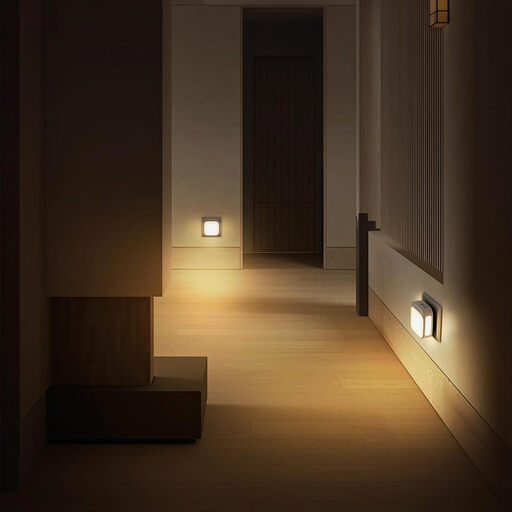
MATCH FOR: NIGHT-TIME NAVIGATION
2er Pack Energieeffizientes Lichtsensor-Nachtlicht Warmwei?

2-Pack Energy-Efficient Warm White Light Sensor Night Light

Why This Fits Their Persona: Ideal for those seeking a simple, maintenance-free solution for hallways, children's rooms, or stairs. The light plugs directly into the socket and provides a soft glow that won't cause glare at night.

How It Avoids the Trap

The integrated dusk-to-dawn sensor (≤20 LUX) prevents it from operating in daylight. Thanks to stepless dimming, the brightness can be adjusted to avoid glare at night.

Key Advantage & Pros

Plug-and-play installation; very low power consumption (0.3W); warm white light (2800-3000K) for a pleasant atmosphere.

MATCH FOR: FLEXIBLE CABINET & KITCHEN LIGHTING
Ultradünnes Schranklicht 20cm, 2er Pack PIR-Sensor LED Lamp

Ultra-Thin 20cm Cabinet Light, 2-Pack PIR Sensor

Why This Fits Their Persona: Perfect for DIY enthusiasts and organisation lovers who want to illuminate dark corners in closets, drawers, or under kitchen cabinets without any wiring.

How It Avoids the Trap

With three selectable colour temperatures (warm, neutral, and cool white), the light can be customised. The 800mAh battery is USB-rechargeable, avoiding frequent battery changes.

Key Advantage & Pros

Tool-free installation with adhesive strips; ultra-thin design (10 mm); PIR sensor with a 3-5 metre range.
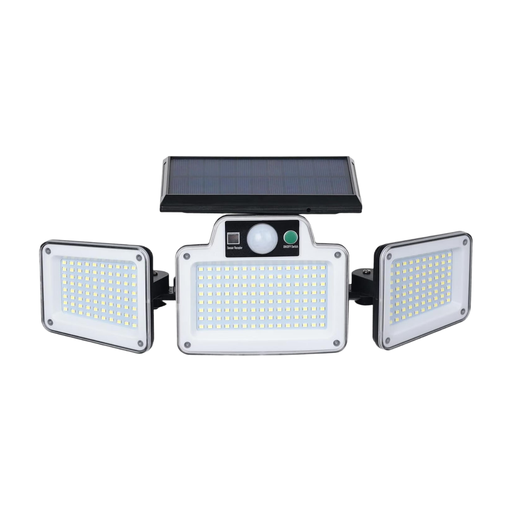
MATCH FOR: OUTDOOR SECURITY
Grifema Solar Security Lights Outdoor Motion Sensor

Grifema Solar Security Lights Outdoor Motion Sensor

Why This Fits Their Persona: For home and garden owners who need powerful, self-sufficient, and flexible security lighting for driveways, yards, or garages without having to run power cables.

How It Avoids the Trap

Power is supplied via a separate solar panel with a 2400mAh battery, eliminating running costs. Three adjustable modes and a sensitive sensor allow for precise control.

Key Advantage & Pros

IP65 waterproof for year-round outdoor use; three adjustable light heads for wide illumination; controlled via remote.

Looking for More Options?

We have compiled a complete, up-to-date list of products that fully meet these strict selection criteria and rigorous safety standards.

Frequently Asked Questions (FAQ)

1. How long does the battery last in an LED sensor light?

The battery life heavily depends on the frequency of use, the set brightness, and the battery capacity (mAh). With average use (a few activations per day), a single charge on indoor models can last several weeks to months. For outdoor lights with a solar panel, the battery is continuously recharged during the day.

2. Can you adjust the illumination time on a motion sensor?

On many models, especially outdoor lights, the duration of illumination after activation is adjustable (e.g., from 20 seconds to several minutes). For simple night lights or closet lights, the duration is often preset to a fixed value of 15–30 seconds, which is sufficient for most applications.

3. What does the IP rating mean for outdoor lights?

The IP (Ingress Protection) rating indicates how well an electrical device is protected against the intrusion of foreign objects (first digit) and water (second digit). The following classes are relevant for outdoor use:

  • IP44: Protection against splashing water from all sides. Sufficient for covered areas.
  • IP65: Complete protection against dust and against water jets from any angle. Suitable for unprotected outdoor use in all weather conditions.