
Lieferung heute & morgen

Qualitätsgarantie

Willkommens-Angebote freischalten: KOSTENLOSE Lieferung | Bis zu 80 % RABATT | Kostenlose 30-Tage-JoyPlus-Testphase
App herunterladen
An LED night light with a motion sensor should provide guidance at night without fully lighting up the room. For families with babies and toddlers, bedrooms, or dark routes to the hallway and bathroom, reliable sensor control, suitable brightness and straightforward operation are particularly important.
However, many products advertise numerous features that do not always deliver the expected benefits in everyday use. What matters is not the longest list of features, but the combination of technical specifications, intended location and ease of use.
The term ‘motion sensor’ alone says little about how practical a product is in everyday use. Buyers should check at what level of ambient brightness the sensor responds and what range is specified. A model that also activates in bright daylight uses energy unnecessarily. If the range is too short, the light may not switch on in time when you get up during the night.
Suitable models provide specific figures, such as activation at no more than 20 lux and motion detection within a range of 3 to 5 metres. These details make it easier to choose the right product for a bedroom, hallway or bathroom.
A lamp may be described as ‘dimmable’ even when only a few brightness levels are available. For a baby night light or subdued lighting while changing a nappy, a very low setting is often more useful than a high maximum brightness. The hallway or bathroom, on the other hand, may require clearer illumination.
It is therefore worth checking whether the night light offers several preset levels, stepless dimming or just two brightness options. A memory function can also be useful if the last selected setting is saved.
A rechargeable night light does not need to remain plugged in at its place of use, but it does need to be charged regularly. Battery capacity and runtime should always be considered in relation to the operating mode. Battery life at full brightness may be significantly shorter than in sensor mode.
The charging connection is also relevant: a USB-C night light can be connected to many current cables and power supplies. With older USB connections, check the supplied cable and compatibility with a 5-V charger.
Warm white light in the region of around 2,800 to 3,200 Kelvin is often chosen for bedrooms or as a baby night light. More neutral light colours between around 4,000 and 4,500 Kelvin can provide clearer guidance in hallways or bathrooms. Some models offer three colour temperatures, making them more versatile.
Brightness is measured in lumens. A value of 20 to 40 lumens may be sufficient for orientation lighting, but it does not replace room lighting. The CRI value describes colour rendering. A stated CRI of over 85 means that colours appear comparatively natural under the light. This should not, however, be taken to imply any medical or therapeutic benefit.
A night light with a timer switches off automatically after a set period. This can be useful for children or as time-limited bedside lighting. With a night light with touch control, the operating gestures should be clearly described, such as a short tap to switch it on and off or a longer touch to dim it.
A motion or light sensor is particularly suitable for routes where you do not have a free hand to operate the light. In a child’s bedroom, manual touch control may be more convenient if the child is allowed to operate the lamp independently. The manufacturer’s age and safety instructions must be observed.
ABS plastic, PC, metal and silicone are used as housing or lampshade materials in the products featured. Rounded shapes without protruding edges can make a night light for children easier to handle. This does not automatically mean that a product is suitable for every age group.
Before buying, you should also check:
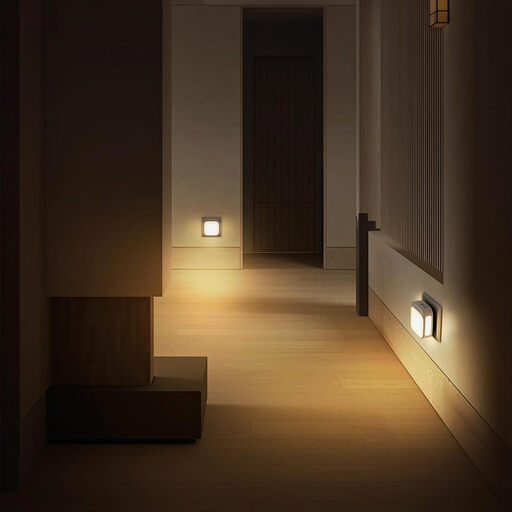
Why this product suits this profile: This 2-pack is ideal for shoppers who want to equip a bedroom, hallway or baby’s room with a simple plug-in solution.
The product details specify a power consumption of 0.3 W, a light sensor that activates at no more than 20 lux, and stepless dimming from 10 to 100 per cent.
Two lights, warm white light at 2,800–3,000 Kelvin and direct use with standard sockets.
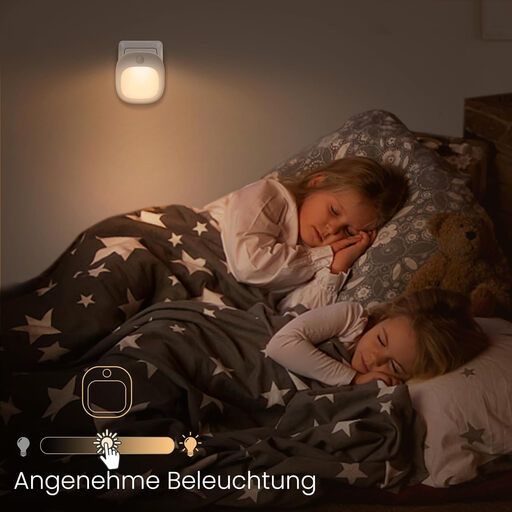
Why this product suits this profile: This model combines motion control, several light colours and flexible use without being permanently tied to a socket.
The range, lux threshold and runtime are clearly specified: 3–5 metres, no more than 20 lux and up to 10 hours in sensor mode.
500-mAh battery, USB charging, three colour temperatures, five brightness levels and 30 lumens.
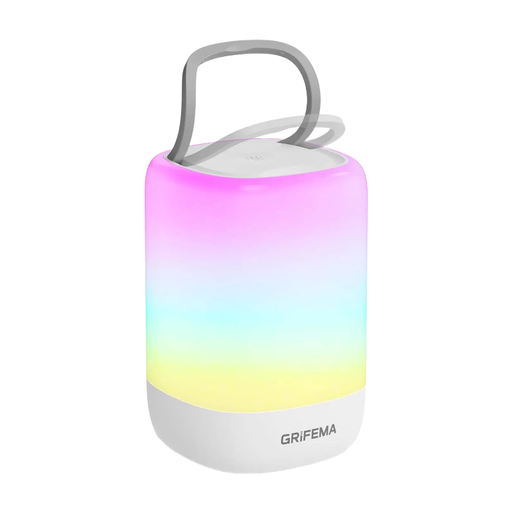
Why this product suits this profile: This portable table lamp is suitable for bedrooms, children’s rooms, camping or changing locations around the home.
The lamp is operated by touch, brightness is reduced from 100 to 5 per cent by touching and holding, and the timer switches it off after 30 minutes.
USB-C charging, 1,500-mAh battery, warm white light and seven RGB colours with static or changing display.
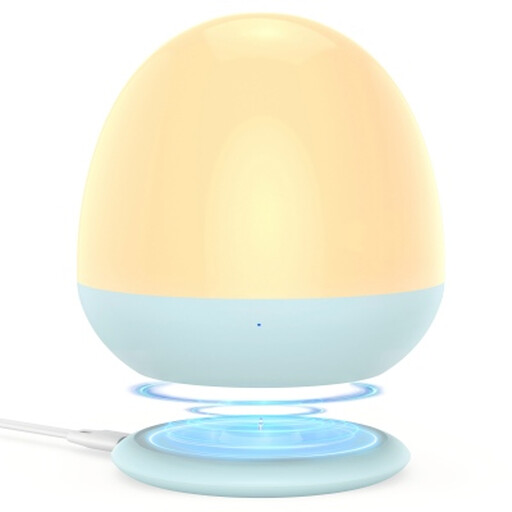
Why this product suits this profile: The rounded egg shape, touch control and charging station fit neatly into established routines in a child’s room or during night-time care.
Wired and wireless charging via a stable charging base reduces reliance on a single charging method. The timer allows the lamp to switch off automatically.
ABS and PC housing, touch control, plus wired and wireless charging via the supplied charging station.
We have put together a complete, regularly updated list of products that fully meet these strict selection criteria and the safety regulations applicable in the EU.
Position the light so that the sensor covers the usual route and is not blocked by furniture, curtains or decorations. In a hallway or bathroom, positioning it a few metres away from the area where movement is expected is sensible. With plug-in models, you must also ensure that access to the socket remains unobstructed.
Runtime depends on the battery, brightness level, light colour and operating mode. The 2-pack with motion sensor described above is specified as offering up to 10 hours in sensor mode. The Grifema model has a battery capacity of 1,500 mAh and a runtime of up to 15 hours. These manufacturer specifications should be treated as guide values, as actual usage may vary.
LED night lights often have low power consumption. The plug-in model with a light sensor is specified at 0.3 W, while other models use 0.9 to 1 W. With rechargeable versions, power consumption also depends on charging habits. A sensor or timer can prevent the lamp from remaining on for longer than necessary.