
Lieferung heute & morgen

Qualitätsgarantie

Willkommens-Angebote freischalten: KOSTENLOSE Lieferung | Bis zu 80 % RABATT | Kostenlose 30-Tage-JoyPlus-Testphase
App herunterladen
A good LED night light provides a sense of security in the dark without disturbing your sleep. However, the selection is vast, and not every product delivers on its promises. Many models are too bright, their sensors are unreliable, or their batteries become useless after a short time. As your Joybuy Product Recommendation Officer, I'll help you identify the crucial features and avoid common purchasing pitfalls.
Before you make a decision, you should be aware of the three most common flaws found in cheap or poorly designed night lights:
night light with a motion sensor that only turns on with direct contact or stays on permanently defeats its purpose. The same applies to dusk sensors that activate at the slightest shadow, wasting electricity unnecessarily.rechargeable night light sounds convenient, but models with low-quality batteries need constant charging or quickly lose their capacity. The build quality is also critical, especially for a night light for kids that might be dropped.To avoid these problems, you should focus on three core technical features. These determine the functionality and everyday usefulness of your night light.
Light quality is the most important criterion. Pay attention to the following values:
night light with colour change can create additional moods but should always offer a warm white mode.guide light doesn't need much power. A brightness of 5 to 20 lumens (lm) is usually sufficient to see outlines without being glaring. A dimmable night light offers the greatest flexibility here, allowing you to adjust the brightness to the surroundings and personal needs, for instance as a gentle slumber light or nursing light.The choice of power source depends on the area of application:
Modern night lights offer smart control features that enhance comfort and efficiency:
guide light.night light with a motion sensor only turns on when movement is detected within its range. It stays lit for a preset time (e.g., 30 seconds) and then switches off again. This is the most energy-efficient solution for areas that do not need to be permanently illuminated.Based on these objective criteria, we have selected a few models from our range that are suitable for specific user profiles.

Why it's a good fit: Ideal as a night light for babies and children. The soft silicone body is safe and pleasant to the touch. Thanks to the integrated 1200 mAh battery, it's portable and can be placed directly by the bed as a nursing light or slumber light.
The 3-level dimming function prevents overly harsh light. The material (ABS, PP, Silicone) is robust and child-safe, which solves the problem of poor durability.
Rechargeable via USB-C with a battery life of up to 6 hours at maximum brightness.
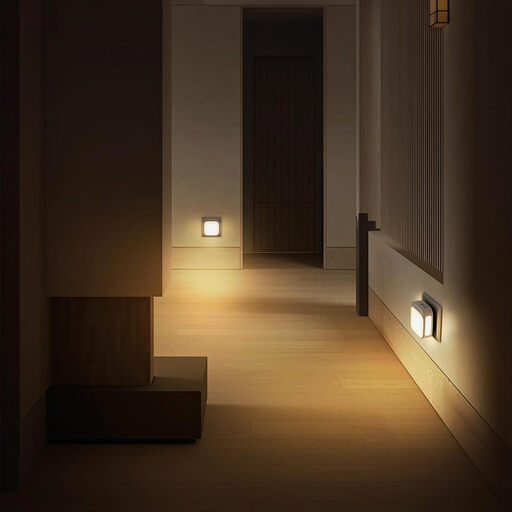
Why it's a good fit: A practical solution for anyone needing a reliable guide light for hallways, stairs, or the bathroom. As a plug-in night light, it's maintenance-free, and the 2-pack allows you to equip multiple areas at once.
The automatic dusk sensor (activates at ≤20 LUX) is precise and prevents unnecessary operation. The stepless dimming and warm white light (2800-3000K) bypass the problem of overly harsh light.
Extremely low power consumption of just 0.3 watts. The stepless dimming from 10% to 100% provides full control over the brightness.
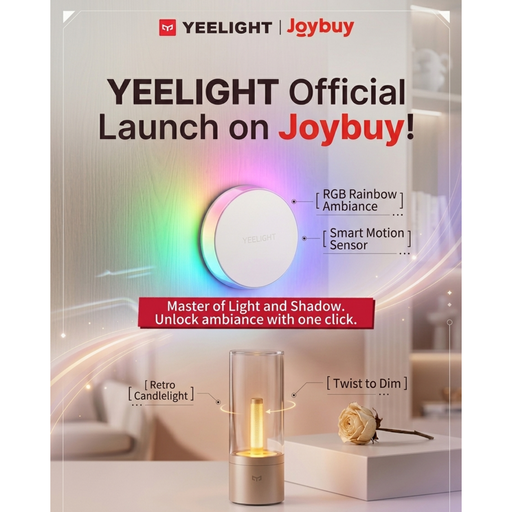
Why it's a good fit: For users who want more than just a simple night light. It combines a functional night light with a motion sensor with a versatile colour-changing night light. Ideal for bedrooms, living rooms, or gaming areas.
The combination of a motion and light sensor ensures precise and efficient control. The battery is rechargeable via USB-C, and the magnetic mount offers a flexible yet stable attachment.
Offers 11 preset lighting effects and a magnetic base for easy installation and flexible positioning.
We have compiled a complete, up-to-date list of products that fully meet these strict selection criteria and all relevant safety regulations.
The power consumption of an LED night light is very low. Plug-in models typically consume between 0.3 and 1 watt. Even with continuous operation for an entire year, this results in electricity costs of only a few dollars. Models with motion sensors are even more economical as they only light up when needed.
For rooms where people sleep, a warm white light colour between 2700 and 3000 Kelvin is recommended. This yellowish-red light is similar to candlelight and is least disruptive to the body's production of the sleep hormone melatonin. Cool white or blue light should be avoided.
A night light with a motion sensor uses a passive infrared (PIR) sensor. This sensor reacts to the heat radiation from people or animals moving within its detection range. As soon as motion is detected, the light turns on for a set duration and then automatically switches off again if no new movement is registered.