
Lieferung heute & morgen

Qualitätsgarantie

Willkommens-Angebote freischalten: KOSTENLOSE Lieferung | Bis zu 80 % RABATT | Kostenlose 30-Tage-JoyPlus-Testphase
App herunterladen
An LED night light should help you find your way in the dark without lighting up the room unnecessarily. In a bedroom, hallway, children’s room or wardrobe, different features matter than they do in a standard ceiling light. The key things to consider are the right brightness, reliable sensors, secure mounting and sensible energy use.
Many products look similar at first glance. Look more closely, though, and you’ll find significant differences in battery capacity, detection range, dimming function and power connection. The following selection from the Joybuy Product Recommendation Officer explains which features matter and which products suit different households.
A high number of LEDs doesn’t automatically mean better illumination. The light output depends on factors including luminous flux in lumens, beam angle and positioning. Moderate brightness is often enough for a hallway or wardrobe lighting. Reading or task lighting has different requirements.
Also check whether the manufacturer lets you adjust the brightness across several settings. A dimmable LED lamp can be more comfortable at night than a model with just one fixed brightness level.
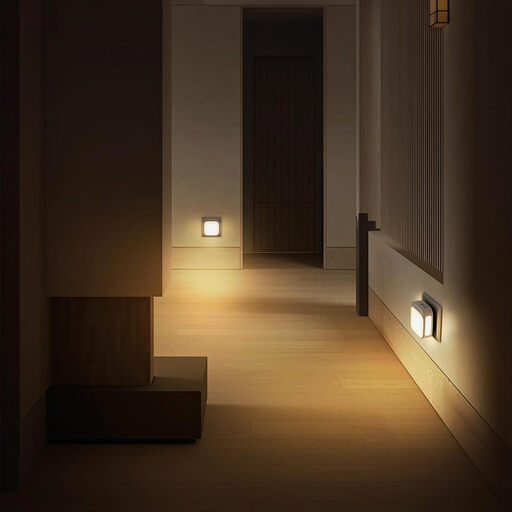
An LED night light with a motion sensor responds to movement, while a sensor night light may also take the ambient brightness into account, depending on the model. For example, a PIR sensor can detect someone within a certain range. A light sensor, by contrast, switches on in the dark and off in daylight.
A motion sensor can be handy for a night-time trip to the bathroom. For a light that stays on to help you find your way around the hallway, a brightness sensor may be more suitable. Check the sensor type and the conditions listed, rather than relying on the word ‘automatic’.
Wireless LED lights with adhesive strips can be fitted without drilling. This is useful in rented homes, wardrobes and on shelves. However, adhesive pads may not stick as well to dusty, rough or damp surfaces. Before fitting the light, make sure the surface is clean, dry and as smooth as possible.
For heavier lights or doors that are opened frequently, magnetic mounting with an additional bracket may be more practical. In all cases, make sure the light is secure so that it won’t fall.
Colour temperature is measured in Kelvin (K):
A warm white night light is usually less noticeable in bedrooms. Models with several colour temperatures offer more flexibility, but require additional controls or settings.
A rechargeable LED night light doesn’t need to be near a socket, so you can fit it wherever it’s useful—in the hallway, by the bed or in the wardrobe. Check the battery capacity, charging connection and stated charging voltage. The battery-powered models featured here include options with 800 mAh or 1,100 mAh batteries and a USB charging voltage of 5 V.
Plug-in models don’t need their batteries replaced and are suitable for fixed locations. Depending on their design, though, they may block a socket and can’t be freely positioned on wardrobes or walls.
Before buying, make sure the product description clearly explains the following:
Most of the models mentioned here are intended for dry indoor spaces. Don’t use a night light where it may be splashed with water unless it has the appropriate protection rating.
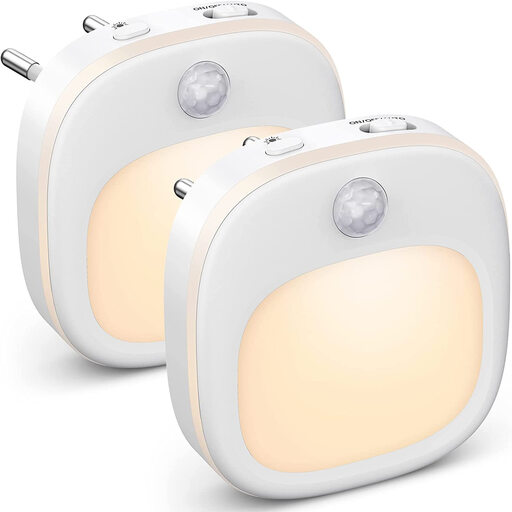
Why it’s a good fit: This pair of plug-in night lights features a warm white colour temperature, an automatic light sensor and stepless dimming, making them suitable for hallways, near bathrooms or in children’s rooms.
The light sensor switches on automatically in the dark. You can adjust the brightness from 10 to 100 per cent, rather than being limited to a single fixed setting.
0.3 W power consumption, a pack of two, a warm white colour temperature of 2,800 to 3,000 K and a 110 to 240 V connection.
Why it’s a good fit: If you’re looking for flexible lighting for a bedroom, nursery or hallway, this pair offers several colour temperatures and five dimming levels.
Five dimming levels and three colour temperatures let you tailor the light more precisely than a model with only cool white or a fixed output.
Pack of two, PIR motion detection, three colour temperatures and five brightness settings in an ABS and metal housing.

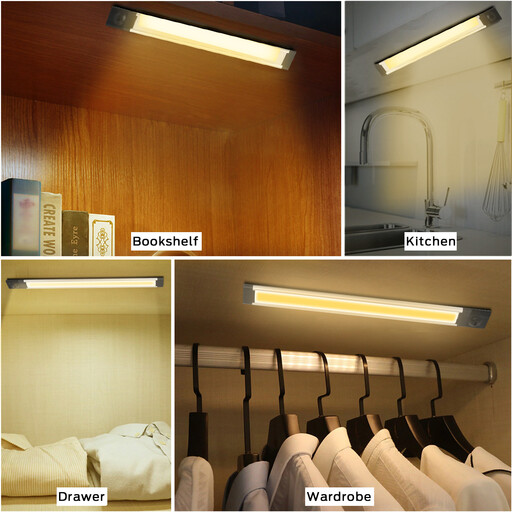
Why it’s a good fit: At 30 cm long, these lights are ideal for kitchen wall units, wardrobes, shelves and longer surfaces without a fixed power supply.
The technical details include the dimensions, sensor range and battery capacity. This makes it easier to check in advance whether the light suits your chosen location and how you plan to use it.
41 LEDs, a 1,100 mAh battery, PIR detection with a range of 3 to 5 metres, USB charging and three colour temperatures.
Why it’s a good fit: If you need removable wardrobe lighting, stair lighting or a flexible night light, the magnetic fitting gives you several ways to use it.
Gesture control lets you switch the light on and dim it without using a switch. Magnetic and hook fittings mean you can avoid drilling, provided the mounting surface is suitable.
36 SMD LEDs, 400 lumens, a colour temperature range of 2,800 to 6,500 K and stepless dimming with gesture control.
We’ve put together a complete, regularly updated list of products that meet these strict selection criteria and the safety regulations in force in the EU.
Choose a spot where the sensor can detect the usual route you take. If you’re using adhesive mounting, the surface must be dry, dust-free and smooth. Test the detection direction before pressing the light firmly into place. Make sure curtains or other objects won’t block it.
Battery life depends on the battery capacity, brightness setting, how long the light stays on and how often it detects movement. It’s not possible to give a general estimate without specific information from the manufacturer. If the light starts to dim, charge the battery using a compatible USB power source. Don’t use the product if it’s visibly damaged or the battery is swollen.
Plug-in models with low power consumption, such as 0.3 W, may be designed to stay on continuously. For battery-powered lights, most of the electricity is used when recharging them regularly. To keep running costs low, choose a suitable brightness setting, adjust the sensor properly and use the light only when needed.