
Lieferung heute & morgen

Qualitätsgarantie

Willkommens-Angebote freischalten: KOSTENLOSE Lieferung | Bis zu 80 % RABATT | Kostenlose 30-Tage-JoyPlus-Testphase
App herunterladen
An LED night light should provide orientation without lighting up the room unnecessarily. Yet many product descriptions create false expectations when you're buying one. A high number of colours doesn't automatically mean a good solution for the hallway. Similarly, a motion sensor isn't practical in every living situation, and a rechargeable battery can be inconvenient in daily use if the charging port is hard to reach.
A night light with a motion sensor only responds reliably if the range, detection angle and mounting position suit the surroundings. With a model that has a twilight sensor, you should also know at what ambient brightness level the light activates. A fixed threshold can be useful in a very dark hallway, but in a bright bedroom it may switch on too late.
RGB functions are mainly suitable for decorative lighting. For nighttime orientation, a more subdued light colour is often more practical. A warm white night light typically falls in the range of around 2,700 to 3,000 Kelvin. 4,000 Kelvin appears neutral white, while 6,500 Kelvin is noticeably cooler and more blue-white. So don't take the description "soft" at face value without checking.
A portable night lamp is flexible, but it needs regular charging. Before buying, you should consider battery capacity, charging time, charging port and automatic shut-off. A USB-C night light can be powered by many modern adapters and cables. With fixed plug-in models, charging is completely unnecessary, but the location is tied to the socket.
Light output is often given in lumens (lm). A value of 40 lm can be enough for subtle orientation lighting, while a dimmable LED lamp with several hundred lumens can also be used for reading or working. For children's rooms, hallways and bedrooms, it's not just the brightness that matters, but also the ability to reduce it.
Colour temperature in Kelvin describes the light effect:
A sensor should suit its location. A twilight sensor switches on depending on brightness, while a motion sensor activates based on detected activity. For stairs and hallways, motion detection can be practical. In a child's room, a permanently dimmed low light may be more pleasant, as frequent switching on and off can be disruptive.
A timer is also useful: some models switch off automatically after a set time. Check whether the controls are via button, touch, remote control or app. A smart LED wall light with voice control offers additional options, but usually requires a stable Wi-Fi connection and a compatible app.
The protection rating IP20 is intended for dry indoor spaces and offers no protection against water. For bathrooms, balconies or damp areas, a higher IP rating is required. A product with IP20 should therefore not be used near splashing water.
Also pay attention to:
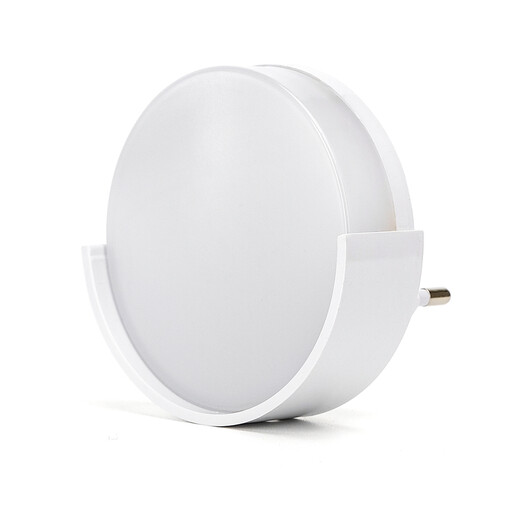
Why this product fits the profile: This plug-in model requires neither batteries nor recharging and switches on automatically when ambient light levels drop.
The automatic light control reduces manual operation and avoids repeated charging. Use is limited to dry indoor spaces.
1 W power, 40 lm, 20-lux switching threshold, 220–240 V and a stated lifespan of 25,000 hours.

Why this product fits the profile: This portable table lamp combines three colour temperatures with touch dimming and is ideal for a desk, side table or reading area.
The brightness is not limited to a fixed level. However, before buying, make sure the stated battery capacity of 2 × 1,800 mAh suits your intended use.
4 W, up to 400 lm, 3,000/4,000/5,000 K, touch control and a flexible lamp neck.
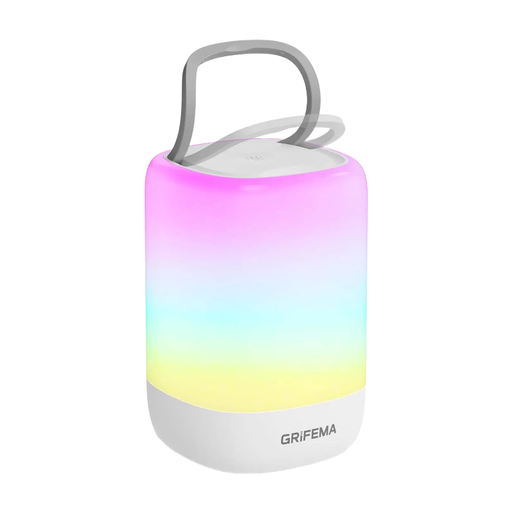
Why this product fits the profile: This portable night lamp can be used in the bedroom, children's room or when camping, and offers touch control and a timer.
The 30-minute timer limits unnecessary running time. USB-C charging keeps the power supply standardised, although battery life depends on brightness and colour mode.
7 RGB colours plus warm white, dimming from 100 to 5 percent, 1,500 mAh lithium-ion battery and USB-C port.
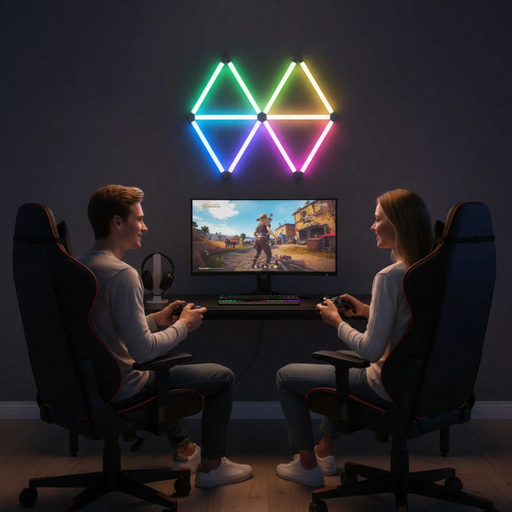
Why this product fits the profile: These light strips are designed for decorative background lighting behind a TV, monitor or on a wall, and can be controlled via app, remote control or voice assistant.
The control options and usage limits are clearly described. Installation requires a smooth, dust-free surface; moisture and sharp bending should be avoided.
16 million RGB colours, more than 40 dynamic scenes, music sync and compatibility with Smart Life, Alexa and Google Assistant.
We've put together a complete, regularly updated list of products that fully meet these strict selection criteria and the safety regulations in force in the EU.
The consumption depends on the power and operating time. A model with 1 W uses roughly 0.01 kWh over ten hours of operation. With continuous use, the consumption adds up accordingly. A twilight sensor or timer can reduce the running time. For an accurate cost calculation, multiply the consumption in kilowatt-hours by your current electricity price.
It can be useful if you only need the light when there is actual movement. Before buying, check whether the detection range and shut-off time are suitable. For areas where people stand or sit for longer periods, a twilight sensor with a permanently low brightness level may be more practical.
The stated lifespan, for example 25,000 hours, is a manufacturer's value and not a guarantee for every usage situation. Heat, frequent switching, power supply quality and battery wear all affect the actual service life. With a portable night lamp, the battery is also a separate wearing part, while the LED itself is usually fixed in place.