
Lieferung heute & morgen

Qualitätsgarantie

Willkommens-Angebote freischalten: KOSTENLOSE Lieferung | Bis zu 80 % RABATT | Kostenlose 30-Tage-JoyPlus-Testphase
App herunterladen
An LED night light should provide guidance at night without making the room unnecessarily bright. However, requirements vary depending on where it is used: in a child’s room, low heat output and a soft light colour are important, while in a hallway a sensor can replace a manual switch. For decorative lighting in the bedroom or living room, factors such as design, colour temperature and power supply are more important.
Three common pitfalls in particular can lead to the wrong buying decision:
For a child’s room or bedroom, a warm white night light of around 2,700 to 3,000 Kelvin is often chosen. Compared with cooler white tones, this light colour feels less dominant. Neutral or cooler light can also be useful in hallways and on stairs when clear outlines need to remain visible.
A value in lumens describes the luminous flux. Lower values are more suitable for guidance lighting, while an LED desk lamp for reading or working requires greater brightness. A dimmable night light provides additional flexibility. For products with several settings, the description should clearly state whether the brightness can be adjusted between fixed levels or continuously.
RGB functions are mainly interesting for decorative purposes. An RGB night light with colour-changing effects can be used as accent lighting in the living room, gaming room or child’s room. For finding your way around at night, a permanently warm white light is often more practical.
A night light with sensor may be equipped with a dusk sensor, motion sensor or a combination of both.
Look for specific details such as the detection angle, range and switch-off time. For example, the Grifema motion-sensor model is specified with a range of up to 3 metres, a 120° angle and automatic switch-off after 60 seconds without movement. Values like these help you assess whether the model is suitable for a hallway, staircase or child’s room.
A plug-in night light is always ready to use and requires neither battery changes nor charging. However, it should be compact enough to leave neighbouring sockets accessible. For a bedside table, shelf or luggage, a rechargeable LED lamp, USB desk lamp or battery-operated model may be more suitable.
You should also check the following:
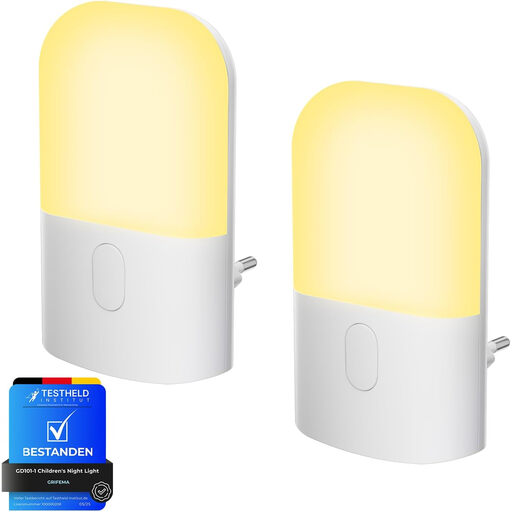
Why this product suits this profile: Two plug-in lights with a dusk sensor, three brightness levels and 2,700 Kelvin are suitable for several dry indoor areas.
The product data specifies the sensor type, three dimming levels, colour temperature and power consumption of 0.5 W.
Automatic switching on and off in the dark, plus a slim design that leaves the neighbouring socket accessible.
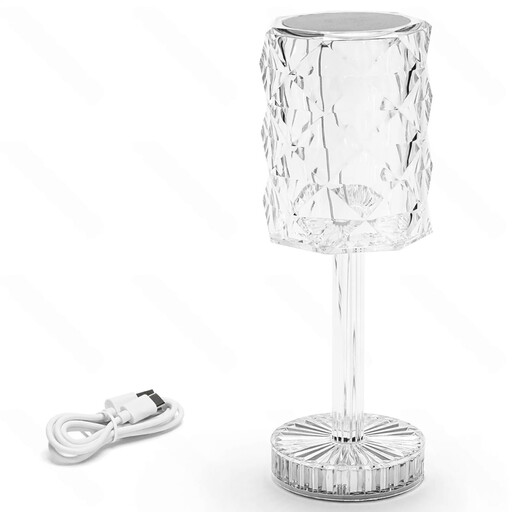
Why this product suits this profile: This compact USB desk lamp offers three colour-temperature ranges from 2,700 to 6,500 Kelvin and 105 lumens at 1 W.
The selectable lighting modes are clearly specified; the USB-C cable and 5 V operation are also described. A mains adaptor is not included.
Integrated LED, compact dimensions of 9 × 9 × 26 cm, and operation via a laptop, power bank or USB power supply.
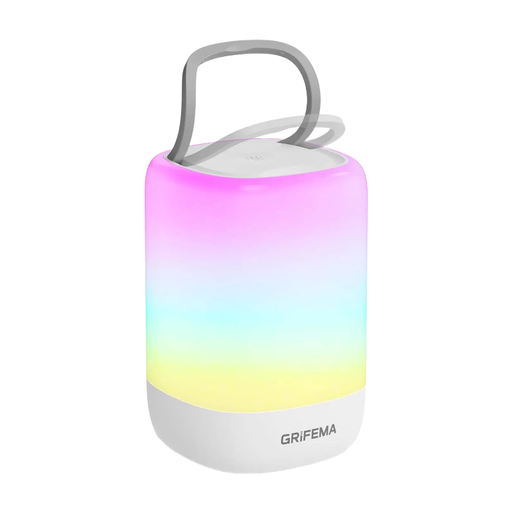
Why this product suits this profile: This rechargeable LED lamp can be used anywhere and combines warm white light, seven RGB colours, touch controls, dimming and a timer.
The power supply is specified as USB-C with a 1,500 mAh lithium-ion battery. This eliminates the need to buy AAA batteries regularly.
Dimmable from 100 to 5 per cent, automatic switch-off after 30 minutes and a portable design.
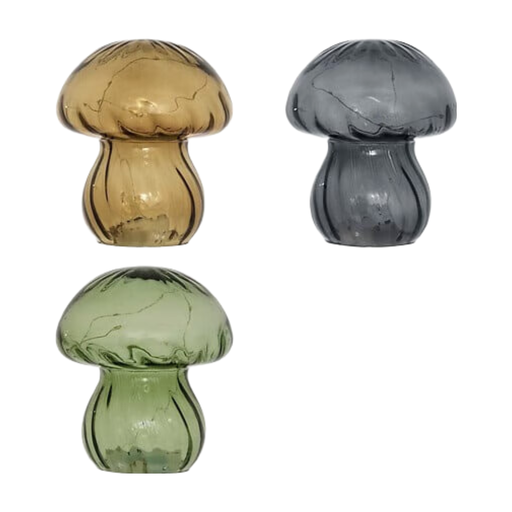
Why this product suits this profile: This glass mushroom lamp is designed as a decorative LED lamp for bedrooms, living areas or shelves.
The material, dimensions and power supply are clearly stated: glass, a height of approximately 15.5 cm and two AAA batteries, which are required separately.
Compact shape with a diameter of 13.2 cm and soft LED light for dry indoor areas.
We have put together a complete, regularly updated list of products that fully meet these strict selection criteria and the safety regulations applicable in the EU.
In a child’s room, a light should be placed or hung so that the cable, power supply and controls do not create a trip or pulling hazard. A plug-in night light must not be covered and should not be used in damp areas unless it is specifically rated for them.
In a hallway, it is best positioned where furniture will not obstruct the sensor. A desk lamp should stand on a level, dry surface. Glass models such as a mushroom lamp require extra care, as they can be damaged if knocked over.
A neon lamp with lettering, such as the Atmosphera “Hello” or “Love” models, is primarily decorative accent lighting. Its compact dimensions of 23 × 4 × 12.5 cm make it suitable for shelves and consoles. For finding your way to the toilet or a child’s bed, however, a sensor night light is generally more practical.
This depends on its power rating, operating time and electricity tariff. A model rated at 0.5 W would theoretically use 0.012 kWh per day if operated continuously. With sensor operation, the actual running time is usually shorter. The specific power consumption should be checked in the product description.
For finding your way around at night, warm white light of around 2,700 Kelvin is often chosen. However, personal perception, brightness and positioning remain important. An RGB night light or neon lamp can be used decoratively, but should not automatically be regarded as guidance lighting.
A plug-in night light is suitable for fixed positions and automatic continuous operation. A rechargeable LED lamp offers greater flexibility, but needs to be charged regularly. For travel, camping or changing locations, the portable option is more practical; for hallways and stairs, a sensor light plugged into a socket is often the simpler choice.