
Lieferung heute & morgen

Qualitätsgarantie

Willkommens-Angebote freischalten: KOSTENLOSE Lieferung | Bis zu 80 % RABATT | Kostenlose 30-Tage-JoyPlus-Testphase
App herunterladen
An LED night light should provide guidance without unnecessarily brightly lighting the room. In practice, unclear specifications, unsuitable sensors and exaggerated design claims can quickly lead to disappointing purchases. Families often focus on appearance while overlooking important details such as colour temperature, power supply and sensor placement.
“Soft” or “pleasant” says little about the actual light colour. A warm white night light is often somewhere between 2,700 and 3,000 Kelvin. Values around 6,500 Kelvin, on the other hand, appear noticeably cooler and whiter. This can be practical in a hallway, but may not create the desired atmosphere in a bedroom or children’s room.
When choosing a light, always check the Kelvin rating rather than relying solely on product images or marketing copy.
An LED night light with a dusk sensor responds to the brightness in the room. For example, it switches on when the surroundings become darker and switches off again during the day. An LED night light with a motion sensor, by contrast, requires movement to activate it and usually switches off automatically after a set period.
A dusk sensor can be useful for a hallway that should remain gently lit. For stairs, bathrooms or the route to a child’s room at night, a motion sensor can help limit energy consumption. The detection angle, range and switch-off time are key considerations.
With a rechargeable LED lamp, battery life depends on brightness, colour mode and how long it is switched on. A stated runtime therefore cannot automatically be achieved in every operating mode. Also check whether a USB cable is included, which connection is used and how long charging takes.
A USB-C night light can usually be charged easily in everyday use with a suitable power adapter, laptop or power bank. A plug-in model, on the other hand, does not require battery replacement or recharging, but remains tied to its installation location.
For finding your way at night, moderate lumen levels are often sufficient. A decorative table lamp may be designed more for creating an atmosphere than for lighting a path. Look out for:
An RGB night light offers several colours, but is not automatically suitable as a permanent sleep light. Check whether a warm white mode is available separately and whether the last selected setting is saved.
With a plug-in night light, make sure that neighbouring sockets are not blocked. Specifications such as 220–240 V, power consumption and indoor use provide information about the intended application.
Portable battery-powered models can be used flexibly on a bedside table, shelf or when camping. Touch controls, a timer and automatic switch-off can be practical features. At the same time, children should not take the lamp apart unsupervised or play with cables while it is charging.
The protection rating is particularly important for bathrooms, cellars and balconies. According to the product information, a model with IP20 is intended exclusively for dry indoor areas. It should not come into contact with water and must not be covered if this could cause heat to build up.
In a children’s room, a stable base, durable materials and safe cable routing are important considerations. Glass models such as a decorative mushroom lamp should be kept out of the reach of young children. Always follow the manufacturer’s instructions on cleaning, power supply and use before buying.
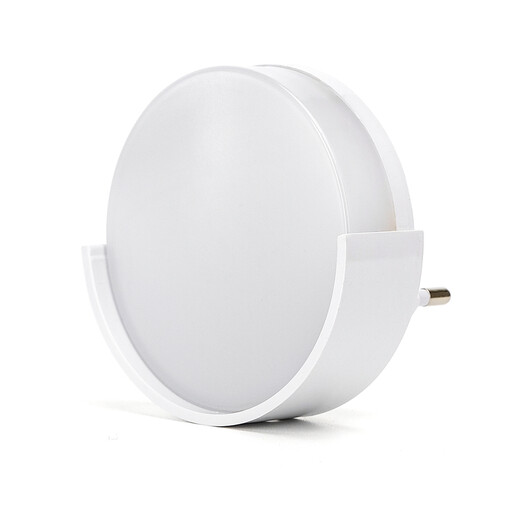
Why this product suits this profile: According to the product information, this plug-in night light requires neither batteries nor regular charging. The integrated sensor activates the lamp when the ambient brightness falls below 20 lux.
Automatic brightness detection prevents unnecessary manual switching. The specified power consumption of 1 W makes ongoing operating requirements easy to understand.
40 lm, 120° beam angle, a stated LED lifespan of 25,000 hours and compact dimensions of 75 × 56 × 73 mm.
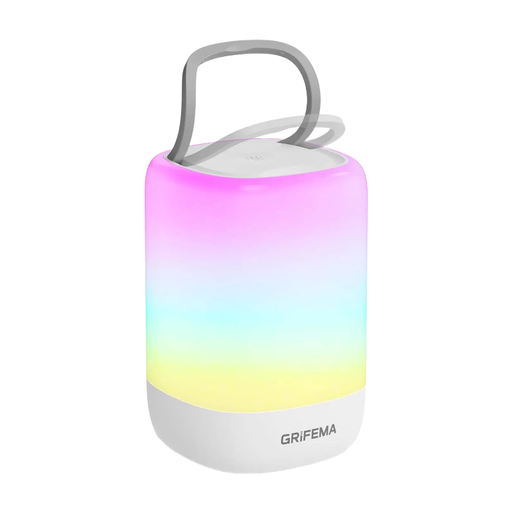
Why this product suits this profile: This portable LED night lamp combines touch controls, several colour tones, adjustable brightness and a USB-C connection. It is suitable for bedside tables, shelves or children’s rooms.
The product specifications list specific operating features: brightness from five to 100 per cent adjusted with a long press, plus automatic switch-off after 30 minutes.
Seven RGB colours plus a warm white mode, 1,500-mAh battery, timer and dimensions of 8,45 × 8,45 × 12,45 cm.

Why this product suits this profile: This plug-in model is designed for hallways, stairs, bathrooms and children’s rooms. It combines motion and dusk sensors and switches off after 60 seconds without movement.
Automatic switch-off limits the time the light remains on. Detection specifications of up to 3 m and 120° help with suitable placement.
Five brightness levels, 2,700 K warm white light, 0,5 W power consumption and battery-free operation.
We have put together a complete, regularly updated list of products that fully meet these strict selection criteria and the safety regulations applicable in the EU.
This depends on its power consumption and operating time. A model rated at 0,5 W uses less energy when running continuously than a lamp rated at 1 W. With sensor models, the actual operating time is reduced if they only switch on in darkness or when movement is detected. To calculate the exact cost, you need your tariff’s electricity price and the daily operating time.
Depending on the product, lifespan is given in hours or as battery runtime. For example, the Aigostar model has a stated LED lifespan of 25,000 hours. With rechargeable lamps, battery ageing is also relevant. Brightness level, charging cycles and ambient temperature all affect the practical service life.
Position it so that the sensor covers the usual route, for example at the side of a hallway or near a staircase. Furniture, curtains and other objects can restrict the detection area. With a plug-in night light, you must also ensure that access to the socket remains clear. Before use, follow the manufacturer’s instructions regarding indoor use, moisture and placement.