
Lieferung heute & morgen

Qualitätsgarantie

Willkommens-Angebote freischalten: KOSTENLOSE Lieferung | Bis zu 80 % RABATT | Kostenlose 30-Tage-JoyPlus-Testphase
App herunterladen
An LED night light for a child’s bedroom should provide orientation without unnecessarily brightening the room. At the same time, many parents want simple operation, low energy consumption and a casing that is easy to use day to day. The choice may initially seem straightforward, but some product claims reveal little about actual suitability.
RGB colours, touch controls, a remote control and multiple brightness levels can be useful. However, they are not automatically helpful for young children. Check whether a warm white night light can be switched on directly and whether the most important setting can be accessed without complicated button combinations.
Wattage primarily describes energy consumption, not perceived brightness. Luminous flux in lumens (lm) is more informative for this purpose. A night light with 18 lm is more suitable for orientation than a lamp with a significantly higher luminous flux. For a bedside table, stepped or continuously variable dimming can be useful, allowing the light to be adjusted to the surroundings.
For a USB-rechargeable night light, the charging port, charging time and battery life should be stated clearly. With a night light with a motion sensor, detection range and positioning are also important. A dusk sensor can prevent the lamp from being activated unnecessarily during the day. If this information is missing, it is difficult to assess how practical the product will be in everyday use.
For orientation at night, warm light is often perceived as more pleasant than cool, very bright lighting. Technically, light colour can be classified by colour temperature: 2,600 to 3,000 kelvins are described as warm white or warm yellow. A dimmable children’s lamp offers greater flexibility, such as a lower setting for sleeping and a brighter setting when getting up.
RGB colours are mainly interesting for ambient lighting. If you buy an RGB night light, check whether the colours can be selected and kept permanently or whether they only change automatically. Simple switching off is also important in a child’s bedroom.
LED lights use little energy compared with many older light sources. However, actual running costs also depend on power consumption, operating time and charging behaviour. A model with an integrated battery does not require battery replacements, but it does need to be charged regularly. A USB-rechargeable night light can be charged using a suitable mains adapter, power bank or computer, provided this is stated in the product information.
Look for a clear charging indicator and check whether the light can be used while charging. Cables should be kept out of the reach of young children and must not be used as a pulling or tripping hazard around the bed.
A night light with a timer switches off after a set period and can help limit energy consumption. A motion sensor is particularly suitable for hallways, stair areas or the route to the bathroom. A night light for the bedroom, on the other hand, should not remain activated by every small movement.
Before buying, decide where the light will be placed:
For electrical products, the information on the packaging and product page forms part of the purchasing decision. The CE mark is a manufacturer’s declaration of conformity with relevant EU requirements; it does not replace the buyer’s inspection of the specific product construction. The casing, charging cable and switches should be checked for damage before every use.
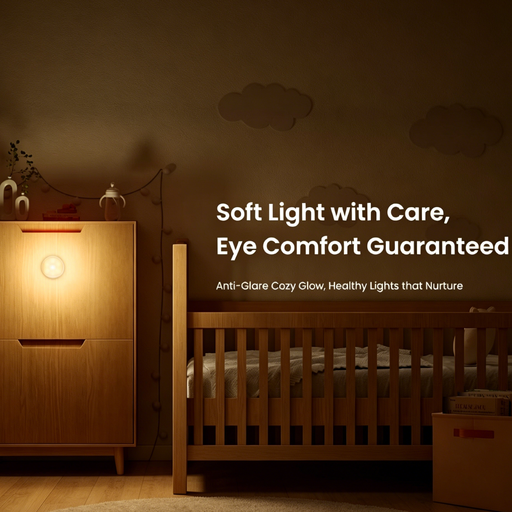
Why this product suits this profile: For shoppers looking for an automatic orientation solution and who value particularly simple operation. The product name indicates motion detection.
The sensor can prevent unnecessary continuous lighting. Nevertheless, check the full details of the detection range, lighting duration and power supply before buying.
Motion sensor according to the product name; suitable for automatic orientation in darker areas.

Why this product suits this profile: This model combines a soft silicone casing, three brightness levels and an integrated battery. It is therefore suitable for families who prefer clear technical specifications.
The specifications state 1200 mAh, a charging time of around three hours and up to six hours of battery life at maximum brightness. Battery life depends on the selected setting.
Three brightness levels; Type-C charging port; 2 W power consumption; CE- and RoHS-compliant according to the product information.
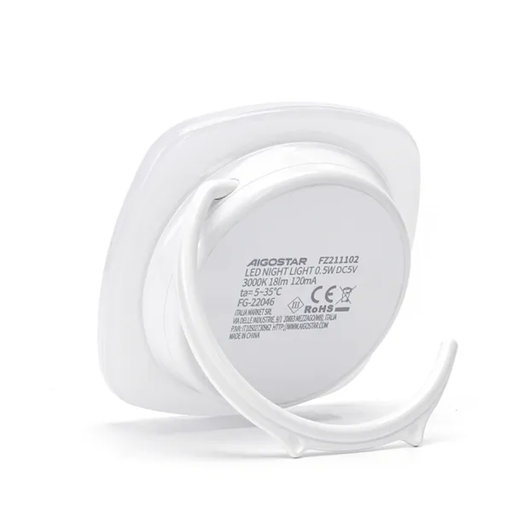
Why this product suits this profile: An option for hallways, cupboards or under-cabinet areas when light is only needed after movement is detected. The stated colour temperature of 3,000 K falls within the warm white range.
The product information specifies the sensor range, detection angle and automatic activation in low ambient light. This makes it easier to plan where to use it.
18 lm luminous flux; 0,5 W LED; 500 mAh battery; up to six hours of light when movement is detected, according to the product description.
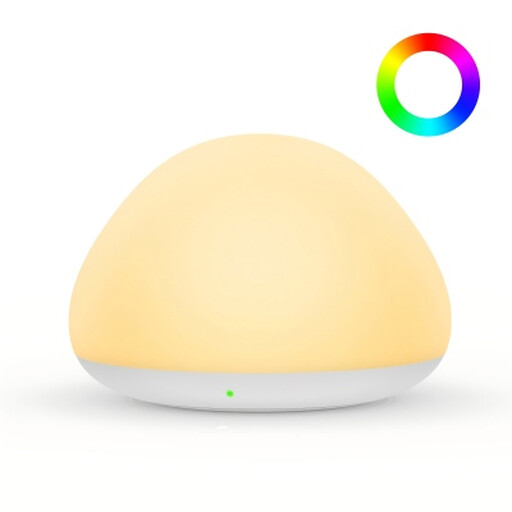
Why this product suits this profile: According to the product name, this model is designed as an RGB silicone lamp with USB charging, a timer, touch controls and dimming. It suits users who want to combine several lighting options in one device.
The timer and dimming function address two common problems: unnecessary continuous lighting and unsuitable brightness. Check the timer duration and charging time before buying.
RGB function; USB charging; touch controls; dimming and timer according to the product name.
We have put together a complete, regularly updated list of products that fully meet these strict selection criteria and the safety regulations applicable in the EU.
Low brightness is usually sufficient for orientation. The key is for the light to make the route or immediate area visible without strongly illuminating the entire room. A dimmable night light makes adjustment easier. The right setting depends on the size of the room, where the light is placed and personal perception.
Battery life depends on battery capacity, brightness setting and the functions being used. For example, the VIVREAL model is stated to provide up to six hours at maximum brightness. This should be understood as manufacturer or product information and may vary in practical use.
A sensor can reduce operating time because the lamp does not stay lit continuously. The actual potential saving depends on how often the sensor is triggered and how long the light remains on. For a reliable choice, consider the detection area, switch-off time and standby consumption together.