
Lieferung heute & morgen

Qualitätsgarantie

Willkommens-Angebote freischalten: KOSTENLOSE Lieferung | Bis zu 80 % RABATT | Kostenlose 30-Tage-JoyPlus-Testphase
App herunterladen
An LED night light should help you find your way at night without lighting up the room unnecessarily. For families, ease of use, a stable base and a pleasant light colour are important. Adults may also look for RGB effects, flexible positioning or decorative LED lighting.
Product descriptions often list lots of features that don’t necessarily offer an advantage in everyday use. What matters is whether the features suit the intended location.
An RGB night light can display a wide range of colours. But for night-time feeding, changing a baby or finding your way to the bathroom, warm white light at a low brightness is usually more practical. If there’s no dimming function, or the brightness can only be adjusted in large steps, the light may be distracting.
So check the product details for clear information about how it works. “Dimmable” could mean stepless adjustment or simply a few preset brightness levels.
A rechargeable LED night light can be placed wherever you need it, whether on a bedside table, shelf or chest of drawers. But without information about the charging voltage and power supply, it’s unclear whether existing USB adapters, power banks or laptop ports are suitable.
Clear specifications such as 5 V and 1 A, along with details of the charging port, are helpful. Don’t cover the device while it’s charging, and only use compatible accessories.
A night light with a motion sensor can be useful in a hallway or bathroom if it only switches on when it detects movement. In a child’s bedroom, however, the sensor could be triggered unexpectedly, for example when a child moves in bed. A night light with a timer is often easier to plan around.
Before buying, check whether the sensor can be switched off and what timer intervals are available. If the product description gives few technical details, check the user manual and product page.
Warm white light is often considered pleasant in bedrooms and children’s bedrooms. A colour temperature of 2600 to 2800 Kelvin falls within the warm white range. The brightness of small lights is often given in lumens. For example, 40 lm is quite different from a more powerful LED bedside lamp designed to light a room.
The CRI value describes colour rendering. According to the product specifications, a value of CRI over 85 indicates comparatively natural-looking colours. This can be useful if you need to make out objects or colours in dim light. However, the CRI value says nothing about the light’s lifespan or safety.
A USB night light can be charged using a suitable adapter, computer or power bank. For mains-powered models, the type of connection and input voltage should be clearly stated. Battery-powered lights don’t need a socket, but their batteries need to be replaced regularly.
Low power consumption, such as 1 W, can be beneficial for longer use. Actual battery life also depends on brightness, colour mode and sensor activity. If no specific battery life is given, don’t try to work it out from the wattage.
An LED night light for a child’s bedroom should have a stable base and rounded or protected controls. Charge it out of reach of young children. Dimensions such as 13 × 8 × 8 cm help you work out whether it will fit on a narrow bedside table.
For silicone lamps, check the care instructions. Electrical lights should never be submerged in water unless they have a stated protection rating that allows it. For outdoor use, look for specific details such as IP44. This protection applies only within the stated conditions and doesn’t mean the product is waterproof.
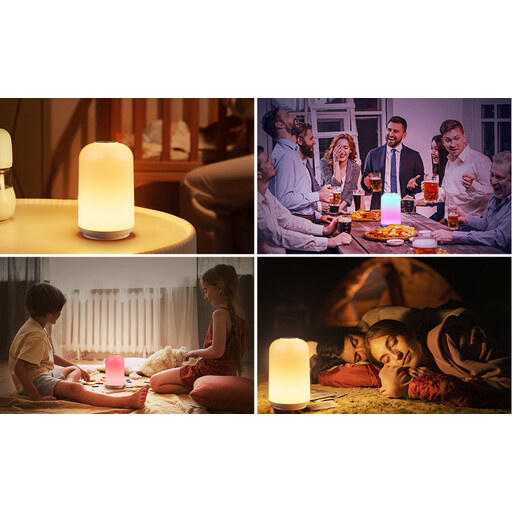
Why this product suits these needs: This compact model combines warm white light with seven RGB colours, making it suitable for a bedside table, shelf or children’s bedroom furniture. Its built-in rechargeable battery means you can use it without keeping it plugged in.
The product details specify stepless dimming in warm white mode and USB charging at 5 V and 1 A. This makes it easier to assess the brightness and power supply.
40 lm, CRI over 85, 12 SMD LEDs and a compact size of 13 × 8 × 8 cm, according to the product description.
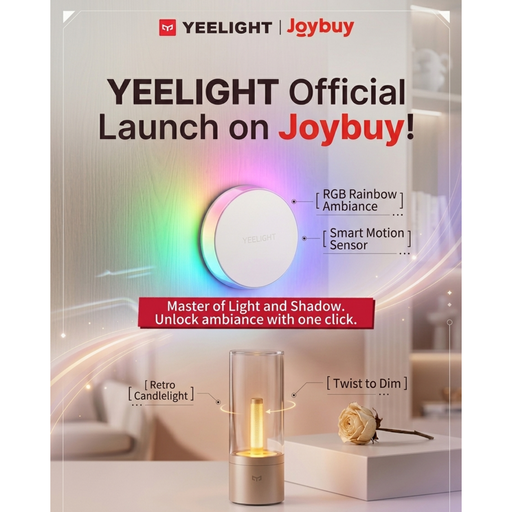
Why this product suits these needs: This RGB mood light is designed for adults who want flexible lighting for living rooms, bedrooms or gaming areas. Its motion sensor, magnetic mount and USB-C rechargeable battery give you more options for where to place it.
The product name lists 11 preset effects, a motion sensor and USB-C charging. Before buying, check exactly how the sensor and effects are controlled.
USB-C rechargeable battery, magnetic design and several preset RGB light effects, according to the product details.
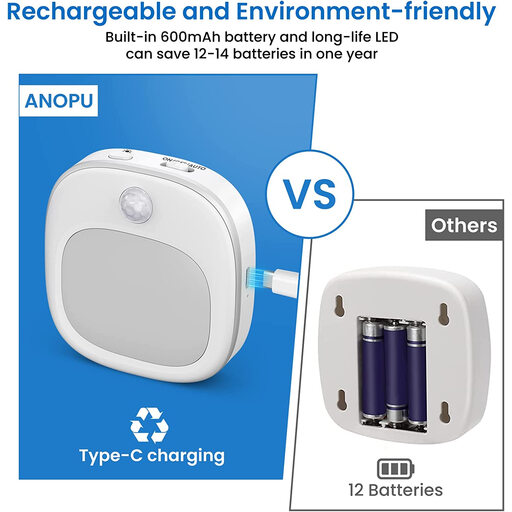
Why this product suits these needs: The two battery-powered lights can be placed in different spots, such as a hallway, stairway or bathroom. They’re a practical choice if there isn’t a socket nearby.
The product name specifies motion detection and five brightness levels. This makes it easier to plan where and when to use the lights than with a model that stays on continuously.
Two lights, five dimming levels and three colour temperatures, according to the product details.
We’ve put together a complete, regularly updated list of products that meet these strict selection criteria and fully comply with the safety regulations in force in the EU.
When choosing a night light for a child’s bedroom, keep these practical precautions in mind:
Consumption depends on power, brightness, operating time and mode. A model rated at 1 W would theoretically use 0.012 kWh if left on continuously for twelve hours. Rechargeable lights also have charging losses. Actual consumption may be lower when using a sensor or timer.
A timer can limit how long the light stays on and prevent it from running all night. Look for easy-to-understand controls, a stable base and the manufacturer’s safety advice. A timer doesn’t replace safe placement or supervision while charging.
Warm white light at around 2600 to 2800 Kelvin is often chosen for subtle night-time lighting. RGB colours are better suited to mood lighting or decorative LED lighting. To help you find your way in the dark, set the brightness so you can see where you’re going without lighting up the room too much.